
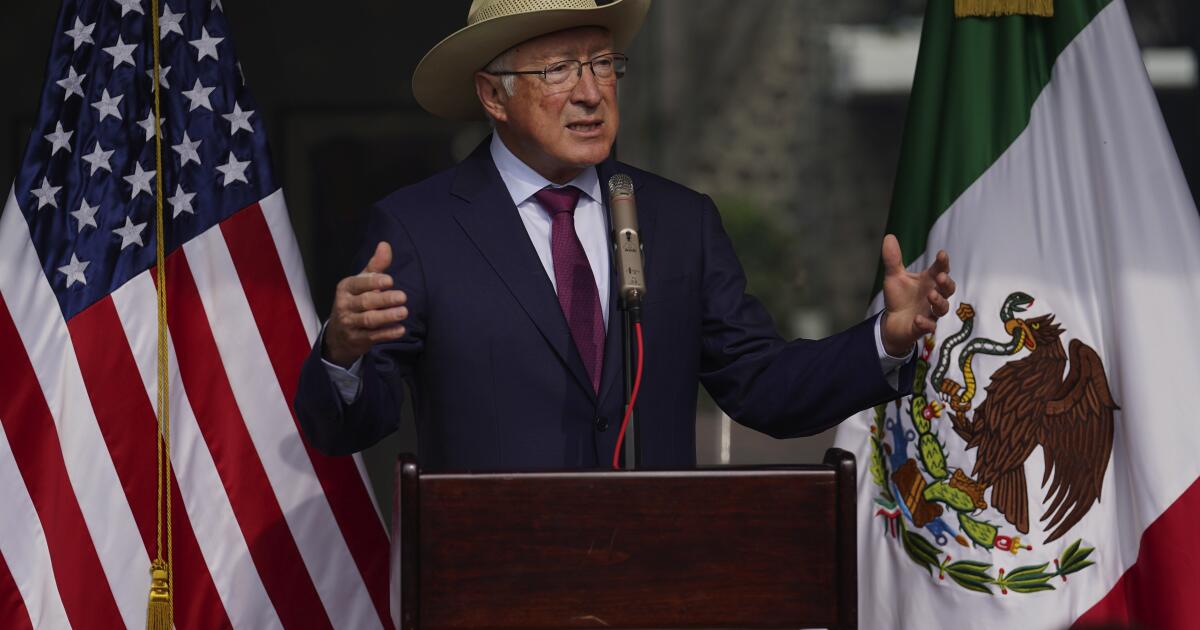
Ex-U.S. ambassador says Mexico’s former president feared Sinaloa boss would expose corrupt officials
Former U.S. Ambassador to Mexico Ken Salazar writes in his upcoming memoir, Borderlands: My Fight for an Inclusive America, that former Mexican President Andrés Manuel López Obrador feared the July 2024 arrest of Sinaloa cartel leader Ismael “El Mayo” Zambada would expose corrupt ties between Mexican officials and organized crime. While Salazar states he personally never saw evidence linking López Obrador to cartels, the account has triggered a sharp rebuke from current President Claudia Sheinbaum, who characterizes the claims as U.S. meddling.
The Origins of the Allegation
Salazar’s book, set for release next month by BenBella Books, details a conversation with an unidentified source he describes as an “AMLO whisperer.” According to the former envoy, this confidant claimed López Obrador was deeply concerned about the intelligence Zambada might provide to U.S. prosecutors following his arrest near El Paso. Salazar, who served as a Biden administration appointee, notes he was eventually frozen out of communications with the Mexican government following the capture of the high-profile capo.
Did You Know? Ken Salazar, a longtime Democrat who served as U.S. Secretary of the Interior under President Obama, became a “persona non grata” in Mexico City following the arrest of Ismael “El Mayo” Zambada and subsequently resigned his post after the election of Donald Trump.
Governmental Pushback and Sovereignty
President Claudia Sheinbaum dismissed the claims during a regular morning news conference, asserting that her predecessor’s primary concern was not corruption, but rather what she termed U.S. “meddling” in Mexican affairs. Sheinbaum maintained that López Obrador had no anxiety regarding what information a jailed cartel leader might disclose to U.S. authorities. López Obrador himself has not provided a direct response to the book, though he has historically denied any links to organized crime.
Expert Insight: The timing of this controversy is significant due to ongoing negotiations regarding revisions to a regional free-trade agreement. As Mexico’s economy remains heavily dependent on exports, political friction between Washington and Mexico City could complicate these negotiations, potentially impacting trade stability across North America.
Lingering Questions on the Zambada Arrest
The circumstances surrounding Zambada’s arrival in the United States remain a point of contention. While U.S. authorities maintain the arrest resulted from an internal betrayal by Joaquín Guzmán López—the son of “El Chapo” who allegedly kidnapped Zambada and flew him to El Paso—Mexican officials have long suspected U.S. involvement in the rendition. Guzmán López, who pleaded guilty to federal drug charges in December 2025, received no cooperation credit for the kidnapping, according to the U.S. Department of Justice.
What May Happen Next
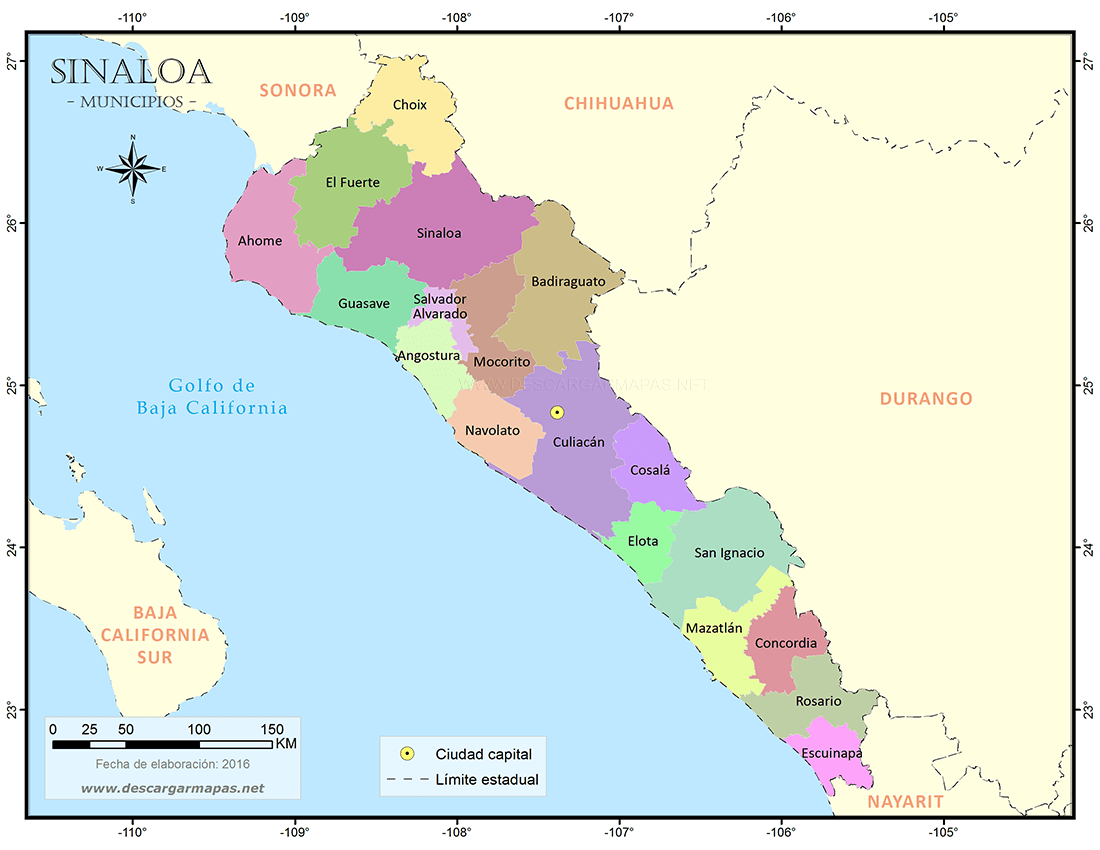
As the Trump administration continues to focus on prosecuting Mexican officials allegedly on cartel payrolls, the political atmosphere remains volatile. Analysts expect that if U.S. prosecutors move forward with more high-profile indictments—similar to the case of Sinaloa Governor Rubén Rocha Moya—diplomatic tensions between the two nations could escalate further. The future of extradition requests for officials like Rocha Moya will likely serve as a barometer for the level of cooperation remaining between the two governments.
Frequently Asked Questions
Did Ken Salazar see evidence linking López Obrador to drug cartels?
No. In a telephone interview, Salazar stated he never saw any proof tying the former president to Mexico’s cartels and explicitly described López Obrador as a leader who believed in the sovereignty of his country.
How did Joaquín Guzmán López arrive in the U.S. with Zambada?
According to U.S. authorities, Guzmán López was aboard the private plane used to transport Zambada to the United States and surrendered to federal agents upon landing near El Paso.
What is the status of the case against the governor of Sinaloa?
Rubén Rocha Moya was indicted in U.S. District Court in April. While he has gone on leave to fight the charges and denies wrongdoing, the U.S. is seeking his extradition, which Mexican authorities have yet to approve citing a lack of sufficient evidence.
How might the ongoing trade agreement negotiations be influenced by these public allegations of corruption?