
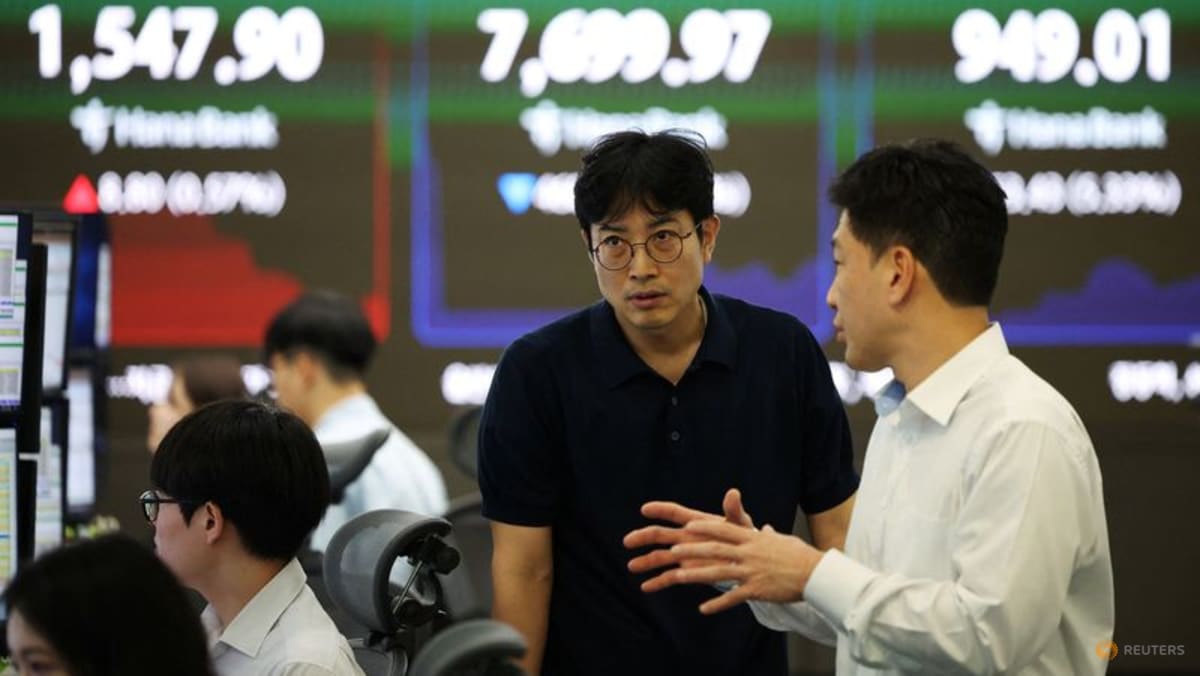
South Korea’s KOSPI Plunges 10% Amid Tech-Led Market Rout
South Korea’s KOSPI index plunged 10 percent on June 23, marking its largest single-day decline since March 4, as a tech-led sell-off on Wall Street triggered a broader retreat in Asian equity markets. The downturn was fueled by heavy losses in major semiconductor firms Samsung Electronics and SK Hynix, both of which saw shares drop more than 12 percent. The volatility prompted an automatic 20-minute trading halt, highlighting growing concerns over market leverage and retail investor exposure to artificial intelligence-related stocks.
Why is the KOSPI experiencing such extreme volatility?
The recent market instability stems from a combination of high retail leverage and a concentrated reliance on a few key technology companies. According to Alexander Redman, chief equity strategist at CLSA, the market has become “dangerously overstretched” due to heavy retail engagement. Redman noted that the use of margin debt—borrowing money to purchase stocks—has reached record highs, creating a feedback loop of volatility. This pressure is compounded by the introduction of leveraged single-security ETFs, which regulators argue have poured “fuel onto the fire,” according to Lee Chan-jin, head of South Korea’s market watchdog.
The KOSPI index rose 94.67 percent in the year leading up to this crash, driven largely by the AI boom. However, the won has simultaneously weakened by 6.5 percent against the US dollar, signaling potential currency-related pressures for international investors.
How do chipmakers influence the broader South Korean market?
Samsung Electronics and SK Hynix have become the primary drivers of the KOSPI, currently accounting for more than half of the total market value. This concentration means that shifts in sentiment toward the semiconductor sector have an outsized impact on the entire index. On June 23, the dual sell-off of these two giants forced the KOSPI down to 8,203.84 points. This reliance on two companies creates a “binary” risk profile; when global demand for AI-related hardware cools—as seen recently on the Nasdaq—the KOSPI lacks the sectoral diversity to buffer the blow.
What are the risks of leveraged retail trading?
Regulators have expressed concern that the accessibility of leveraged financial products encourages retail investors to take on risks that exceed their capacity to absorb losses. Lee Chan-jin stated that the government was “too hasty” in approving leveraged funds tied to chip stocks. Because these funds amplify both gains and losses, they have contributed to the heightened volatility observed throughout June. The Financial Supervisory Service has issued warnings against using margin debt, though the practice remains prevalent among retail participants who remain in the “driving seat,” according to CLSA’s Redman.
Market Comparison: KOSPI vs. Nikkei 225
| Index | Performance (June 23) |
|---|---|
| KOSPI (South Korea) | -10.0% |
| Nikkei 225 (Japan) | -3.55% |
Frequently Asked Questions
- What triggered the KOSPI crash? The crash was triggered by a tech-led sell-off on Wall Street, where major firms like Nvidia and Microsoft saw sharp declines, combined with domestic concerns over high retail leverage.
- Are trading halts normal in the KOSPI? Yes, the exchange uses automatic circuit breakers to pause trading during extreme volatility, such as the 20-minute halt triggered on June 23.
- Why are regulators worried about retail investors? Regulators are concerned that retail investors are utilizing high levels of margin debt and leveraged ETFs, which amplify market swings and increase the risk of systemic instability.
Stay informed on global market shifts by subscribing to our financial newsletter or exploring our latest analysis on semiconductor supply chains.
