
Fact Check: No, Indonesia’s Human Rights Minister Never Told Iran to Leave Strait of Hormuz
How Viral Misinformation Targets Government Officials
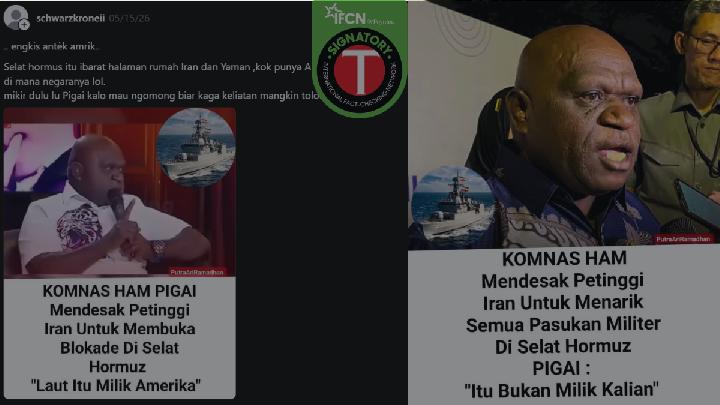
False claims regarding Human Rights Minister Natalius Pigai and the National Commission on Human Rights (Komnas HAM) recently surfaced on platforms like Threads and Facebook. The viral posts falsely alleged that Pigai demanded Iran withdraw military forces from the Strait of Hormuz, claiming the waterway belongs to the United States. Fact-checkers at Tempo confirmed these reports are entirely fabricated, as neither the Minister nor the commission issued such statements.

Why Does Geopolitical Misinformation Spread So Quickly?
Social media algorithms prioritize high-engagement content, often rewarding inflammatory political narratives regardless of their factual accuracy. When a post links a prominent figure—like Indonesia’s Human Rights Minister—to a volatile global hotspot like the Strait of Hormuz, it triggers an emotional response. According to Tempo’s investigation, the goal of these hoaxes is often to manufacture domestic controversy by misrepresenting an official’s stance on international conflicts.
The Strait of Hormuz remains a critical global chokepoint. Because tensions in the region have real-world impacts on oil prices and maritime security, users are more likely to share content that suggests a government has taken a definitive, albeit controversial, side. This phenomenon highlights the importance of verifying official government portals, such as the official Komnas HAM website, before treating social media posts as news.
How to Spot Fabricated Political Narratives
To avoid falling for digital deception, readers should apply a “source-first” approach to every viral claim. Start by checking if reputable news organizations—such as Tempo, RRI, or major wire services—have reported the same quote or press release. If a high-stakes statement appears only on social media accounts without a corresponding official transcript, it is likely a hoax.
The Role of Independent Institutions in the Digital Age
Institutions like Komnas HAM are designed to be independent, yet they remain frequent targets for disinformation campaigns. Anis Hidayah, the leader of the agency through 2027, explicitly confirmed to Tempo that no such statement regarding Iran was released. By manufacturing these claims, malicious actors attempt to undermine public trust in the independence of human rights bodies.

Comparing this incident to previous disinformation cycles reveals a pattern: attackers often target officials during periods of cabinet transition or international crisis. While the 2024 elections saw a rise in domestic political hoaxes, the current trend shows a shift toward dragging Indonesian officials into international military narratives to stir public sentiment.
Frequently Asked Questions
- Did Natalius Pigai actually mention the Strait of Hormuz?
No. Minister Natalius Pigai confirmed to Tempo that the claim is a hoax. - What is the function of Komnas HAM regarding foreign policy?
Komnas HAM is an independent state agency focused on human rights research and mediation within Indonesia; it does not set military or foreign policy regarding international maritime straits. - How can I verify if a politician made a specific statement?
Always check the official website of the ministry or the verified social media accounts of the official in question.
Have you encountered suspicious political claims online? You can report them to the Tempo Fact-Check ChatBot. Stay informed and subscribe to our newsletter for the latest verified updates.