

Fear of being left behind’: Why Thailand is joining Indonesia in OECD membership push
Thailand is pursuing OECD accession and a European Union free trade agreement to modernize its economy and attract investors diversifying away from China. According to the World Bank, Thailand’s GDP growth is forecast to drop to 1.7% in 2026, necessitating structural reforms to combat high household debt and a large informal sector.
Why is Thailand pursuing OECD membership now?
Thailand is attempting to reposition its economy as global supply chains shift toward more resilient bases in Southeast Asia. Vibeke Lyssand Leirvåg, chairperson of the Joint Foreign Chamber of Commerce Thailand (JFCCT), states that the push for OECD membership is welcomed by both new and existing foreign investors because it forces necessary regulatory reforms.
The bid serves as a signal to the international community. Archanun, an economic analyst, notes that the OECD process can demonstrate that Thailand is serious about improving its business environment. This is critical because Thailand ranked below Indonesia in Transparency International’s 2024 Corruption Perceptions Index.
Sineenat Sermcheep, director of the ASEAN Studies Center at Chulalongkorn University, says joining the OECD could attract higher-quality investment by providing companies with more predictable rules and increased competitiveness.
How does Thailand’s economic growth compare to regional peers?
Thailand’s growth has slowed significantly compared to its historical peaks. National Economic and Social Development Council (NESDC) figures put GDP growth at 2.4% in 2025, with the World Bank forecasting a further dip to 1.7% in 2026.
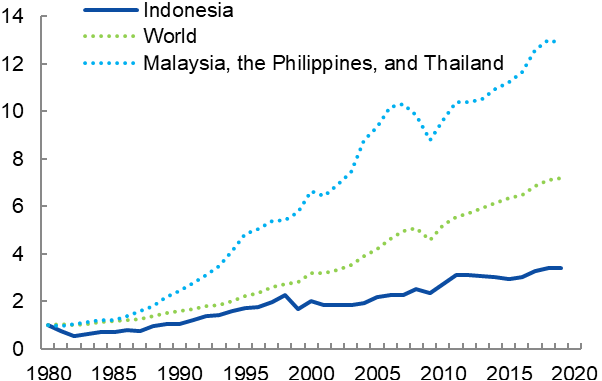
A primary structural drag is the size of the informal economy. Rujikorn, an economic expert, estimates Thailand’s informal economy at roughly 48% of GDP. In contrast, Indonesia’s informal sector stands at approximately 18%.
This gap makes it harder for the Thai state to protect workers, collect taxes, and manage systemic debt compared to its regional neighbors. This structural weakness is a core target for the formalization pressures that come with OECD standards.
What are the risks of the “double-edged sword” reform?
While OECD accession offers a path to modernization, it carries significant political and social risks. Archanun describes the process as a “double-edged sword,” warning that if the government fails to follow through on promised reforms, the resulting backlash could be severe.
The transition may not be painless for everyone. Sineenat Sermcheep warns that reforms could be costly for some businesses and politically difficult to implement. Specifically, small and medium-sized enterprises (SMEs) and workers in the informal sector may face intense adjustment pressures and higher compliance costs.
Despite these short-term hurdles, Sermcheep suggests that long-term benefits will likely include better education opportunities, improved living conditions, and rising incomes driven by sustainable growth.
Can OECD standards fix Thailand’s household debt crisis?
Thailand is currently battling some of the highest household debt levels in Asia. According to the International Monetary Fund (IMF), household debt now stands at nearly 90% of GDP.

Pavida Pananond, a professor of international business at Thammasat University, argues that this debt, coupled with domestic political instability, risks leaving Thailand “at the back of the line” for regional investment attractiveness.
Policy makers hope that OECD-style reforms will force a greater formalization of the economy. By bringing more businesses and workers into the official regulatory and tax systems, the state can better address debt problems and provide social protection to a larger portion of the population.
Frequently Asked Questions
What is the main goal of Thailand’s OECD bid?
The goal is to attract high-quality investment, reduce corruption, and modernize regulations to remain competitive as companies move supply chains away from China.
How high is Thailand’s household debt?
According to the IMF, Thailand’s household debt is nearly 90% of its GDP, one of the highest rates in Asia.
Why is the informal economy a problem?
At 48% of GDP, the informal economy limits the government’s ability to tax businesses, protect workers, and manage national debt levels.
What do you think about Thailand’s shift toward OECD standards? Will these reforms be enough to attract new tech giants? Share your thoughts in the comments below or subscribe to our newsletter for more deep dives into Southeast Asian economics.