
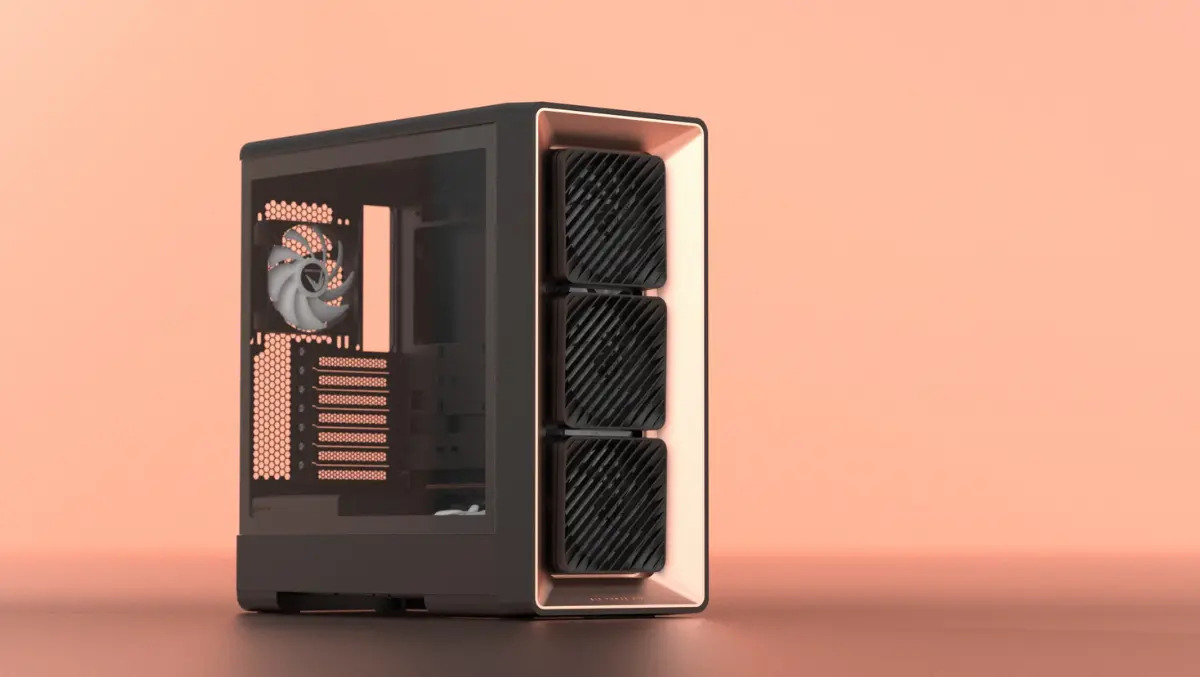
Formula V Line previews adjustable-airflow Air Power G10
The Death of the Static Airflow: Why Targeted Cooling is the Next Frontier
For decades, the philosophy of PC case design has been simple: pull cool air from the front, push hot air out the back. It’s a linear path that worked when components were modest. But as we enter an era of massive GPUs and CPUs that can push thermal loads to the limit, the “one size fits all” airflow model is breaking.
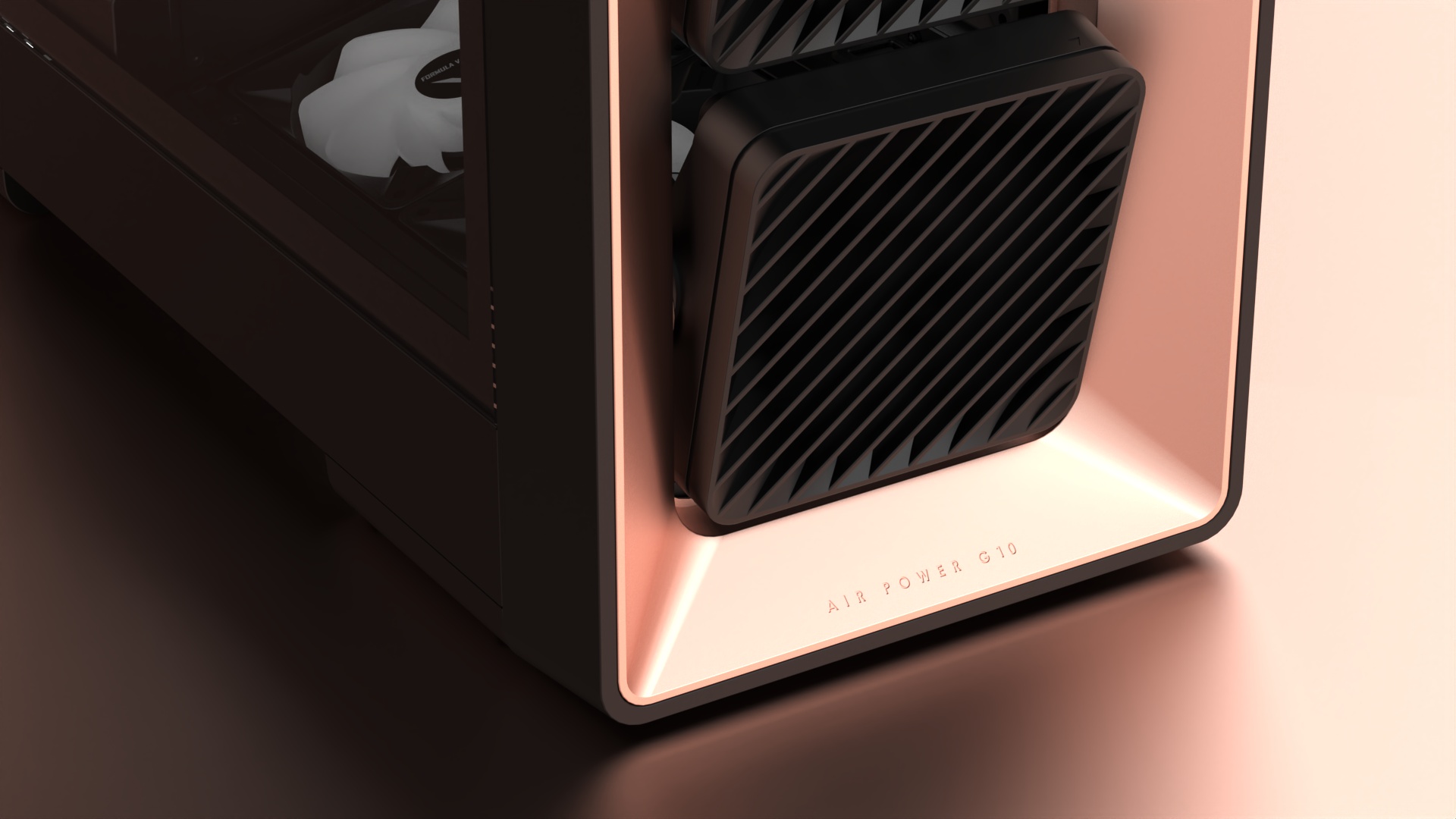
The industry is shifting toward dynamic thermal management. Instead of hoping a wall of air hits the right spot, we are seeing the rise of adjustable intake systems. The ability to tilt fans—directing a concentrated stream of cool air specifically toward a scorching VRM or a power-hungry graphics card—represents a fundamental shift from passive housing to active thermal engineering.

Consider the thermal profile of a modern high-end build. A GPU might be idling while the CPU is under a heavy rendering load, or vice versa. Static fans waste energy cooling empty space. Targeted airflow allows builders to optimize their “thermal map,” potentially lowering component temperatures by several degrees without increasing fan RPM or noise levels.
Modularity 2.0: The “LEGO-ification” of PC Hardware
We are moving past the era of the “fixed box.” The next generation of chassis is embracing extreme modularity, where the internal layout can be reconfigured based on the hardware being installed. We are seeing a trend toward interchangeable chamber modules and removable panels that do more than just provide access—they change the actual physics of the build.
The ability to move a bottom chamber forward or backward isn’t just about aesthetics; it’s about managing the “heat soak” effect. By shifting the power supply and cable management areas, builders can create larger pockets of cool air or make room for massive 420mm radiators that were previously impossible to fit in mid-tower footprints.
This trend mirrors the broader movement in industrial design toward customization-on-demand. Users no longer want to choose between a “compact” case and a “performance” case; they want a chassis that can evolve as they upgrade their components over a five-year lifecycle.
For more on how to choose the right chassis for your specific components, check out our guide on optimizing your PC build layout.
The Rise of the “Gaming Lifestyle” Ecosystem
Hardware brands are no longer content selling just a piece of metal or a silicon chip. We are witnessing the emergence of the “holistic gaming ecosystem.” When a company expands from PC cases into cooling fans, power supplies, and even gaming chairs, they aren’t just diversifying their catalog—they are capturing the entire user experience.
This strategy creates a seamless aesthetic and functional synergy. Imagine a system where the case, the cooling fans (complete with integrated displays), and the PSU are designed to communicate and match visually. This “ecosystem lock-in” is similar to how Apple manages its hardware, but applied to the enthusiast PC market.
Data from recent market shifts suggests that “lifestyle” branding increases customer loyalty. When a user trusts a brand’s thermal engineering in a case, they are significantly more likely to purchase that same brand’s air cooler or power supply to ensure guaranteed compatibility.
Aesthetics vs. Thermals: The Panoramic Glass Dilemma
The “aquarium” or showcase-style case—featuring wrap-around panoramic glass—has exploded in popularity. However, glass is a thermal insulator, not a conductor. This creates a paradoxical challenge: users want to see their high-end hardware, but the glass panels that showcase them often trap heat.
The solution lies in hybrid airflow architecture. Future trends point toward cases that combine panoramic visibility with hidden, high-efficiency intake paths (such as side-mounted or bottom-mounted fans). The goal is to maintain the “showcase” look while utilizing the “targeted” airflow mentioned earlier to ensure the components don’t overheat in their glass display.
Industry leaders like TechPowerUp have frequently highlighted the importance of mesh integration in these designs to prevent the “oven effect” common in early glass-heavy cases.
Frequently Asked Questions
Q: Does directing airflow toward specific components actually lower temperatures?
A: Yes. By reducing the distance cool air travels and avoiding obstacles, you minimize air turbulence and ensure the hottest components receive the freshest air first.
Q: Is a modular case harder to build in?
A: Generally, no. Modern modular designs are intended to simplify the process, offering removable panels and adjustable chambers that make cable management and radiator installation easier.
Q: Should I prioritize a “showcase” case or a “mesh” case?
A: If you have top-tier components (like an RTX 4090), prioritize airflow (mesh). However, if the showcase case utilizes targeted side/bottom intake, you can achieve a balance of both beauty and performance.
What do you think about the shift toward adjustable airflow? Would you prefer a case that looks like an aquarium or one that maximizes every degree of cooling? Let us know in the comments below or subscribe to our newsletter for the latest in hardware innovation!