
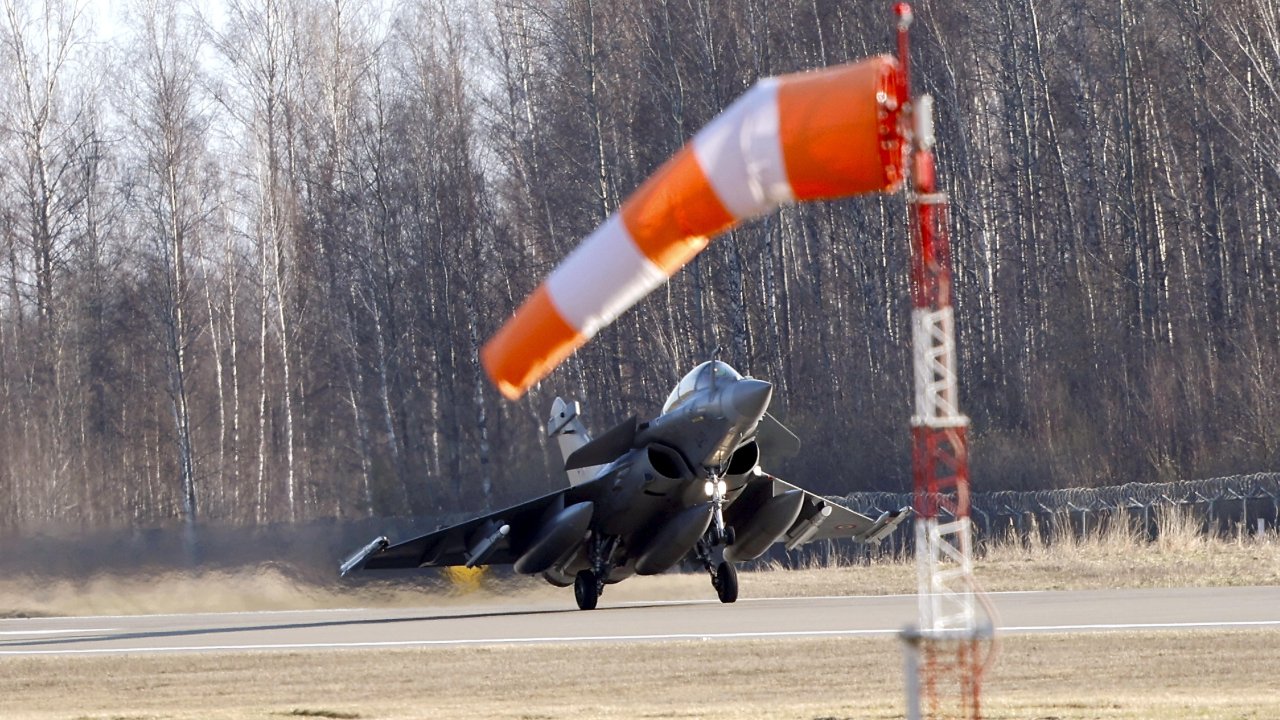
French Rafale Intercepts Russian Su-35 in Baltic Airspace
French Rafale fighter jets successfully conducted a close-range visual interception of a Russian Su-35 aircraft on June 2, 2026. The operation took place within the Baltic responsibility area as part of NATO’s Baltic Air Policing mission, which ensures the security of airspace for member states lacking their own interceptor capabilities.
Strategic Assets in Direct Encounter
The interception involved two Rafale jets from the 71st detachment, based at the Šiauliai Air Base in Northern Lithuania. These aircraft, developed by Dassault Aviation, are fourth-generation-plus multirole fighters equipped with RBE2-AA active electronically scanned radars and SPECTRA electronic warfare systems.
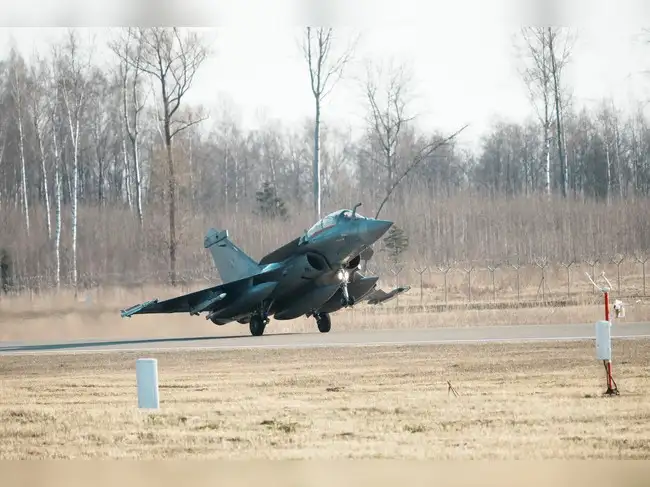
The primary target of the interception was the Su-35S, Russia’s leading non-stealth air superiority fighter. Developed by the Sukhoi Design Bureau, the Su-35S features the N035 Irbis-E radar and three-dimensional thrust-vectoring nozzles, providing extreme maneuverability during visual combat.
analysing the Russian Flight Composition
The encounter was notable for the diversity of the six Russian aircraft involved. Alongside the Su-35, French and Swedish Gripen pilots identified a Su-34 supersonic bomber, a Su-24 attack aircraft, and three transport and reconnaissance platforms: the Il-76, An-12, and An-30.
This specific combination of air superiority, strike, heavy transport, and intelligence-gathering assets suggests a coordinated effort. Such operations are often used to probe the response times and operational procedures of allied forces in the region.
Evolution of Baltic Air Defense
The designation of the 71st detachment marks France’s 71st rotation in this mission, illustrating a long-term commitment that began after the Baltic states joined NATO in 2004. Rotations typically occur every three months between member nations.
Since the full-scale invasion of Ukraine in February 2022, the quality of aircraft deployed to Šiauliai and Ämari Air Base has increased. Member states are now more likely to deploy their most capable frontline fighters rather than older variants.
Potential Future Scenarios
Given the current operational climate, NATO allies may continue to deploy high-capability aircraft to the Baltic region to deter incursions. Russia could potentially increase the frequency or complexity of these mixed-asset flights to further test response protocols.
Future encounters are likely to remain focused on visual identification and escorting, provided that the current diplomatic boundaries regarding “escalation” are maintained by both air forces.
Frequently Asked Questions
Which Russian aircraft were intercepted during the June 2 operation?
The group consisted of six aircraft: a Su-35 air superiority fighter, a Su-34 supersonic bomber, a Su-24 attack aircraft, an Il-76 heavy transport, an An-12 medium transport, and an An-30 reconnaissance platform.
What are the key capabilities of the French Rafale jet?
The Rafale is a fourth-generation-plus multirole fighter featuring the RBE2-AA radar and SPECTRA electronic warfare complex, with the ability to carry nuclear weapons.
Why is the Su-35 considered a significant threat in visual combat?
The Su-35S utilizes three-dimensional thrust-vectoring nozzles, which provide a level of low-speed maneuverability that few Western fighters can match.
How do you perceive the impact of high-readiness air policing on regional stability in the Baltic?