

Future of music is human, says Latvia’s Sonarworks / Article
For decades, music production has been a uniquely human art, blending technical skill with artistic judgment. Producers have shaped sound, guided artists, and translated emotion into recordings, using technology as a tool to realize their vision. But the rise of artificial intelligence is fundamentally altering this relationship, introducing systems capable of making creative decisions, not just executing commands.
AI’s Growing Role in the Studio
AI is no longer a futuristic concept in music production; it’s a practical reality. Today’s tools can clean audio, separate individual instrument tracks, balance mixes, generate harmonies, and even compose and arrange music with minimal human input. These systems are rapidly improving and becoming increasingly accessible to music creators.
A recent survey, conducted by Latvian company Sonarworks in partnership with Sound On Sound, explored how working music creators are responding to this shift. The survey, which included over 1100 professionals, revealed a cautious approach, characterized by evaluation rather than outright acceptance or rejection.
Evaluating AI’s Capabilities
Producers are currently testing and experimenting with AI, but are not yet fully committing to its use. Many are using AI for specific tasks, while reserving judgment about its broader impact. A clear distinction exists between AI tools that handle technical tasks and those that attempt to automate creative choices.
Tasks like audio cleanup, noise reduction, stem separation, and session organization are seen as areas where AI is helpful and non-threatening, saving time and allowing producers to focus on higher-level decisions. However, tools designed to generate lyrics, compose songs, or make aesthetic choices are met with more skepticism. Producers prioritize maintaining creative control and are hesitant to delegate authorship to AI.
A Familiar Disruption, With a Twist
The introduction of AI into the studio echoes previous technological disruptions, such as the rise of synthesizers, digital recording, and DAWs. In those cases, technology altered workflows but didn’t eliminate the need for human skill. However, AI differs from these earlier tools because it increasingly makes decisions, rather than simply executing them.
Producers are accustomed to technology enhancing their abilities, but are more cautious when technology decides what *should* be done. This has led to a pragmatic, watchful stance rather than enthusiastic adoption.
Concerns About Originality and Ethics
The biggest concern expressed by producers in the survey was the potential loss of originality. Respondents fear that AI could lead to a flood of generic-sounding music, exacerbating existing issues with music platform algorithms that prioritize engagement over artistic depth. This concern outweighs anxieties about job displacement.
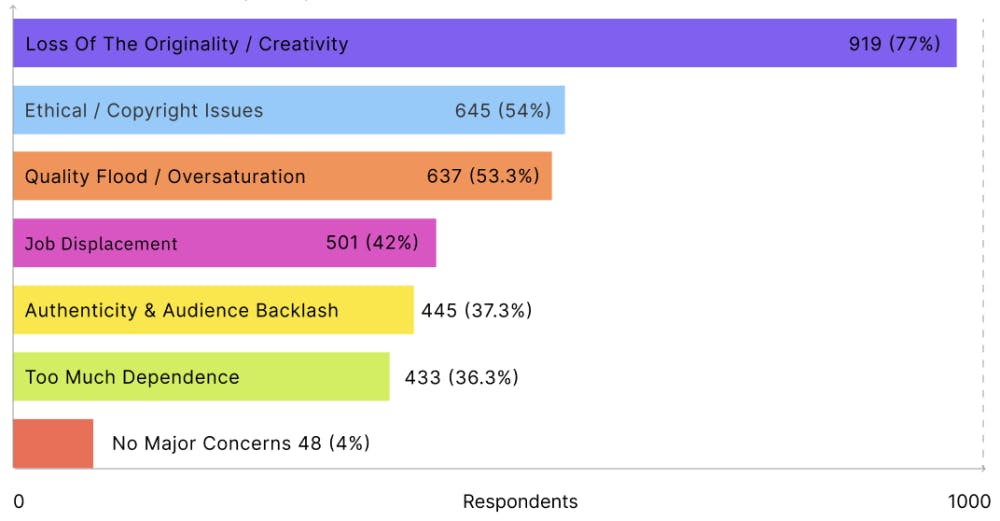
Ethical considerations surrounding AI training data are also paramount. Producers emphasize the importance of ethically sourced AI, viewing it as a professional obligation. Tools trained on unlicensed or scraped material are considered problematic, even if the output is legally sound. Transparency regarding the origins and construction of AI tools is crucial for building trust.
The Evolving Role of the Producer
The survey suggests that the value of certain technical skills is diminishing, as AI becomes proficient in tasks like manual audio editing and routine mix balancing. However, skills like musicality, critical listening, arrangement, emotional judgment, and interpersonal communication are becoming *more* important.
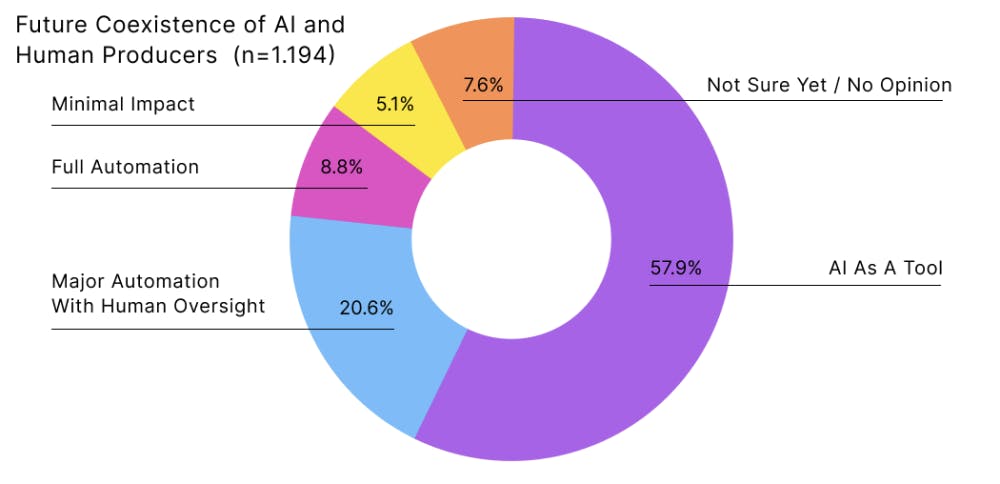
Producers envision a future where AI functions as an assistant, handling routine tasks while humans retain creative authority. The producer’s role may evolve toward that of a creative director, guiding musicians and directing intelligent tools. Technical fluency with AI will serve artistic intent, rather than replacing it.
Frequently Asked Questions
What is the primary concern producers have about AI in music?
The biggest concern is the potential loss of originality and creativity, with 77% of respondents expressing this fear.
Are producers worried about AI replacing their jobs?
Concerns about job displacement were lower, at 42%, than concerns about the loss of originality and ethical issues.
How do producers view the future of AI in music production?
Most producers envision AI as a tool to assist with routine tasks, while humans retain creative authority and direction.
As AI continues to develop, will the emphasis in music production shift from technical execution to artistic vision and leadership?