

Galaksi Kerdil Awan Magellan Kecil Diduga Terbelah Dua Akibat Gravitasi
The Small Magellanic Cloud (SMC) is being torn apart by the gravitational pull of the more massive Large Magellanic Cloud (LMC), according to a study by researchers at Nagoya University in Japan. Analysis of 7,000 massive young stars reveals the dwarf galaxy is splitting into two parts, a finding that may force a total revision of existing galactic interaction models.
Why is the Small Magellanic Cloud splitting?
The destruction is driven by the gravitational influence of the Large Magellanic Cloud. This massive neighbor is pulling the SMC’s structure apart, according to the Nagoya University research team.
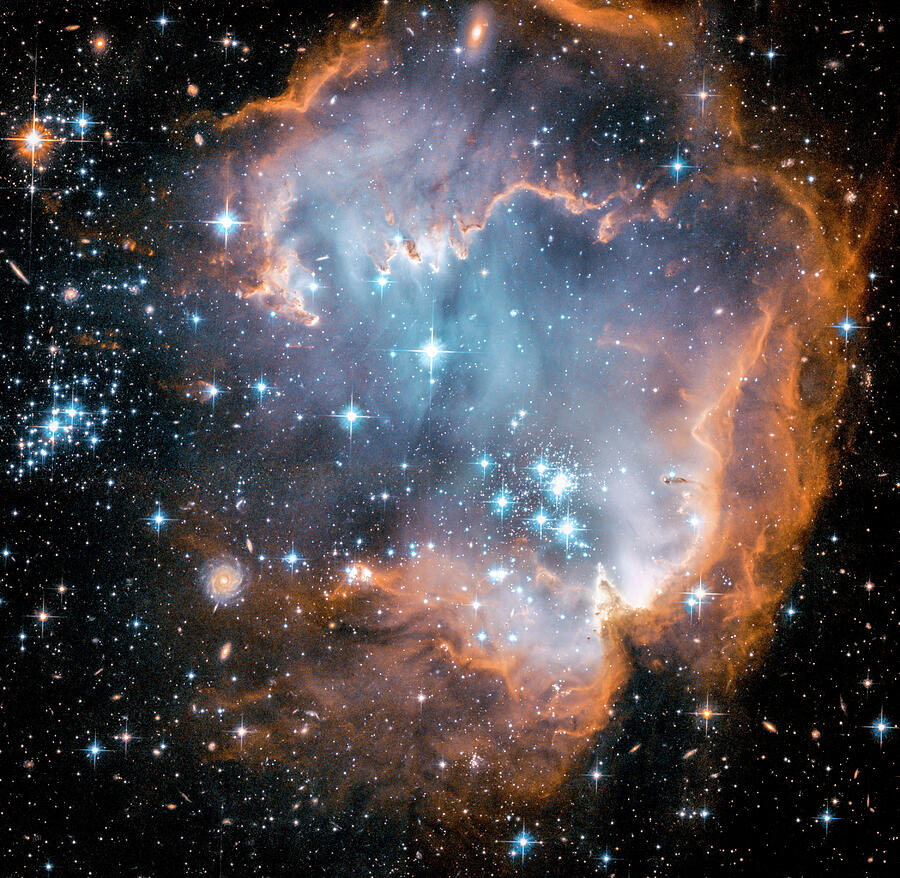
Kengo Tachihara, a lead author of the study, stated that stars on opposite sides of the SMC are moving in opposite directions. Some stars are moving toward the Large Magellanic Cloud, while others are moving away.
What did the analysis of 7,000 stars reveal?
Researchers focused on 7,000 massive young stars because these stars retain traces of the galaxy’s early dynamics and interactions. The team found an anomalous movement pattern where the galaxy is being pulled away from its own center.
The study also found that the SMC lacks clear evidence of rotation among its massive star population. This is unusual because most galaxies, including the Milky Way, follow regular rotation patterns.
How does this change the understanding of the Milky Way’s neighbors?
Researcher Satoya Nakano indicated that these findings could lead to a total revision of the historical models governing the interaction between the Milky Way, the SMC, and the LMC. This revision would likely include new estimates of the galaxy’s mass.
The process demonstrates how inter-galactic gravitational interactions can permanently alter the fate of a star system. It suggests the cosmic environment surrounding the Milky Way is more dynamic than previously thought.
What happens next for the SMC?
Astronomers are currently monitoring the galaxy to determine its final fate. The SMC could eventually split into two smaller galaxies.
Alternatively, the galaxy may be slowly absorbed by the combined gravity of the Large Magellanic Cloud and the Milky Way.
Frequently Asked Questions
What is causing the Small Magellanic Cloud to be torn apart?
The gravitational pull from the more massive Large Magellanic Cloud is the primary cause.
How did researchers discover this phenomenon?
A team from Nagoya University analyzed the movement of approximately 7,000 massive young stars within the galaxy.
Why is the lack of rotation in the SMC significant?
Most galaxies have regular rotation patterns; the absence of this in the SMC suggests its mass and structure may have been misunderstood, requiring a revision of galactic history models.
Do you think our understanding of the Milky Way’s history will change significantly as we discover more about its satellite galaxies?