
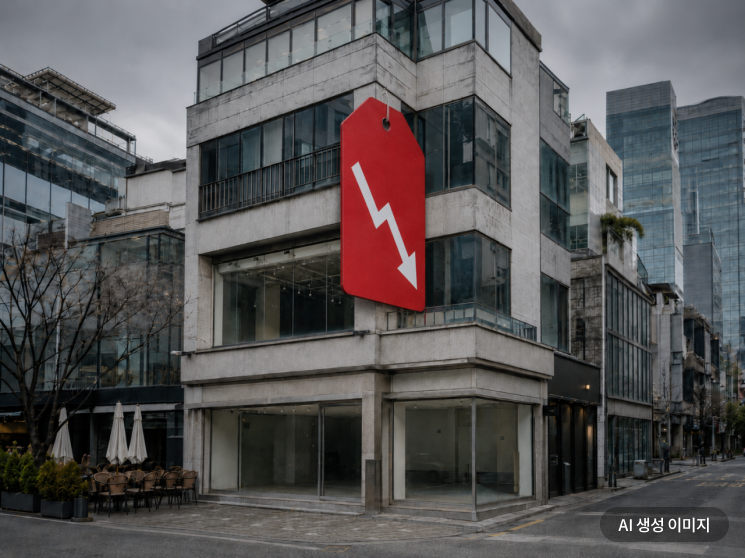
Gangnam Small Building Prices Plunge Below Asking Rates
The commercial real estate market in Seoul’s Gangnam district is experiencing a significant disconnect between seller expectations and market reality. Recent data reveals that “kkoma buildings”—small-to-medium commercial properties—are frequently selling for prices substantially lower than their initial asking prices, signaling a shift in the viability of back-street assets.
The Gap Between Asking and Actual Prices
An analysis of 25 transactions by the NAI Korea Research Center shows that actual sale prices averaged 13% lower than the original asking prices. In total, the asking prices for these properties summed to 504.69 billion won, while the actual transaction total was 420.5 billion won, representing a 16.7% decrease in total value.

The data indicates a widespread trend of price concessions. Out of the 25 transactions, 23 occurred below the asking price, with only two properties selling at the requested amount. Among these, 15 properties were sold at more than 10% below asking, four dropped by over 20%, and two saw reductions exceeding 30%.
High-Value Assets Facing Steeper Declines
The price drop is most pronounced in higher-end properties. For assets with asking prices of 30 billion won or more, the average decline was 21.9%—more than double the 9.5% drop seen in properties priced under 30 billion won. Every one of the seven high-value properties in the study sold for at least 16% less than the asking price.
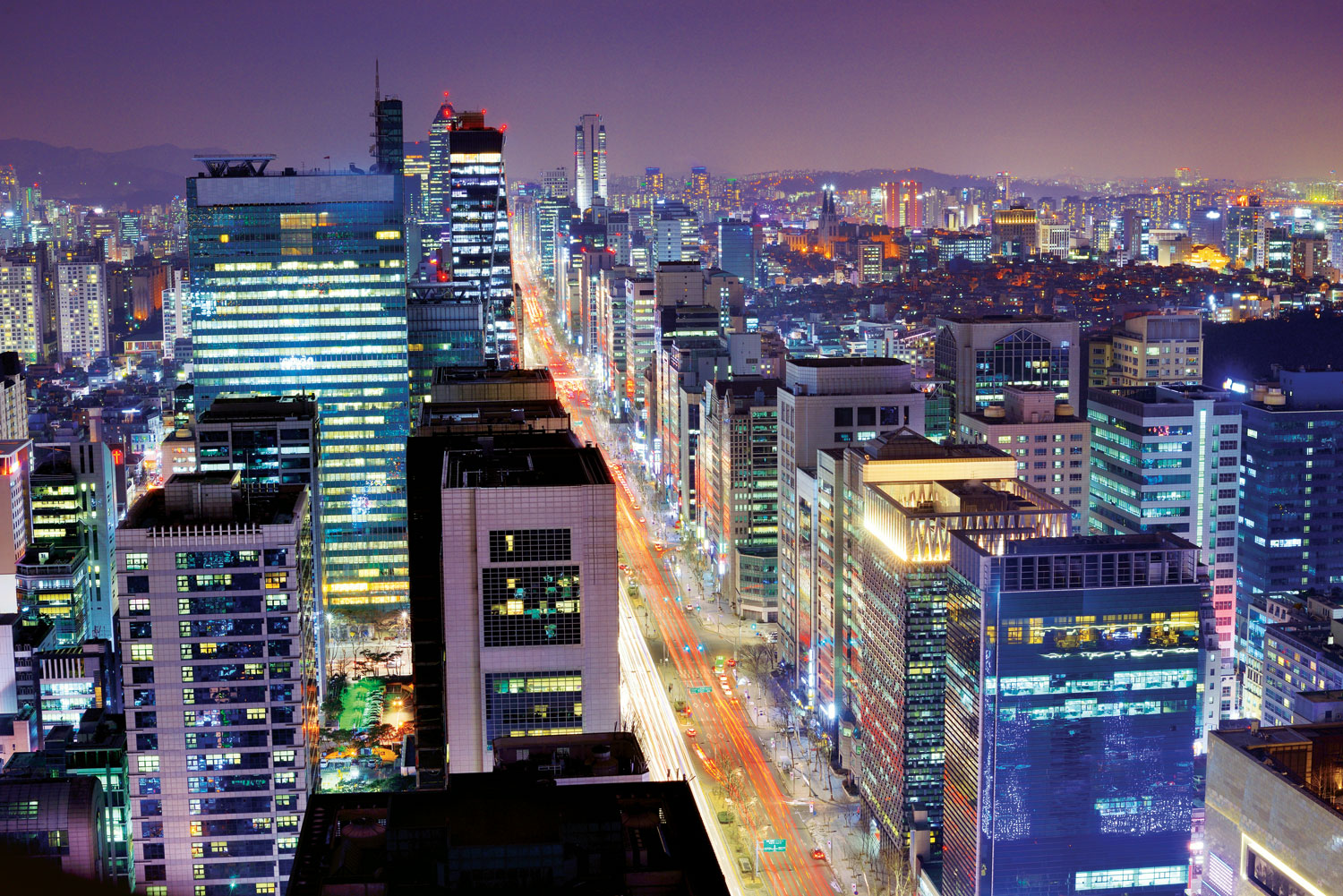
Notable examples include a new building in Daechi-dong, completed in 2023, which was listed at 33 billion won but sold for 21 billion won, a transaction rate of just 63.6%. Similarly, a building in Samseong-dong near Bongeunsa Station dropped from 43.5 billion won to 30 billion won (a 31% decrease), while a Yeoksam-dong property fell from 48 billion won to 40 billion won.
Smaller assets were not immune. A 54-pyeong building in Nonhyeon-dong sold for 3.8 billion won against a 4.2 billion won asking price, and a 115-pyeong building in Yeoksam-dong sold for 5.3 billion won, down from 6 billion won.
Celebrity Losses and Market Realities
High-profile investors are also facing losses. Singer Shin Hye-sung sold a Nonhyeon-dong building last month for 5.55 billion won, up from his 2022 purchase price of 4.9 billion won. However, when accounting for 800 million to 900 million won in remodeling and extension costs, alongside taxes and loan interest, the transaction resulted in a practical loss.
In Sinsa-dong’s Garosu-gil area, the corporation ‘The Mu’ sold a building to Noh Hong-chul last month for 15.2 billion won. The property had been purchased from entertainer Kang Ho-dong in 2024 for 16.6 billion won. Industry analysts estimate the actual loss for ‘The Mu’ exceeds 2 billion won after including acquisition taxes and financial costs.
Structural Pressures and the NPL Market
The downturn is driven by a collapse in rental demand for back-street buildings. Many startups that previously occupied these spaces are moving to co-working offices to reduce costs. The decline of night-time dining cultures following the pandemic has severely impacted neighborhood living facilities.
Financial pressures are compounding the issue. Investors who purchased properties between 2019 and 2021 during a period of low interest rates are now struggling with rising rates and vacancies. Financial institutions are strictly applying the Interest Coverage Ratio (RTI) for loan extensions, increasing pressure on leveraged owners.
This instability is reflected in the Non-Performing Loan (NPL) market. According to a January report by Samil PwC, the average sale rate for bank NPLs was 87.3% in 2023 and is projected to drop to 68.4% by the fourth quarter of 2025, indicating that collateral properties are yielding lower returns for investors.
Outlook for the Second Half of the Year
While transaction volumes appear to be rising—with Gangnam transactions increasing from 16 in January to 27 in April—experts caution that This represents often the result of sellers lowering prices rather than a market recovery.
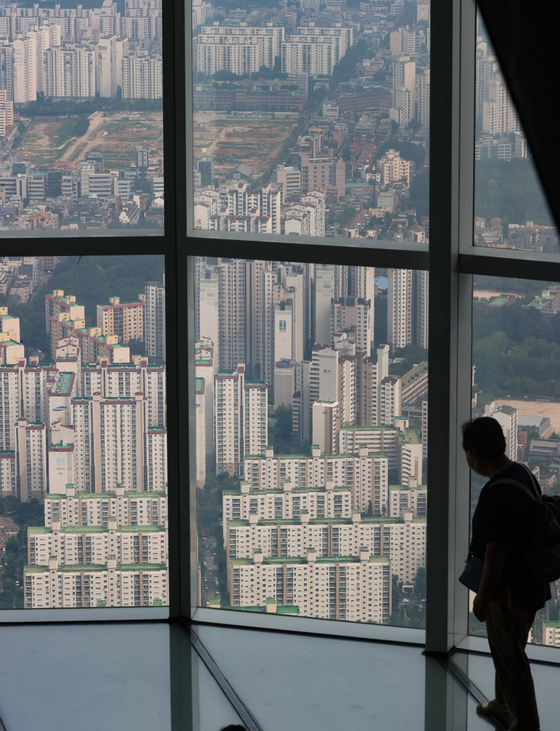
Future market performance is likely to be characterized by sharp polarization. Properties on main roads with stable rental demand or those in core commercial areas with high tourist traffic may maintain their value. Conversely, back-street buildings with high vacancy risks may undergo further devaluation.
Frequently Asked Questions
Why are Gangnam kkoma buildings selling below asking prices?
The decline is attributed to weakened rental demand as startups move to co-working spaces and night-time dining districts decline. This is exacerbated by rising interest rates and strict loan extension requirements (RTI).
How does the price drop differ between expensive and cheaper buildings?
High-value properties (asking price over 30 billion won) have seen a much steeper average decline of 21.9%, compared to a 9.5% decline for properties priced under 30 billion won.
Is the increase in transaction volume a sign of market recovery?
Not necessarily. While the number of deals has risen, many are only occurring because sellers have significantly lowered their asking prices to attract buyers.
Do you believe the trend toward co-working spaces will permanently lower the value of small commercial buildings in urban centers?