
Google’s AirDrop-Like File Sharing: Supported Android Devices List
Breaking the Walls: The Era of Cross-Platform Seamlessness
For years, the tech industry has been defined by “walled gardens.” Apple had AirDrop, Samsung had Quick Share, and Google had Nearby Share. If you were an Android user trying to send a high-resolution video to an iPhone user, you were usually forced into the clumsy dance of emailing a file to yourself or uploading it to a cloud service just to download it seconds later on another device.
That era is officially ending. The recent expansion of unified sharing protocols across the Pixel 10 series, Samsung’s upcoming Galaxy S26 lineup, and various OPPO and Vivo devices signals a fundamental shift. We are moving toward a world where the brand of your smartphone no longer dictates how you share your digital life.
Beyond File Sharing: What Happens When Android and iOS Truly Talk?
While the ability to send a photo from a Pixel to an iPhone is a huge win, it is only the first domino to fall. The real trend we are seeing is universal interoperability. We aren’t just talking about files; we are talking about a seamless transition of state across different operating systems.
Imagine a future where your “Universal Clipboard” works across a Samsung tablet and a MacBook, or where a “Handoff” feature allows you to start a draft in an Android app and finish it on an iPad without a third-party cloud sync. Here’s the logical conclusion of the current trend: the hardware becomes agnostic, and the service becomes the priority.
We’ve already seen this with the adoption of RCS (Rich Communication Services) on iPhones. By removing the “green bubble” stigma, the industry is admitting that user experience outweighs ecosystem lock-in.
The Role of AI in Ecosystem Integration
The integration of AI, specifically Large Language Models (LLMs) like Google Gemini and Apple Intelligence, will accelerate this trend. AI doesn’t care about the OS; it cares about the data.
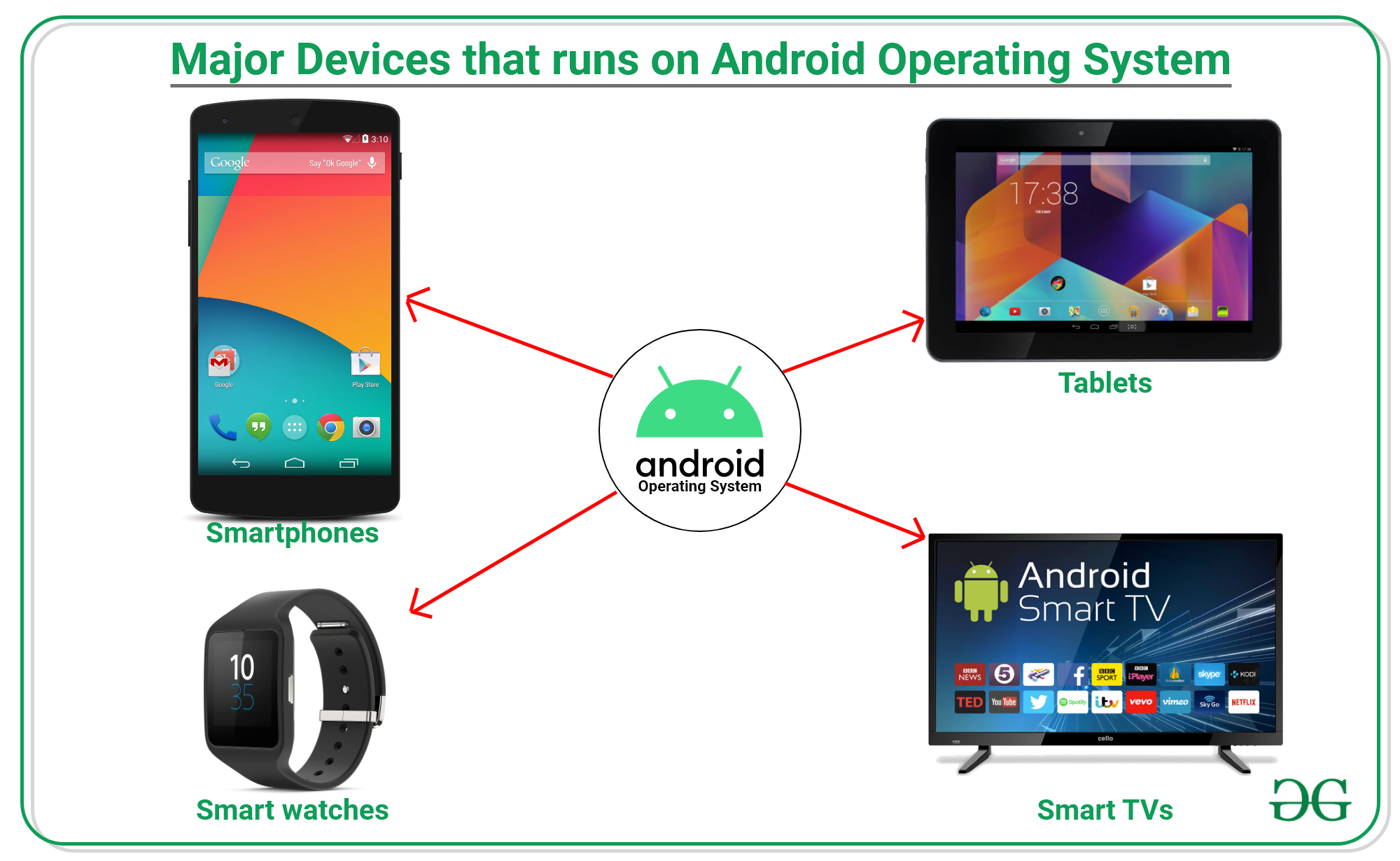
In the coming years, AI agents will likely handle the “sharing” for us. Instead of manually selecting a file and choosing a recipient, you’ll simply tell your AI, “Send the project photos to Sarah,” and the AI will determine the fastest, most secure protocol—whether it’s a unified AirDrop-style transfer or a secure cloud link—regardless of whether Sarah uses a Vivo, a Pixel, or an iPhone.
Why This Matters for the Average User
For the average consumer, this shift removes the “fear of switching.” One of the biggest reasons people stay with a brand they might actually dislike is the perceived cost of leaving—the fear that they will lose the ability to easily share files with their family or colleagues.
When the “sharing tax” is removed, manufacturers can no longer rely on lock-in to keep customers. They must instead compete on actual hardware quality, camera performance, and software innovation. This is a massive win for the consumer, as it forces companies like Samsung, Google, and Apple to innovate faster.
Consider the workplace: in a corporate environment with a mix of BYOD (Bring Your Own Device) policies, a unified sharing standard reduces IT friction and increases productivity. No more struggling with proprietary transfer apps during a quick meeting; just a simple, encrypted tap-and-send.
Security in an Open Ecosystem
A common concern with opening these walls is security. However, the trend is moving toward end-to-end encryption (E2EE) as the baseline. The new sharing protocols aren’t just about opening a door; they are about building a secure, encrypted tunnel between two devices that trust each other, regardless of the logo on the back of the phone.
By using public-key cryptography, these devices can verify the identity of the recipient before the transfer begins, ensuring that your private data doesn’t end up in the wrong hands just because the system is more “open.”
Frequently Asked Questions
Will old Android phones get this updated sharing functionality?
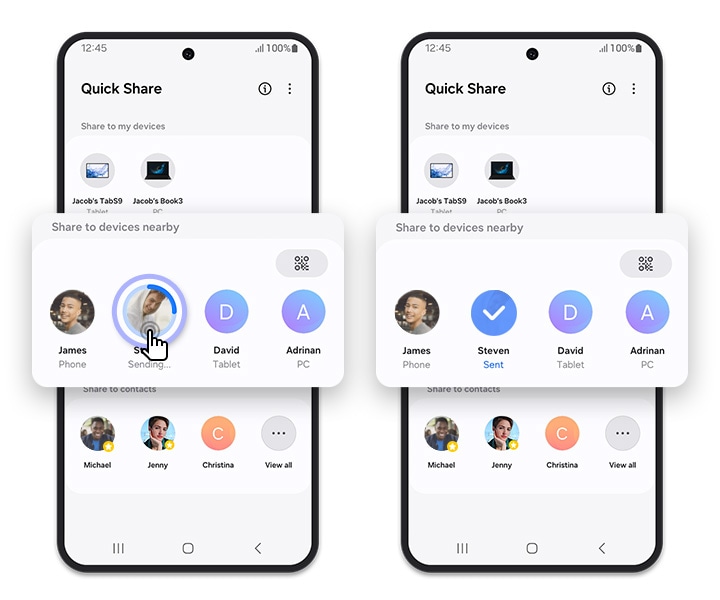
While the latest flagships like the Pixel 10 and Galaxy S26 are the primary targets, many of these features are implemented via system updates. Check your “Quick Share” settings to see if your device has been updated to the latest unified standard.
Is this the same as using Google Drive or iCloud?
No. Cloud services upload a file to a server and then download it. Unified sharing (like AirDrop/Quick Share) uses a direct peer-to-peer connection (Bluetooth/Wi-Fi Direct), making it significantly faster and more private for local transfers.
Does this mean I can now use iMessage on Android?
Not exactly. While file sharing and RCS (texting) are becoming universal, proprietary apps like iMessage still maintain their own closed servers. However, the trend toward interoperability suggests that more “bridge” features will arrive soon.
What do you think?
Are you staying with your current phone brand because you love the hardware, or because you’re afraid of losing your ecosystem perks? Let us know in the comments below!
Want more tech insights? Subscribe to our newsletter for the latest on mobile trends and hardware leaks.