

How Bees Stay Cool: New Research on Bumblebee Flight & Heat Regulation
The Buzz About Bee Cooling: How Tiny Engineers Inspire Climate Resilience
Bees, particularly bumblebees, are aerial athletes, capable of sustained flight at speeds reaching 22 kilometers per hour. This intense activity generates significant heat, posing a critical challenge to their survival. Recent research reveals the surprisingly effective cooling mechanisms these insects employ, offering insights that extend far beyond the world of entomology.
Self-Cooling Flight: A Natural Air Conditioner
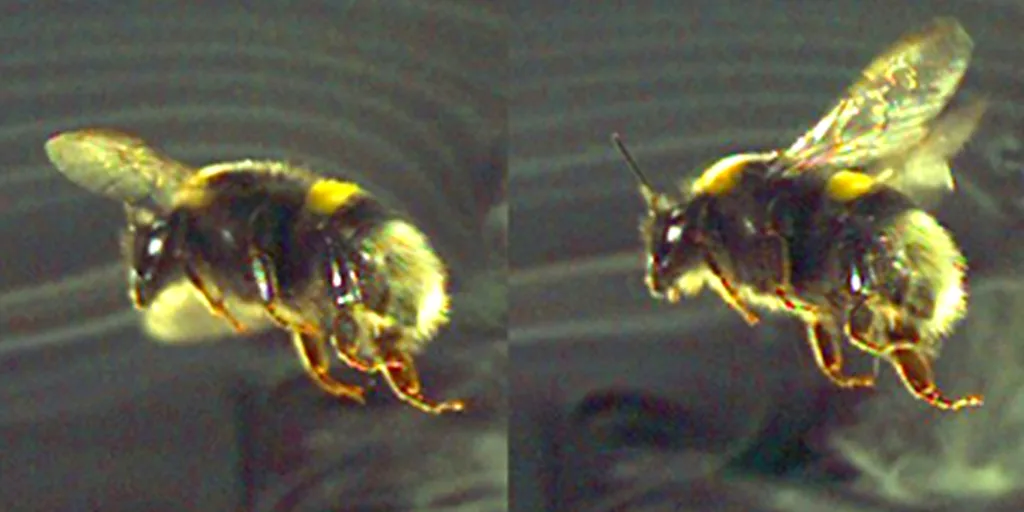
A groundbreaking study published in Proceedings of the Royal Society B: Biological Sciences demonstrates that the airflow created by a hovering bumblebee can reduce its body temperature by as much as 5°C. This self-generated breeze acts as a natural air conditioner, preventing overheating during strenuous flight. Art Woods, an insect physiologist at Montana State University, emphasizes the significance of this finding, stating it’s crucial for understanding how insects will cope with a warming planet.
The fascination with insect flight dates back centuries, with Leonardo da Vinci meticulously studying dragonflies to inform his own flying machine designs. Modern research has shifted focus to the metabolic heat produced by flight muscles. Bees, for example, can raise their body temperature over 30°C above ambient temperature by shivering their flight muscles on cold mornings – essentially “warming up” their engines before takeoff, as Jordan Glass, lead author of the study from the University of Wyoming, aptly puts it.
Beyond Airflow: A Multi-faceted Cooling System
While airflow is a key component, bees utilize a suite of strategies to regulate their temperature. They employ a circulatory fluid called hemolymph to transfer heat from the thorax (chest) to the cooler abdomen. Researchers are also investigating the role of evaporative cooling and the impact of solar radiation. Creating a comprehensive “thermal balance model” for bumblebees proved challenging, however, as no one had previously quantified the cooling effect of self-generated airflow.
To measure this effect, researchers used sensors to track airflow around hovering bees in a controlled chamber, recording speeds between 0.25 and 2 meters per second. They then used a fog created with dry ice and water to visualize the airflow patterns. Further experiments involved implanting tiny temperature sensors into 18 anesthetized bees, exposing them to simulated flight conditions in a wind tunnel. The results were striking: without the cooling effect of airflow, hovering bees would overheat and crash within two minutes.
Implications for a Warming World: Bio-Inspired Engineering & Conservation
This research isn’t just about bees; it has broader implications for bio-inspired engineering and conservation efforts. Understanding how insects manage thermal stress can inform the design of micro-aerial vehicles (MAVs) – tiny drones – that operate more efficiently in varying temperatures. The principles of bee cooling could be applied to improve the thermal management of small electronics and robotics.
More critically, the findings highlight the vulnerability of insect populations to climate change. As temperatures rise, the energetic cost of flight increases, potentially exceeding the limits of an insect’s physiological capacity. This could lead to declines in pollinator populations, with cascading effects on ecosystems and agriculture. A 2020 study by the University of Sussex found that bumblebee populations are already declining at an alarming rate, with some species facing extinction due to habitat loss and climate change. Read more here.
Future Research: Unanswered Questions and Emerging Trends
Researchers are now investigating how cooling mechanisms differ during various flight maneuvers and how the dense hairs covering a bee’s thorax influence heat transfer. They are also exploring the potential for genetic adaptation to warmer temperatures. The development of more sophisticated thermal models will be crucial for predicting the long-term survival of bees and other pollinators in a changing climate.
The field of thermal biology is experiencing a surge in interest, driven by the urgency of climate change. Scientists are increasingly looking to nature for inspiration, studying how animals have evolved to cope with extreme temperatures. This bio-inspired approach holds promise for developing innovative solutions to a wide range of challenges, from energy efficiency to human health.
Frequently Asked Questions (FAQ)
- Why is overheating a problem for bees? Bees generate a lot of heat during flight. Overheating can damage their muscles and nervous system, leading to exhaustion and death.
- How do bees cool down besides airflow? Bees use hemolymph circulation, evaporative cooling, and seek shade to regulate their temperature.
- What does this research mean for climate change? It highlights the vulnerability of insects to rising temperatures and the need for conservation efforts.
- Can we apply this knowledge to technology? Yes, the principles of bee cooling can inspire the design of more efficient micro-aerial vehicles and electronic devices.
What are your thoughts on the future of bee conservation? Share your ideas in the comments below!