
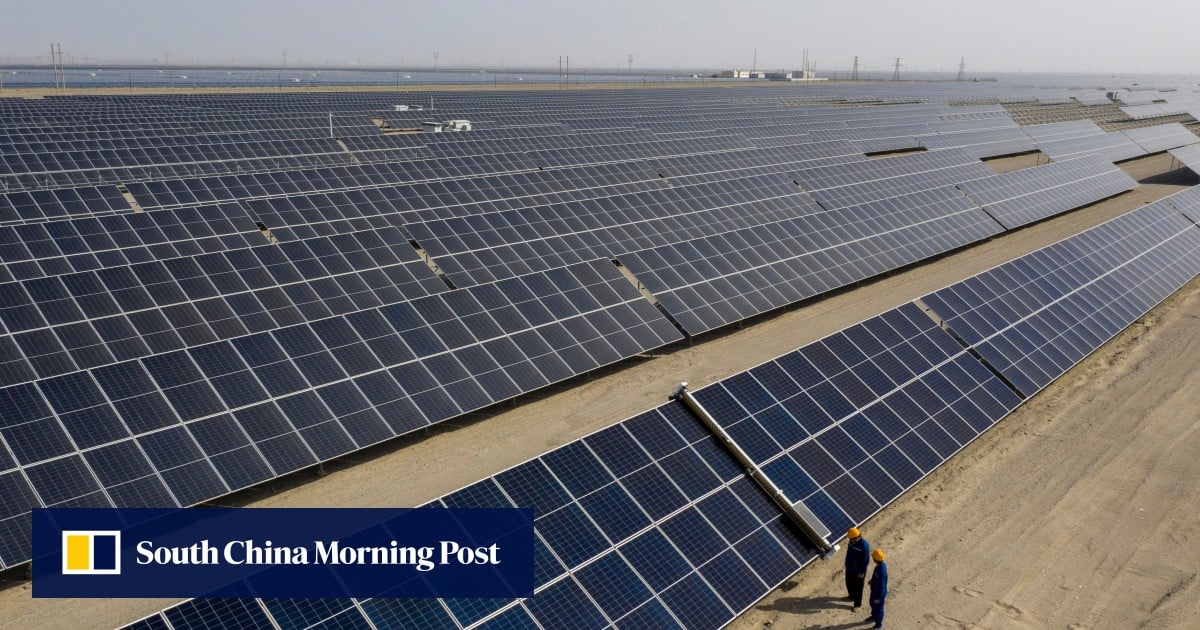
How Southeast Asia’s ambitious green transition strategy is a windfall for China
The Rise of the ‘Super Grid’: Redefining Energy Sovereignty in Southeast Asia
For decades, energy security meant one thing: owning your own resources. If you had oil or gas, you had power. But as the world pivots toward a decarbonized future, the rules of the game are changing. We are moving away from national energy silos and toward a massive, interconnected regional network.
The vision is bold: a cross-regional power grid stretching from the skyscrapers of Singapore, through the jungles of Malaysia and Thailand, all the way to southern China. This isn’t just a technical upgrade; it’s a geopolitical shift that could redefine how Southeast Asia fuels its growth.
The Singapore Blueprint: Importing Sustainability
Singapore has set a high bar, aiming to import up to 6 gigawatts (GW) of low-carbon electricity by 2035. To put that in perspective, that would cover roughly one-third of the nation’s entire power demand. Since the city-state cannot produce this energy domestically, it is turning its gaze northward.
This ambition is already manifesting in projects like the transmission of hydropower from Laos. By utilizing existing interconnectors through Thailand and Malaysia, Singapore is proving that “energy diplomacy” can work. The goal is to create a seamless flow of electrons across borders, treating electricity like a tradable commodity rather than a guarded national secret.
For more on how urban centers are adapting, check out our analysis on modern urban sustainability trends.
Why China is the ‘X-Factor’ in the Green Transition
While Southeast Asian nations provide the geography and the demand, China provides the machinery. Chinese energy firms currently hold a dominant position in the global supply chain for solar panels, wind turbines, and—crucially—High Voltage Direct Current (HVDC) technology.
HVDC is the “secret sauce” for a regional grid. Unlike traditional AC power, HVDC allows electricity to be transported over vast distances with minimal loss. As Singapore and its neighbors look to link their grids, the technical expertise and infrastructure provided by Chinese firms will likely be the backbone of the entire operation.
Beyond the Wires: The Future of Low-Carbon Trade
The trend we are seeing isn’t just about cables in the ground; it’s about the creation of a regional energy market. We are seeing a surge in bilateral and multilateral agreements between Indonesia, Vietnam, Malaysia, and Singapore to ease the trade of low-carbon electricity.
This shift creates several emerging trends:
- Energy Arbitrage: Countries with surplus renewable energy (like Laos’s hydro or Vietnam’s wind) can sell to high-demand hubs like Singapore.
- Grid Resilience: An integrated grid acts as a shock absorber. If one country faces a power shortage or a natural disaster, others can pipe in energy to prevent a total blackout.
- Standardization: To make this work, ASEAN nations must align their regulatory frameworks and technical standards, leading to deeper economic integration.
The Hurdles: Politics vs. Power
It sounds seamless on paper, but the road to a “Super Grid” is fraught with challenges. Energy is a matter of national security. The idea of relying on a neighbor—or a superpower like China—for a significant portion of your electricity can be a hard pill for some governments to swallow.
the physical infrastructure requires massive capital investment and land rights agreements across multiple jurisdictions. However, the economic incentive is becoming too large to ignore. The cost of renewable energy is plummeting, and the cost of carbon emissions is rising.
For a deeper dive into the global energy landscape, you can explore the International Energy Agency (IEA) reports on regional integration.
Frequently Asked Questions
What is the ASEAN Power Grid (APG)?
The APG is an initiative to integrate the power systems of Southeast Asian nations, allowing them to share electricity resources, increase reliability, and accelerate the adoption of renewables.
Why is Singapore importing green energy?
Due to severe land constraints, Singapore cannot produce enough solar or wind energy to meet its decarbonization targets, making imports essential.
What role does China play in this transition?
China provides the critical technology—specifically in solar, wind, and HVDC transmission—required to build and manage long-distance, cross-border energy networks.
Is a grid from Singapore to China actually possible?
Yes, technically. With HVDC technology and political cooperation between the intervening nations (Malaysia, Thailand, etc.), a physical link is entirely feasible.
What do you think? Would you trust a cross-border grid for your national energy security, or is it too risky? Let us know in the comments below or subscribe to our newsletter for more insights into the future of energy.