

How Stone Tools, Fire, And Language Paved The Highway To Artificial Intelligence
Beyond the Screen: The Next Leap in Human Evolution and Communication
For millions of years, human evolution was a slow burn of anatomical tweaks and social adaptations. From the descent of the larynx in Homo erectus to the precision of the Acheulian handaxe, our ability to communicate was tethered to our physical bodies.
But we have entered a new epoch. The “biocultural feedback loop” that once linked tool-making to brain growth has shifted. Today, the tool is no longer a stone blade; it is an algorithm. As we merge our cognitive processes with artificial intelligence, we aren’t just changing how we talk—we are changing how we think.
The End of the Vocal Era: Toward Synthetic Telepathy
For millennia, the hyoid bone and the pharyngeal cavity were the gatekeepers of human connection. Speech was our primary symbolic tool. However, we are rapidly approaching a tipping point where vocalization may become a secondary mode of communication.
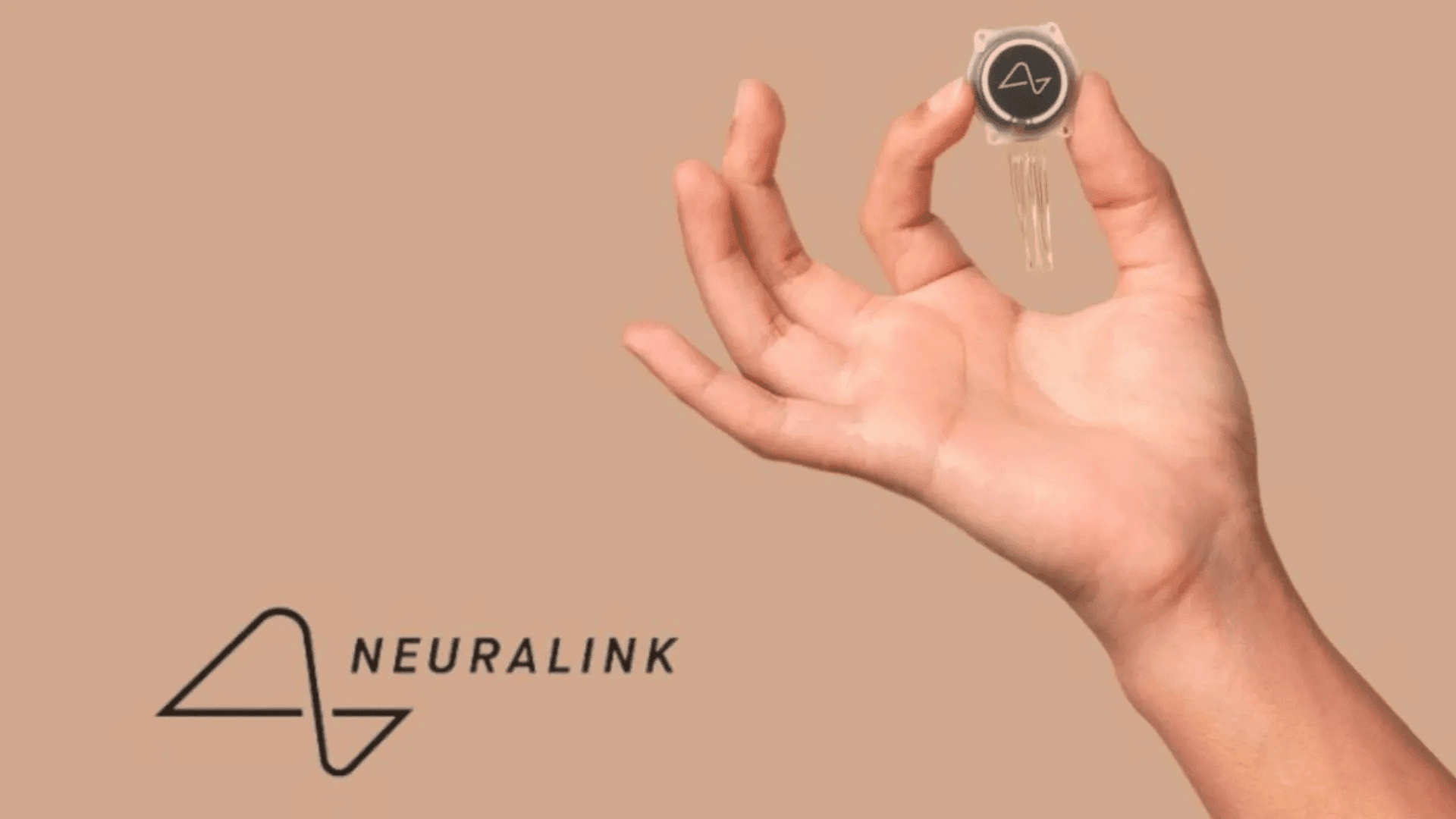
The rise of Brain-Computer Interfaces (BCIs), such as those being developed by Neuralink and Synchron, suggests a future of “synthetic telepathy.” Instead of translating a complex thought into linear words, which are then spoken and decoded by another, we may soon transmit raw conceptual data directly from one mind to another.
This shift represents a “fractalization” of communication. We are moving from the auditory (speech) to the visual (text/screens) and finally to the neural (direct data transfer). While this promises unprecedented efficiency, it risks bypassing the nuance and emotional resonance that define human empathy.
The Digital Hive Mind: Efficiency vs. Individuality
The concept of the “Borg” from Star Trek is no longer mere science fiction; it is a sociological mirror. We are already witnessing a form of “soft assimilation” through algorithmic curation.
When millions of people consume the same AI-generated summaries and interact via the same limited sets of emojis and character counts, linguistic homogenization occurs. We are seeing a decline in dialectal diversity and a rise in “algorithmic speak”—a simplified, optimized version of language designed to be understood by both humans and machines.
The Risk of Cognitive Homogenization
As we rely on Large Language Models (LLMs) to draft our emails, essays, and even our text messages, we are outsourcing the act of thinking. If the process of synthesizing a thought is what grows the brain, what happens when the synthesis is done by a third party?
This creates a paradox: while we have access to the sum of all human knowledge via global networks, our individual capacity for complex, divergent thought may be shrinking. We are trading the “depth” of the individual mind for the “breadth” of the collective network.
Post-Humanism and the New Biocultural Loop
The transition from hunter-gatherer societies to production-based economies created distinct social hierarchies. The next transition—from biological intelligence to hybrid intelligence—will likely create a new set of “cognitive classes.”
We are entering an era of Cognitive Offloading. We no longer memorize phone numbers; we offload them to the cloud. Soon, we may offload complex analytical reasoning or emotional regulation to AI implants. This represents the new biocultural feedback loop: technology enhances the brain, which in turn creates more complex technology.
Real-world examples are already emerging in “augmented reality” (AR) integration, where information is overlaid onto our visual field in real-time. This removes the gap between needing to know and knowing, effectively expanding our working memory into the digital ether.
Future Trends to Watch:
- Neural Literacy: The ability to “read” and “write” neural patterns will become as essential as reading and writing text.
- Hybrid Identity: A shift in how we define the “self,” as our memories and thoughts become intertwined with external AI databases.
- Cognitive Sovereignty: The emergence of movements dedicated to protecting the “unplugged” human mind from algorithmic influence.
Frequently Asked Questions
What is post-humanism?
Post-humanism is the theoretical stage of evolution where humans use technology (AI, genetic engineering, cybernetics) to transcend current biological limitations, altering the very definition of what it means to be human.
Will AI replace human language?
It is unlikely to replace it entirely, but it will likely transform it. We may move toward “hybrid languages” that combine spoken word with digital data bursts or neural signals for higher precision.
Is the “Hive Mind” inevitable?
While global connectivity pushes us toward uniformity, human nature has a historical drive toward differentiation and identity. The tension between collective efficiency and individual autonomy will be the defining conflict of the next century.
Join the Conversation
Are we evolving into a more connected species, or are we losing the essence of what makes us human? Do you believe the “Hive Mind” is a utopia or a dystopia?
Share your thoughts in the comments below or subscribe to our newsletter for more insights into the future of human evolution.