
:max_bytes(150000):strip_icc():focal(1065x754:1067x756)/Milano-Cortina-2026-Winter-Olympics-Armonia-ceremony-020626-176a9a9e511e4bccad3b9094ff689225.jpg "How Wheeling Shaped the Birth of West Virginia During the Civil War")
How Wheeling Shaped the Birth of West Virginia During the Civil War
West Virginia stands as the only state in American history to be carved out of another during the Civil War. In the mid-1800s, the city of Wheeling served as the epicenter for this pivotal transformation, evolving from a thriving Virginia riverside hub into the birthplace of a new state.
The Divide Between Wheeling and Richmond
By the early 1860s, Wheeling was the second-largest city in Virginia, trailing only Richmond. Its growth was fueled by a robust economic base, supported by the B&. O Railroad, the National Road, the Ohio River, and the new Suspension Bridge.
Despite this prosperity, a deep divide existed between the northwestern region and the state’s eastern and southern portions. Beyond the physical barrier of the Appalachian Mountains, residents in the west felt forgotten by the leadership in Richmond.
Hal Gorby, a historian and professor in the Department of History at West Virginia University, noted that tensions had been brewing for a decade prior to the Civil War. These conflicts centered on economic development, taxation, and a lack of funding for public education and infrastructure.
The Influence of Media and Ideology
Industrialization played a key role in shaping the region’s identity. Wheeling developed a thriving manufacturing base focused on glass, nails, and iron, making it more connected to Pennsylvania and Ohio than to eastern Virginia.

While slavery existed in the area, it was not the primary economic driver as it was in the east. This created a cultural shift toward wage labour and anti-slavery sentiment in northwestern Virginia.
The Daily Intelligencer, West Virginia’s oldest daily newspaper, became a powerful voice for these views under the editorship of Archibald Campbell. Campbell transitioned the paper into a pro-union, anti-slavery, and pro-abolitionist publication that campaigned vigorously for Abraham Lincoln.
The Path to Statehood
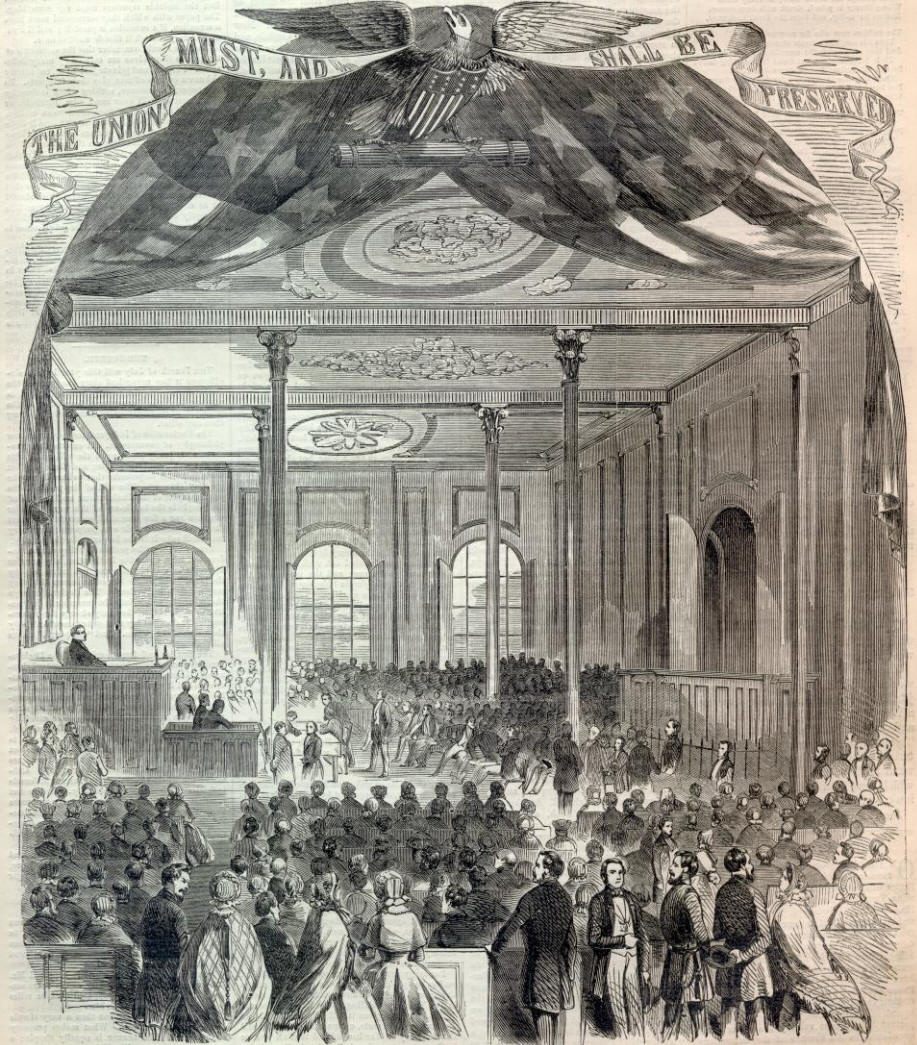
When Virginia seceded from the Union in April 1861, opposition mounted in the northwestern counties. Delegates gathered in Wheeling to establish the Restored Government of Virginia, which remained loyal to the Union.
These historic actions took place in the third-floor district federal courtroom of the Custom House, now known as West Virginia Independence Hall. This site hosted the Wheeling Conventions of 1861 and became the foundation for the new state.
Following urging from Archibald Campbell to President Lincoln, West Virginia officially became the 35th state in the union on June 20, 1863.
A Shifting Capital
Wheeling served as the capital for the Restored Government of Virginia from 1861 to 1863 and subsequently became the first capital of the new state. Its financial and banking capital made it a logical centre for regional investment.
The state later experienced a “floating capital” era. The capital moved to Charleston in 1870, returned to Wheeling in 1875 due to Charleston’s lack of established railroad and capital structures, and finally moved back to Charleston in 1885.
Despite the move, the northern part of the state maintained a strong presence through its educational institutions and industrial wealth. Today, Congress recognizes Wheeling as a National Heritage Area for its role in westward expansion and its unique place in American history.
As historical interest continues, future analyses may explore how these early regional tensions could have influenced the long-term political landscape of the state.
Frequently Asked Questions
When did West Virginia officially become a state?
West Virginia officially became the 35th state in the union on June 20, 1863.
Where were the Wheeling Conventions held?
The conventions were held in the third-floor district federal courtroom of the Custom House, which is now known as West Virginia Independence Hall.
Why did Wheeling serve as the initial capital?
Wheeling was a centralized hub with pro-union views, an anti-slavery economic structure, and significant financial and banking capital that supported the development of other towns in the region.
How do you think the geographic and economic divide between regions continues to shape state identities today?