
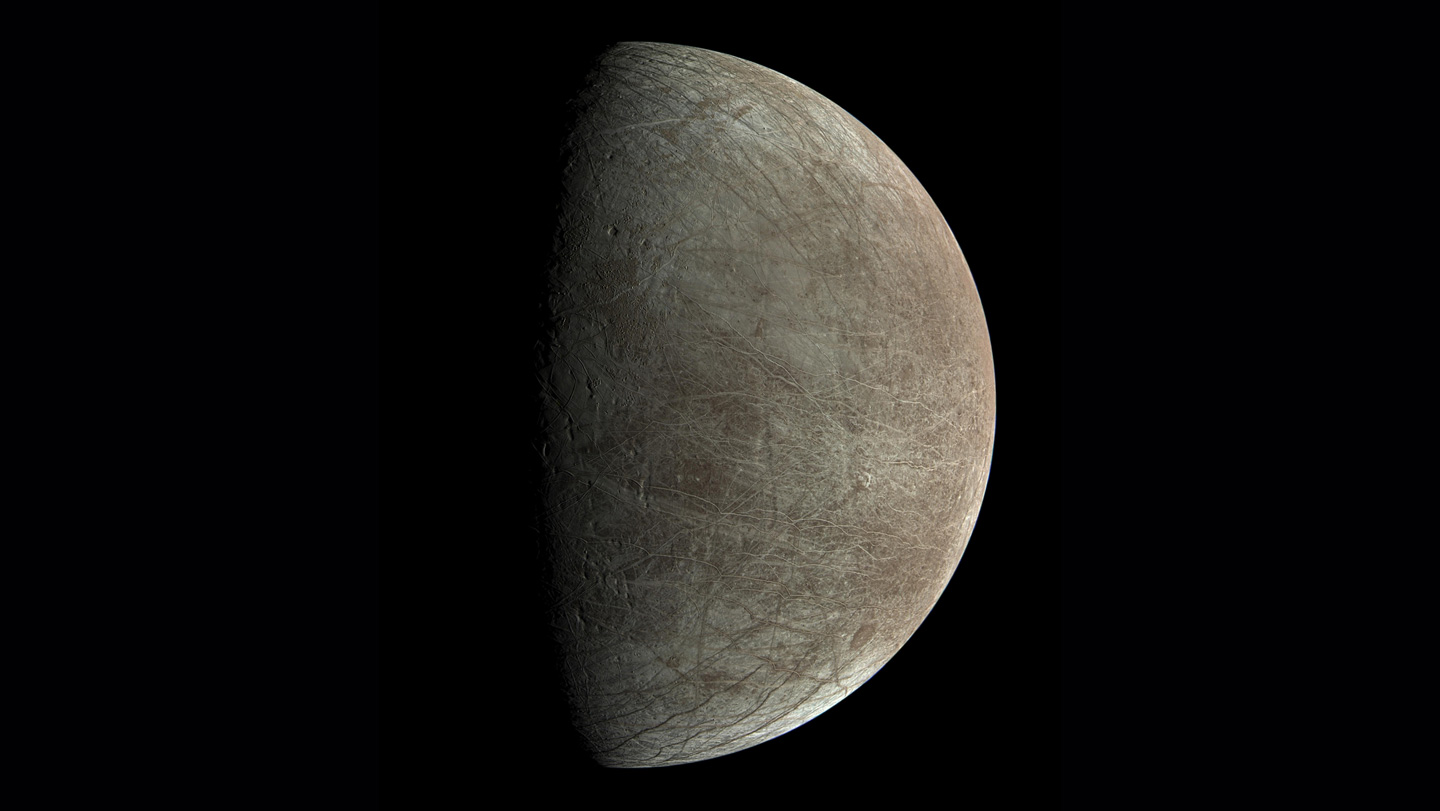
Hubble Finds No Evidence of Water Plumes on Jupiter’s Moon Europa
Recent observations of Jupiter’s icy moon, Europa, indicate that previously detected water plumes have vanished. An analysis of nearly a decade of Hubble Space Telescope data suggests there is no longer strong evidence for the vapor jets reported 13 years ago.
The Vanishing Plumes of Europa
Planetary astronomer Lorenz Roth of the KTH Royal Institute of Technology in Stockholm reports that the evidence for these plumes has disappeared. The findings were detailed in the May issue of Astronomy & Astrophysics.
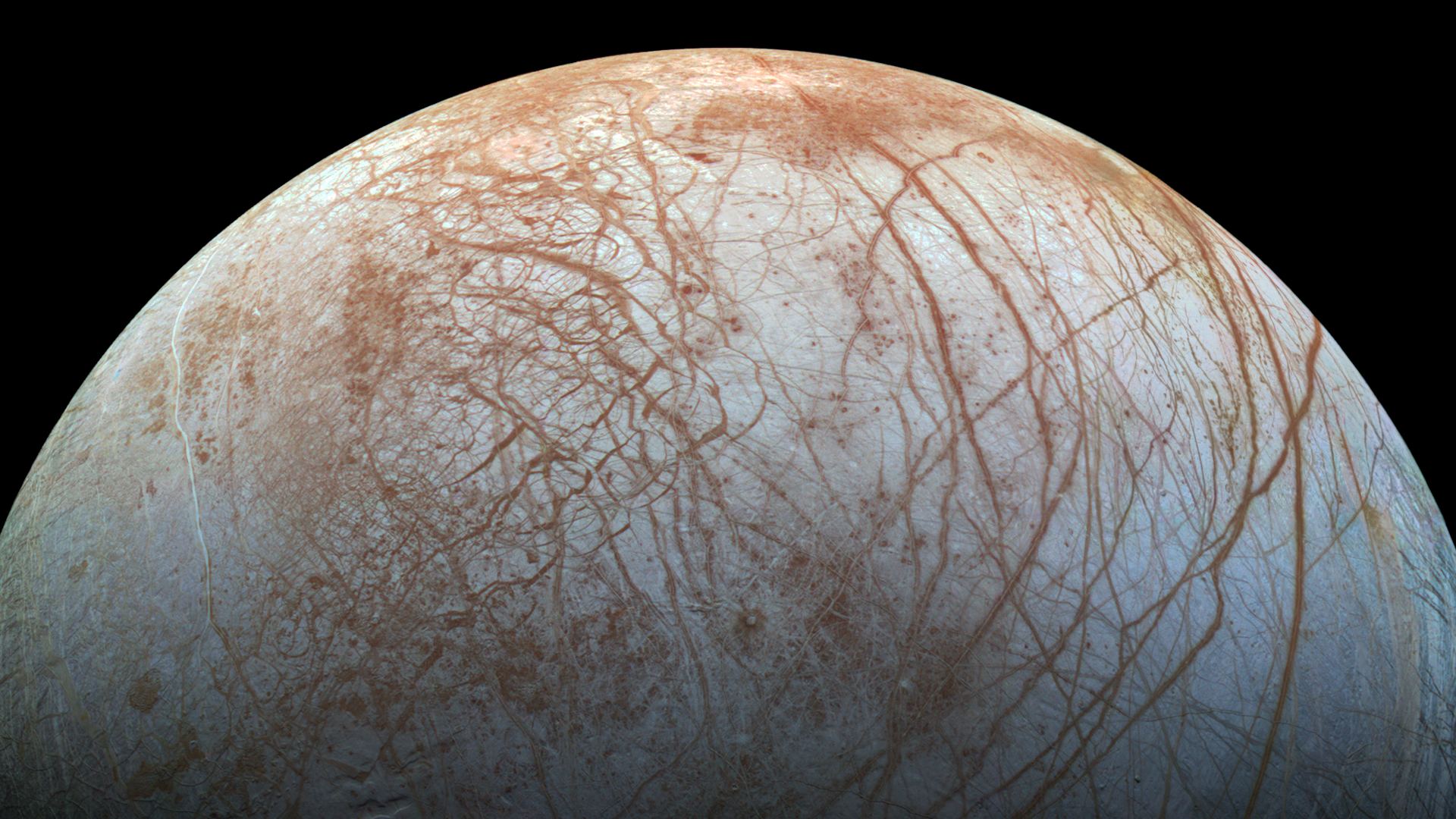
In 2013, Roth and his colleagues identified excess ultraviolet light from oxygen and hydrogen atoms near Europa’s south pole. This led to the belief that cracks in the icy surface intermittently released water from a subsurface ocean into space.
Implications for the Search for Life
The presence of a subsurface ocean makes Europa one of the most promising locations in the solar system to search for life. These plumes were significant because they could allow a spacecraft to sample the ocean by flying through them.
Without these jets, scientists cannot easily access the water without landing on the surface or drilling through the ice. This “vanishing act” complicates the current understanding of how to study the moon’s biological potential.
Analyzing the Hubble Data
The new study analyzed 20 Hubble observations from 2013 to 2020, alongside three earlier observations from 1999, and 2012. Researchers used improved methods to constrain Europa’s edges to ensure higher accuracy.
The team also integrated new knowledge regarding Europa’s extensive hydrogen exosphere. Despite these refined methods, the ultraviolet excess previously observed has disappeared.
Future Exploration and Possibilities
While Hubble has not found current evidence, smaller plumes could still exist undetected. A possible next step involves the use of more advanced instrumentation to locate these smaller features.
NASA’s Europa Clipper spacecraft is expected to arrive at Jupiter in April 2030. This mission may have the instruments necessary to find smaller plumes that Hubble could not detect.
Roth suggests that it is unlikely evidence will be found before the arrival of the Europa Clipper. This leaves a period of approximately four years of uncertainty.
Frequently Asked Questions
What was the original evidence for the plumes?
In 2013, researchers reported excess ultraviolet light from hydrogen and oxygen atoms hovering around Europa’s south pole.
Why are plumes important for studying Europa?
Plumes could allow a spacecraft to take a sample of the inner ocean by flying by, avoiding the need to land or drill through kilometers of ice.
When will the Europa Clipper arrive?
The spacecraft is scheduled to arrive at Jupiter in April 2030.
Do you believe the search for life in our solar system should prioritize icy moons over rocky planets?