
Humpback Whale Tracked for 215 Kilometers After Rescue from Baltic Sea
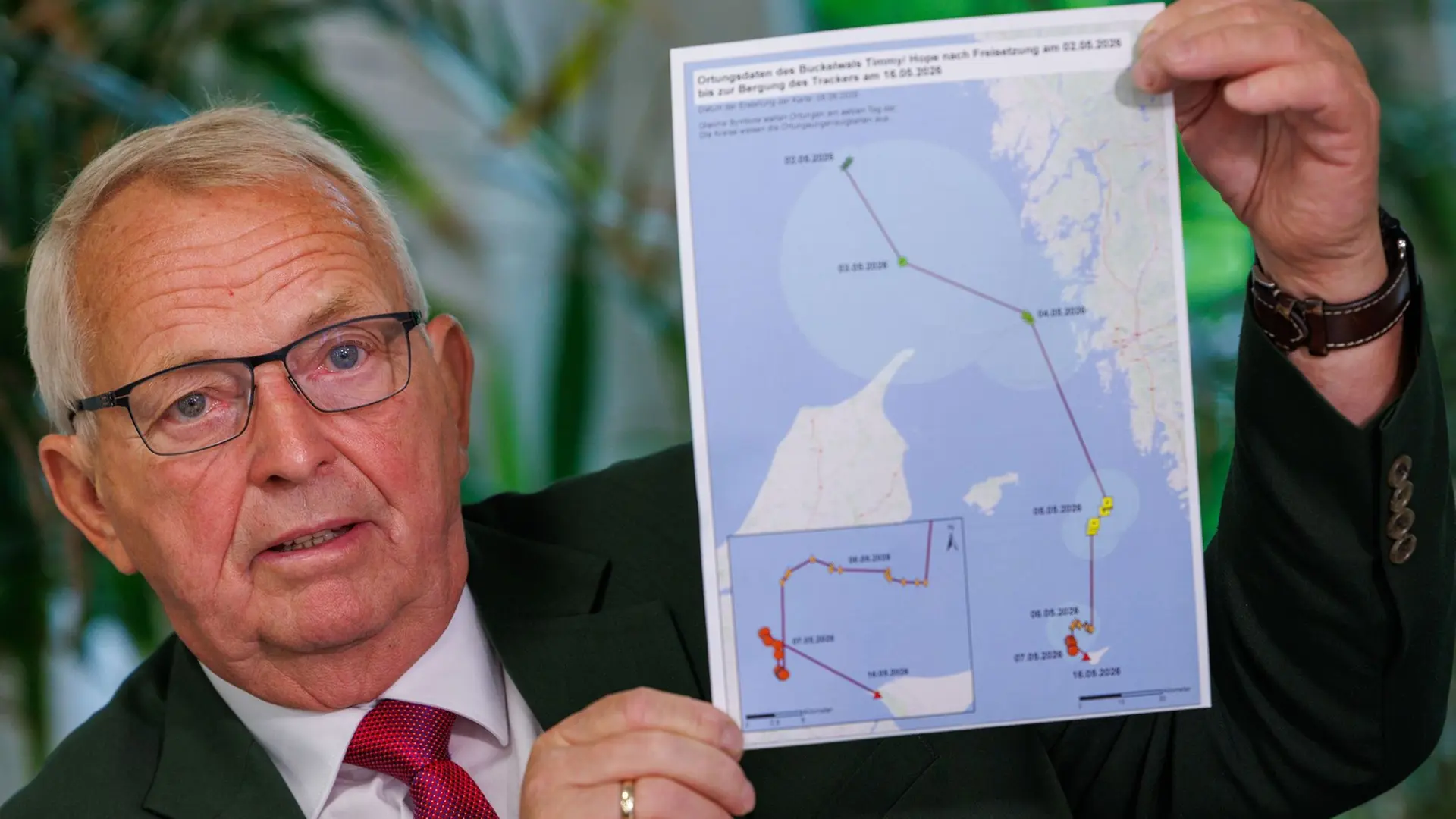
A humpback whale, which was rescued and released off the coast of Poel on May 2, survived for several days before dying, according to data released by Mecklenburg-Vorpommern’s Environment Minister, Till Backhaus. Tracking information shows the whale traveled approximately 215 kilometers west of Skagen before the transmitter stopped sending signals on May 6 or 7. While the cause of death remains under investigation, officials confirmed that the whale’s carcass was discovered on May 14 near the Danish island of Anholt.
Did You Know? The tracking device attached to the whale’s dorsal fin remained functional after the animal’s death, providing researchers with significant data regarding water temperatures, dive depths, and the whale’s movement patterns that are still being analyzed.
What do the movement data reveal?
Data from the tracker indicate that the whale’s behavior changed significantly around May 5. According to Minister Backhaus, the whale began to slow down and remained unusually close to the water’s surface in the days leading up to the signal loss. Burkhard Baschek, director of the German Maritime Museum, stated that these findings suggest a “passive drift,” where the whale likely moved primarily with the currents toward the end of its life.

Why the whale’s condition is a focus of study
Experts suggest the whale was already in a weakened state at the time of its release. Before the intervention, the animal had stranded multiple times and exhibited signs of disorientation. Baschek noted that the recorded swimming speed and distance were consistent with a significantly compromised animal, making its ultimate failure to survive in the Baltic Sea a result that was not unexpected from a scientific perspective.
Expert Insight: The death of this humpback whale highlights a critical gap in regional emergency protocols. While the transport and release were conducted under a maritime expert assessment—covering ship stability and animal welfare—the lack of established, standardized procedures for large whale incidents in German waters suggests that future operations will require more clearly defined institutional roles and scientific coordination.
Ongoing investigations and future protocols
Danish authorities recovered the tracker on May 16, and initial examinations of the carcass revealed no evidence of external or internal trauma, violence, or entanglement in fishing gear. Although researchers identified bacterial irregularities in one of the whale’s kidneys, experts do not believe this was the primary cause of death. Further laboratory analysis of organ samples is currently underway.
In response to the public and scientific debate surrounding the rescue, a joint federal-state working group is scheduled to begin work on June 17. This group aims to establish clear procedures for managing similar wildlife emergencies in German waters by late November. Minister Backhaus has defended the original rescue attempt as a “last chance” effort for an animal that had no long-term survival prospects in the Baltic, despite the controversy and hundreds of inquiries directed toward the state prosecutor’s office.
Frequently Asked Questions
Did the rescue attempt cause the whale’s death?
According to Minister Till Backhaus, there is currently no evidence to suggest that the release operation contributed to the whale’s death.
What was the whale’s final path?
The whale traveled approximately 215 kilometers west of Skagen after its release on May 2, with signals ending between May 6 and May 7.
Were there any signs of injury found during the examination?
No. Danish authorities and researchers found no evidence of violence, internal or external injuries, or entanglement in nets or other foreign objects.
What lessons should be prioritized as authorities develop new protocols for managing large whale strandings in the future?