
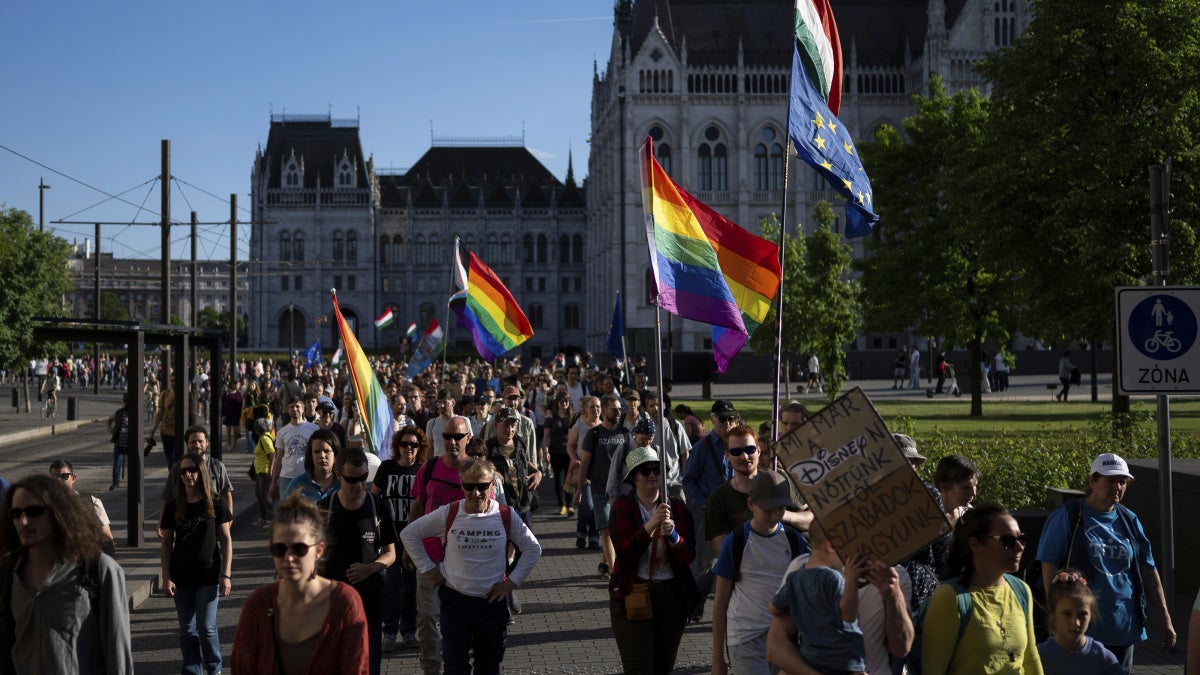
Hungary Drops Charges Against Pride Organizers Following EU Court Ruling
Hungarian prosecutors have dropped criminal charges against Budapest Mayor Gergely Karácsony and activist Géza Buzás-Hábel for organizing 2025 Pride events. This legal reversal follows a European Court of Justice (ECJ) ruling that Hungary’s 2021 anti-LGBT “child protection” law is incompatible with EU law, signaling a potential shift toward restoring the rule of law in Hungary.
Why did Hungary drop the charges against Pride organizers?
The decision stems directly from a European Court of Justice judgment. The court found that the 2021 “child protection” law, enacted during the Fidesz era, was unlawful because it violated EU standards. This law had been used as a tool to restrict LGBT rights under the guise of protecting children.
According to reports from Human Rights Watch, prosecutors used these laws to target high-profile figures. Mayor Gergely Karácsony faced fines for the June 2025 Budapest Pride march. In Pécs, Géza Buzás-Hábel—a gay Roma teacher and activist—faced up to a year in prison for organizing the city’s rural Pride event in October 2025.
Once the ECJ ruled the underlying law invalid, the legal foundation for these prosecutions vanished. Prosecutors in both Budapest and Pécs cited the ECJ ruling as the primary reason for dropping all charges.
What happens next for LGBT rights in Hungary?
The immediate trend is a move toward decriminalizing the organization of Pride events. Coming during Pride month, this announcement acts as a signal to thousands of allies and LGBT individuals that they can gather without the immediate threat of arrest or spurious fines.

However, the long-term trend depends on the newly elected parliament. The European Commission, which challenged the law, now expects Hungary to fully repeal the 2021 act. Beyond that, there’s pressure to dismantle other discriminatory constitutional amendments that have historically hampered civic space.
We’re likely to see a “domino effect” where other cases brought under similar Fidesz-era legislation are challenged. If the ECJ’s precedent holds, any law that contradicts EU human rights charters will become a liability for Hungarian prosecutors.
How does this impact the broader EU rule-of-law struggle?
This isn’t just about Pride; it’s a test of the EU’s ability to enforce its values on member states. For years, the former Hungarian government engaged in what the European Commission described as a systematic attack on the rule of law. By successfully challenging the “child protection” law, the EU has proven that its judicial mechanisms can override domestic legislation that violates fundamental rights.
Contrast this with the previous years: between 2021 and 2025, the trend was toward tightening control and narrowing the space for civic activism. Now, the momentum is shifting toward alignment with Brussels. This creates a legal blueprint for other EU nations facing similar democratic backsliding.
Comparing the Legal Shift
The difference in the legal environment is stark when you look at the evidence:

- Fidesz-era Approach: Used “child protection” as a pretext to criminalize Pride organizers; focused on fines and imprisonment.
- Post-ECJ Approach: Recognition of EU law supremacy; dropping of charges against political and civic leaders.
Frequently Asked Questions
What was the 2021 “child protection” law?
It was a piece of legislation that restricted the depiction of LGBT themes and the organization of Pride events, which the ECJ later ruled was incompatible with EU law.
Who is Gergely Karácsony?
He is the Mayor of Budapest who was targeted by prosecutors for his role in organizing the 2025 Pride march.
Can Pride events now be held legally in Hungary?
Yes. With the charges dropped and the underlying law ruled unlawful by the ECJ, organizers and attendees have a much stronger legal shield.
What do you think about the EU’s role in shaping domestic laws in member states? Does this set a positive precedent for other countries? Let us know in the comments below or subscribe to our newsletter for more updates on European human rights.