
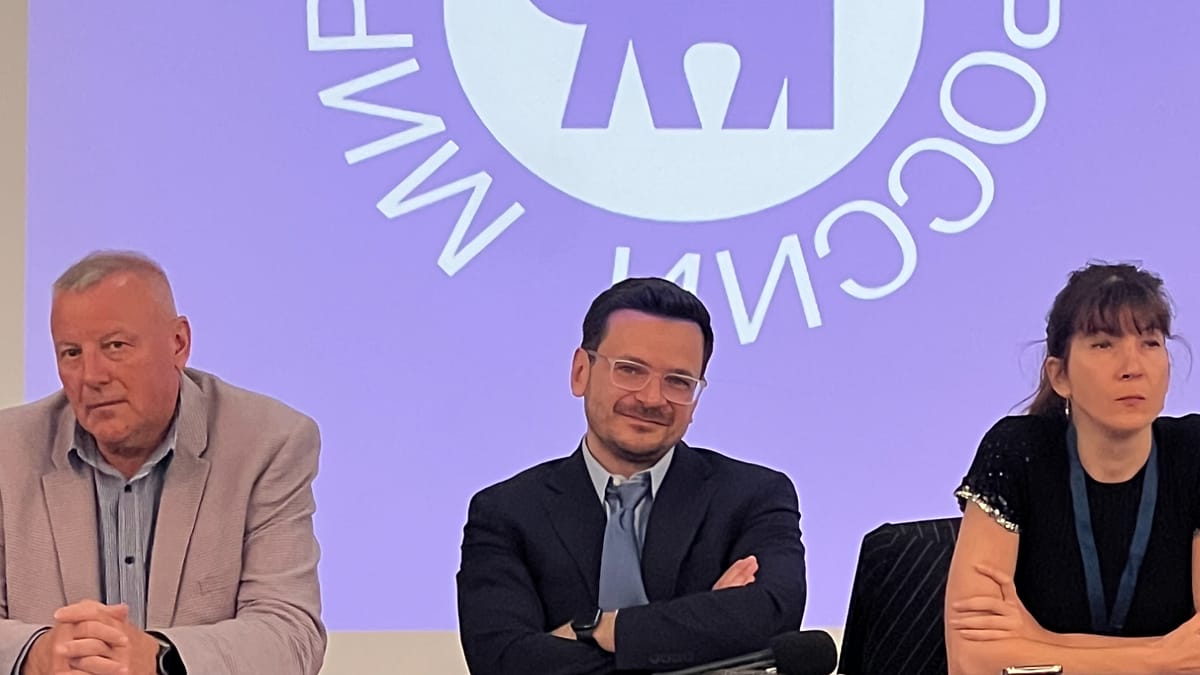
Ilya Yashin Elected Leader of New Russian Opposition Party Peaceful Russia
Ilya Yashin was elected chairman of the new Russian opposition party “Peaceful Russia” during a congress in Berlin on June 12-13. According to Igor Kachetkov, Yashin secured roughly 60 percent of the vote among 126 delegates to lead a movement targeting supporters within Russia from exile.
Why did the party rename itself to Peaceful Russia?
The party dropped the word “Forces” from its original name, “Peaceful Forces of Russia,” to distance itself from specific political connotations. Igor Kachetkov, a human rights activist and member of the organizing committee, told Euronews the change was intended to avoid associations with repression in Russia and the ongoing war in Ukraine.
Delegates spent twelve hours during the congress adopting the party program and debating leadership. Alexander Archagov, a party delegate, told Euronews that Yashin’s experience and ability to inspire people were key factors in his election.
How will the party reach supporters inside Russia?
The party’s primary target audience remains within Russian borders, despite its leadership being based in Europe. Ilya Yashin told Euronews that the party plans to work with people in Russia “discreetly” because cooperation carries significant legal and personal risks for citizens.

Yashin acknowledged that “Peaceful Russia” cannot operate legally under current Russian law. To justify the strategy of organizing from abroad, he cited the Bolshevik Party as a historical precedent. Vladimir Lenin and other leaders lived in exile before the 1917 Russian Revolution and eventually took power.
However, a critical distinction exists: there are no historical records of a democratic opposition party returning from exile to govern Russia. This gap creates a precarious path for Yashin’s movement compared to the authoritarian model established by the Bolsheviks.
Why are some delegates warning against the party’s leadership style?
Internal tensions emerged during the Berlin congress, specifically regarding the concentration of power. Maxim Reznik, a former member of the St. Petersburg Legislative Assembly, expressed concern that Yashin could become a “mini-Putin.”
Reznik told Euronews he fears Yashin is acting as a “self-centered Moscow political boss,” a trait he claims has plagued the opposition. Reznik specifically criticized the party’s organizational structure, arguing that Yashin is attempting to recreate a model based on the Communist Party of the Soviet Union (CPSU).
According to Reznik, the party needs a leader capable of treating people across different regions as equals rather than following a top-down hierarchy.
What determines the success of an opposition party in exile?
The ability to influence events inside Russia from Europe remains limited. Andreas Heinemann-Grüder, a Russia expert at the University of Bonn, suggests that the new party must avoid the pitfalls of previous liberal movements.
Heinemann-Grüder pointed to the experience of Yabloko, a liberal party founded in 1993, as a case study. He argues that for “Peaceful Russia” to succeed, it must meet three criteria:
- Decentralization: Moving away from a single “boss” model.
- Ethnic Diversity: Reflecting the multicultural reality of the Russian Federation.
- Diaspora Integration: Effectively representing Russians living across the European Union.
Without these elements, Heinemann-Grüder told Euronews that the party may struggle to overcome the fragmentation that has historically weakened the Russian opposition.
Frequently Asked Questions
Who is the chairman of Peaceful Russia?
Ilya Yashin, a Russian opposition politician and former political prisoner, was elected chairman with approximately 60 percent of the vote.
Where is the party based?
The party is currently based in Europe, with its most recent congress held in Berlin.
Is Peaceful Russia legal in Russia?
No. Ilya Yashin has acknowledged that the party cannot operate legally within the Russian Federation.
What was the party’s original name?
The party was originally called “Peaceful Forces of Russia” before removing the word “Forces” to avoid associations with repression.
What do you think about the strategy of organizing a political party from exile? Can a democratic movement succeed without a legal presence in its home country? Share your thoughts in the comments below or subscribe to our newsletter for more updates on global political shifts.