
India-Italy Defense Ties: From AgustaWestland Scandal to Strategic Partnership
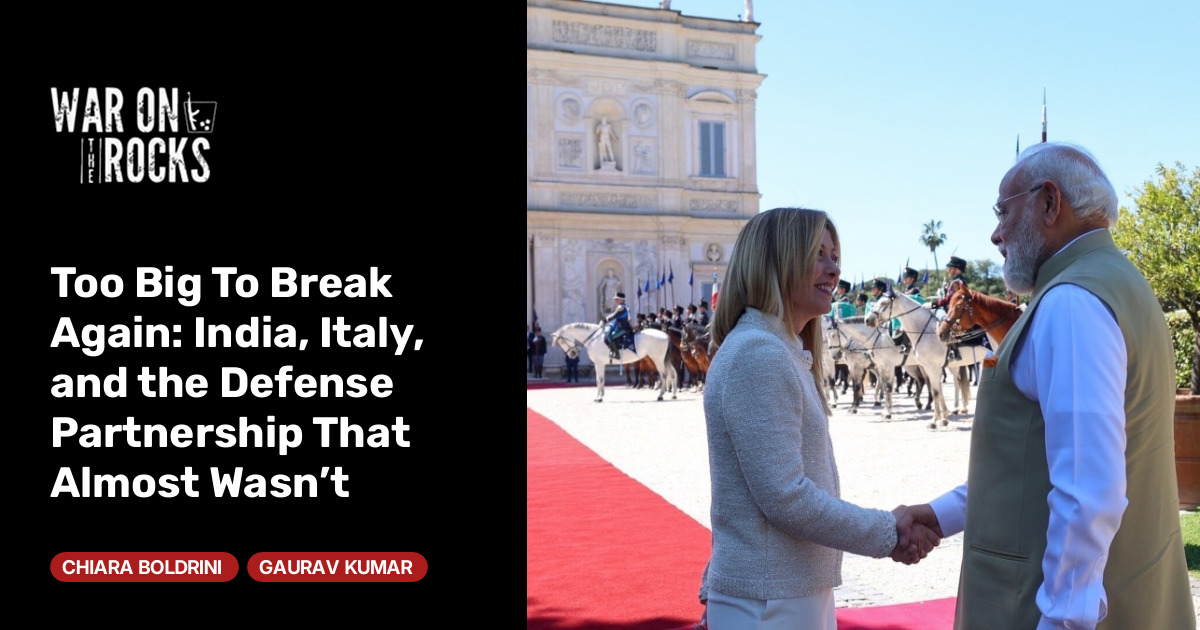
India and Italy have elevated their defense relationship to a “Special Strategic Partnership,” marking a formal end to the decade-long freeze triggered by the 2013 AgustaWestland corruption scandal. According to a joint Defence Industrial Roadmap, the two nations are now shifting from basic procurement to deep industrial integration, focusing on co-production, technology transfer, and shared maritime security in the Indo-Pacific. This reconciliation is driven by India’s need to diversify its military supply chain away from Russian dependence and Italy’s desire for a reliable, democratic partner in the Asian defense market.
Why Did the Defense Partnership Collapse in 2013?
The collapse of Indian-Italian defense ties originated with the 2010 contract for 12 AgustaWestland helicopters. In February 2013, Italian authorities arrested Giuseppe Orsi, then-CEO of Finmeccanica (now Leonardo), on allegations that the company paid $60 million in bribes to secure the deal, according to court documents cited by international observers. The Indian government responded by cancelling the contract and blacklisting Leonardo from all defense-related business.

The fallout was severe and systemic. According to official reports, the ban halted the supply of 127-millimeter naval guns, blocked the delivery of Black Shark heavyweight torpedoes for Scorpène-class submarines, and stalled midlife upgrades for over 20 Sea King helicopters. This episode demonstrated how a single procurement controversy could paralyze decades of industrial cooperation, leaving the Indian Navy’s operational readiness compromised for years.
Before the 2013 rupture, Italian naval technology was so deeply embedded in India that Bharat Heavy Electricals Limited had been manufacturing the OTO Melara 76-millimeter naval gun under license in India since 1994.
How Is the New Industrial Roadmap Different?
The current partnership moves beyond the traditional “buyer-seller” model. Under the new framework, India and Italy are prioritizing co-design and co-development. According to the Joint Strategic Action Plan unveiled in late 2024, the goal is to localize production through partnerships like the one between Adani Defence and Leonardo. This approach aims to address India’s “Aatmanirbhar Bharat” (self-reliant India) policy, which requires foreign partners to share manufacturing know-how rather than just shipping finished platforms.
Unlike previous agreements, the current roadmap includes specific commitments to share design documentation and software source code. This is a critical distinction; in past decades, foreign suppliers often retained design rights, effectively leaving India with assembly lines but no true industrial independence. The success of this new phase depends on whether these commitments are formally codified into binding, long-term contracts.
What Are the Risks to Future Cooperation?
Institutional fragility remains the primary threat to this renewed partnership. According to strategic analysts, the two governments have yet to establish a permanent, standing dispute resolution channel. Without a mechanism to insulate strategic cooperation from future procurement disputes, a single scandal could theoretically trigger another period of estrangement.
Furthermore, the geopolitical environment has shifted in ways that make the partnership more essential, yet more complex. As noted by researchers, both nations are facing the reality of disrupted maritime trade routes in the Red Sea and the Indian Ocean. Italy’s decision to abandon China’s Belt and Road Initiative has pushed Rome to seek alternative strategic anchors in Asia, while India’s reliance on Russian military hardware has become a liability following the 2022 invasion of Ukraine. These pressures provide a strong incentive for both countries to maintain stability, regardless of short-term political frictions.
To monitor the progress of this partnership, look for reports on the Information Fusion Centre – Indian Ocean Region (IFC-IOR). Increased data sharing through this hub is a primary indicator that the two navies are moving toward operational, rather than just industrial, integration.
Frequently Asked Questions
Is Leonardo still banned from doing business in India?
No. The ban was effectively lifted through a series of administrative actions beginning in 2021. Leonardo agreed to withdraw financial claims linked to the cancelled helicopter order, allowing the company to re-enter the Indian market, albeit under strict new conditions.
What specific military technology is Italy providing to India?
Italy is currently focused on naval artillery, undersea warfare systems, and aerospace engineering. This includes the production of 76-millimeter naval guns, heavy-weight torpedoes, and potential co-production of helicopters and trainer aircraft.
Why is this partnership considered “Indo-Mediterranean”?
The term reflects the growing link between security in the Mediterranean and the Indo-Pacific. Because both Italy and India are peninsular trading economies, they share a vulnerability to disruptions in the same maritime choke points, such as the Suez Canal and the Strait of Hormuz.
What are your thoughts on the role of co-production in modern defense diplomacy? Share your perspective in the comments below or subscribe to our weekly newsletter for more deep dives into global security trends.