
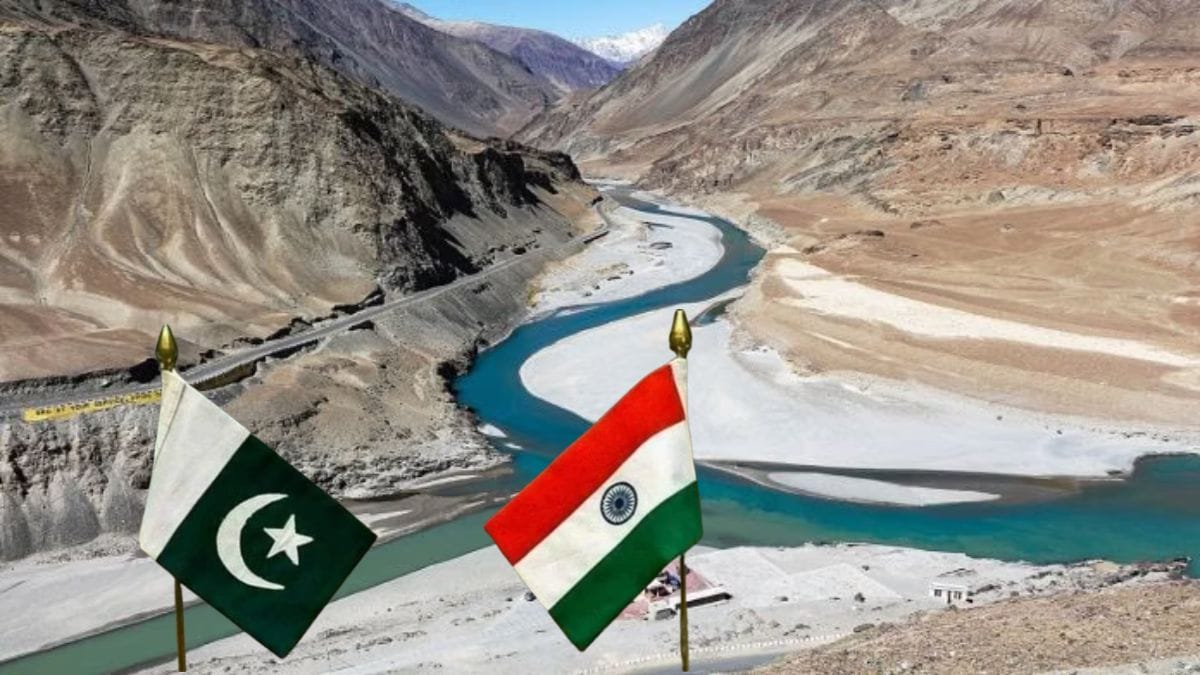
Inside the second partition of India-Pakistan-the full story of the Indus Waters Treaty
Pakistan has formally accused India of violating the Indus Waters Treaty (IWT) and the Vienna Convention on the Law of Treaties following the announcement of the Chenab-Beas Link Tunnel Project. Pakistan Foreign Office Spokesperson Tahir Andrabi stated that India has neither communicated nor shared notice of the project, nor sought the required consultations. This development follows India’s 2025 decision to place the IWT in abeyance in the wake of the Pahalgam terror attacks.
Why the Chenab-Beas Link Tunnel matters
The proposed project signals a definitive move away from India’s long-standing policy of strategic restraint regarding water-sharing. According to Uttam Kumar Sinha, a Senior Fellow at the Manohar Parrikar Institute for Defence Studies and Analyses, the project represents an inter-basin water transfer, a practice explicitly restricted under the IWT for the western rivers—the Jhelum, Chenab, and Indus. While India has historically underutilized its rights on these rivers, the current geopolitical climate suggests a shift toward maximizing permissible usage. Analysts suggest this move reflects a policy of zero-tolerance, where state-harbored terrorism invites tangible consequences, effectively linking water diplomacy to national security and sovereignty.
Did You Know? The Indus Waters Treaty, signed in 1960 by Prime Minister Jawaharlal Nehru and Field Marshal Mohammad Ayub Khan, required India to pay £62 million to finance replacement canals in Pakistan to mitigate the impact of the river system’s partition.
Historical context of water tensions
Water-sharing disputes between the two nations date back to 1948, shortly after Partition, when the East Punjab Government temporarily suspended water supplies to canals flowing into West Punjab. This incident established a pattern of vulnerability for Pakistan as a lower riparian state, leading to persistent fears that water could be weaponized. Ajay Bisaria, former High Commissioner of India to Pakistan, notes that the discourse has evolved from “No talks with terror” after the 2016 Uri attacks to a “No water for terror” posture in 2025. While the IWT was designed to divorce water from bilateral political conflicts, the current suspension indicates that the treaty’s original strategic logic is increasingly under strain.
Expert Insight: The current impasse highlights the inherent difficulty in managing transboundary rivers when bilateral relations are at a historic low. As Amit Ranjan of the Institute of South Asian Studies notes, the treaty’s success always relied more on the political willingness of both parties to cooperate than on the technical content of the document itself. The shift toward “zero-tolerance” policies suggests that the IWT may no longer function as a firewall against broader geopolitical tensions.
What could happen next?
The future of the IWT remains uncertain as both nations navigate this new, uncharted terrain. It is possible that the treaty could face formal dissolution if tensions continue to escalate, or it may remain in its current state of abeyance until diplomatic conditions permit a resumption of talks. Analysts expect that India will continue to prioritize internal infrastructure development to harness its share of the western rivers, despite Pakistan’s objections. Meanwhile, Pakistan may continue to utilize international forums to highlight its concerns, potentially further internationalizing the dispute.
Frequently Asked Questions
Why did India put the IWT in abeyance?
According to the source, India took this step in 2025 following the tragic Pahalgam terror attacks as a deterrence measure to address the costs of terrorism.

What is the primary objection to the Chenab-Beas Link Tunnel Project?
Pakistan claims the project is a “grave violation” of the IWT and the Vienna Convention on the Law of Treaties because India has not officially communicated or consulted with Pakistan regarding the inter-basin transfer.
Has India historically used all its water rights under the treaty?
No. Experts like Uttam Kumar Sinha note that for decades, India adopted a restrained interpretation of its rights, leaving many provisions related to hydropower and storage on the western rivers underutilized.
Will the current suspension of the Indus Waters Treaty lead to a permanent restructuring of water-sharing agreements in the region?