
Kaspara Groševa izstādes Dzīvo ar/Domā par recenzija
The centre for Contemporary Art Kim? is currently hosting “Dzīvo ar/Domā par,” a solo project by artist Kaspars Groševs, curated by Zane Onckule. Rather than a traditional exhibition, performance, or action, the work is positioned as a spatial and procedural state of consciousness and a “life approach.”
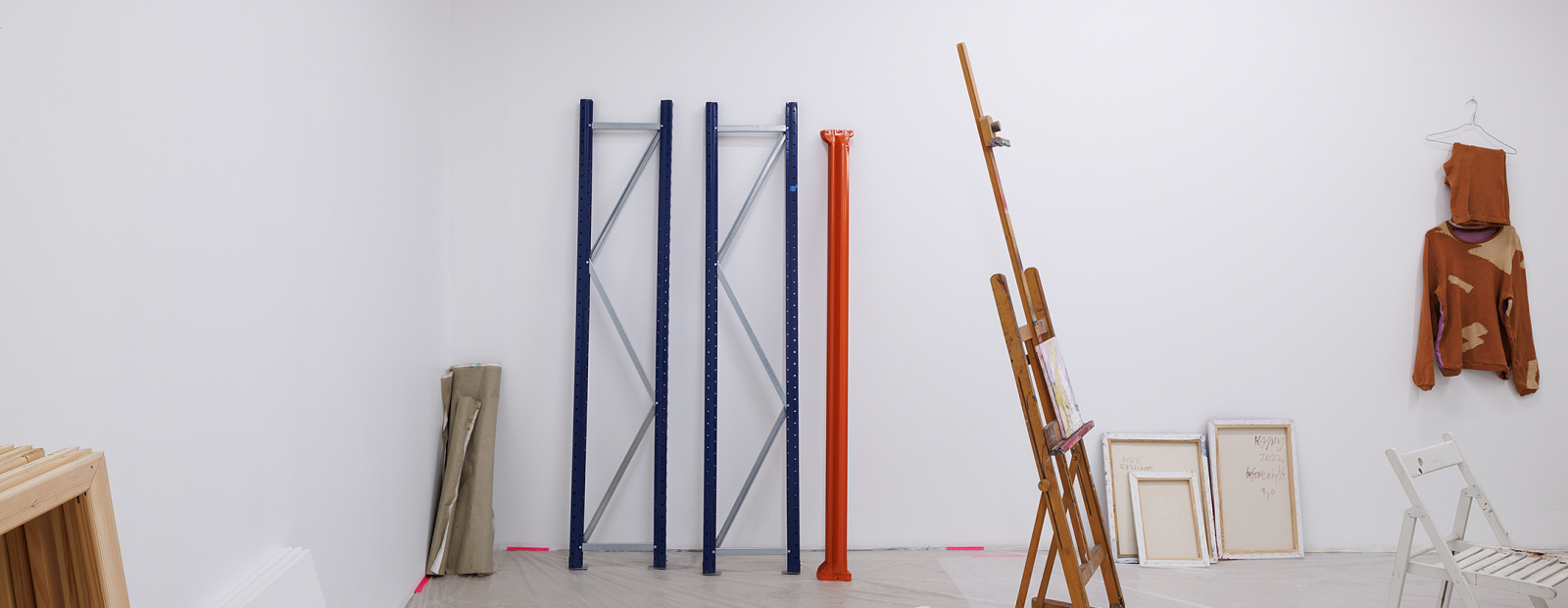
Groševs utilizes the space to dissolve the boundaries between professional art and “non-art” daily life. This approach manifests in the physical layout of the gallery, which has been transformed into a living space divided into private, guest and work zones where the artist himself resides during the event.
Redefining the Artist’s Space
The project focuses on the creative process and the artist’s status in society, challenging stereotypes and myths. Instead of a standard retrospective, the exhibition attempts to reconstruct daily life as a vital biographical impulse for artistic creation.
A central theme is the inclusion of friends and peers within the exhibition, highlighting collective creation. This mirrors Groševs’ influential role as a curator and leader of gallery 427, through which many new and “recently new” generation authors have entered the art scene in Riga.
A History of Elegiac Escapism
The current installation continues a career-long exploration of “elegiac escapism”—the desire to retreat from the outside world into self-created islands of security. This is evident in previous works such as the 2020 “Cita istaba” installation and the 2022 “Zilā līča māja.”
Other notable projects include “Café de Paris” (2024), which imitated a Parisian cafe, and the 2021 exhibition “Vecais vīrs iet mājās” in Vilnius. The latter combined paintings with a text about a mysterious figure’s journey toward a home that simultaneously exists and does not exist here.
Surrealism and Urban Iconography
Groševs’ painting style is characterized by surreal, absurd figures set against pink-hued backgrounds. These works blend mythology with modern urban art, drawing from video game iconography and “narco-aesthetics” to capture impressions of altered states of consciousness.
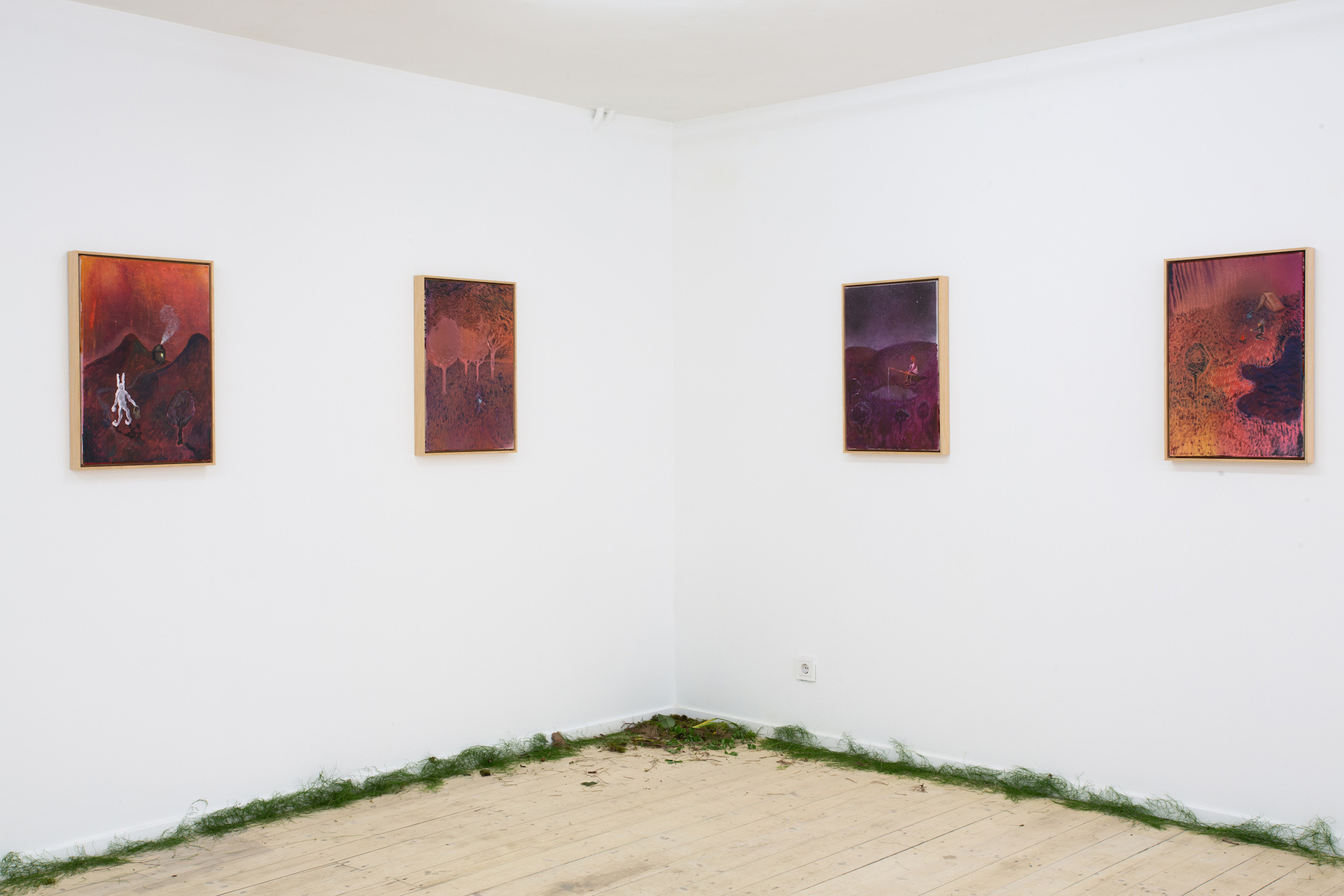
The work is marked by a sense of playfulness and a refusal of over-concreteness. This is reflected not only in the visuals but also in the artist’s laconic and often abrupt descriptions of his work.
Future Implications
Given his history of merging living spaces with galleries, Groševs may continue to explore hybrid environments that challenge institutional art boundaries. His dual role as artist and curator could likely lead to further projects that emphasize the collective over the individual creator.
Frequently Asked Questions
What is the primary goal of the “Dzīvo ar/Domā par” exhibition?
It aims to merge art with daily life, presenting itself as a procedural state of consciousness and a “life approach” rather than a traditional art show.
How is the exhibition space organized at centre for Contemporary Art Kim?
The space is divided into specific functional zones: a private zone, a guest zone, and a work zone, where the artist stays during the exhibition.
What recurring emotional theme is present in Kaspars Groševs’ work?
His work frequently explores “elegiac escapism,” characterized by a desire for the feeling of “home” and a need to seek refuge from the external world.
How do you feel about the blurring of lines between an artist’s private life and their public work?