
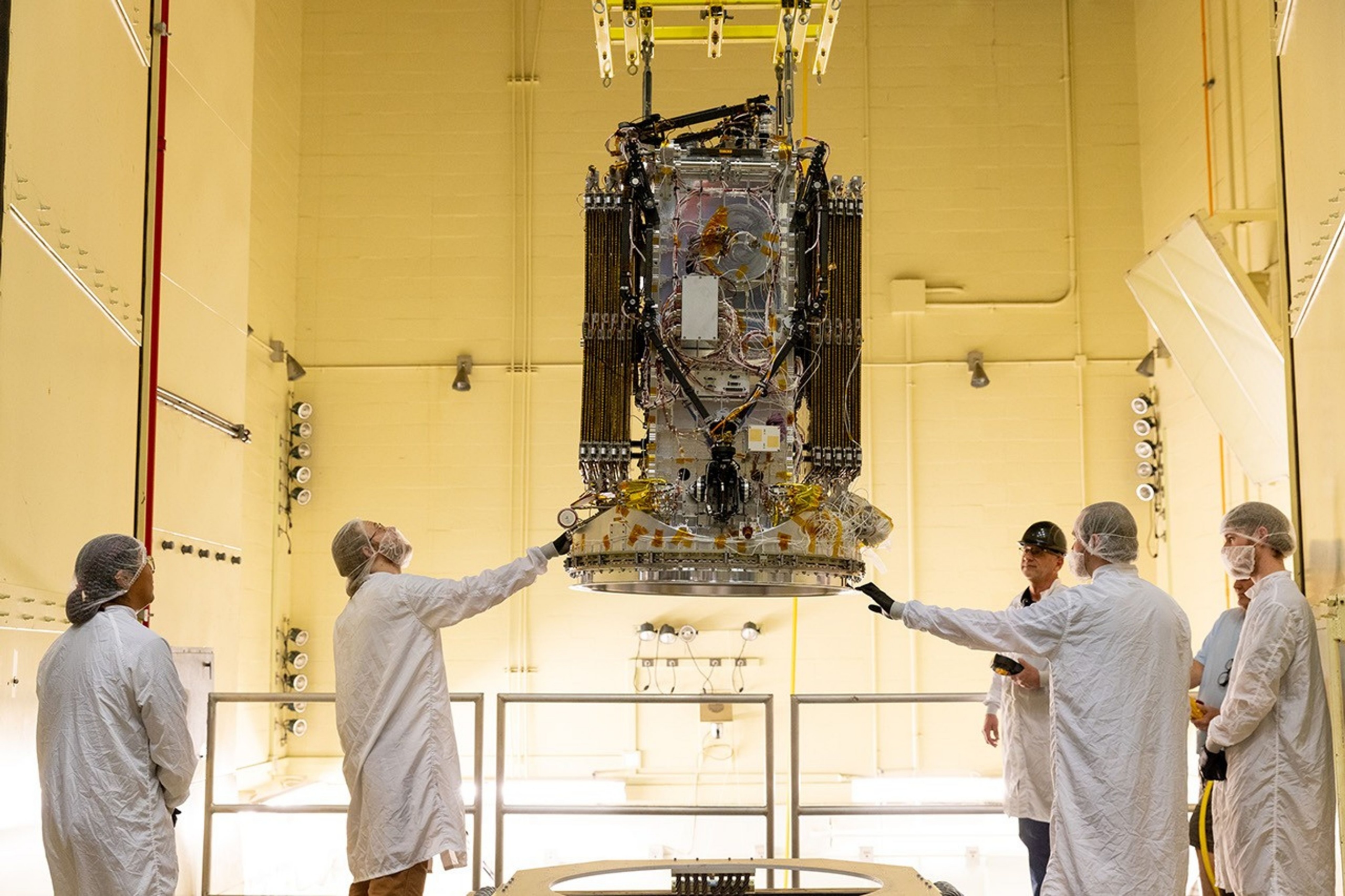
Katalyst Raises $12M to Extend Satellite Servicing to GEO
Katalyst Space has secured $12 million in funding led by Geodesic Capital to develop its NEXUS robotic servicing spacecraft, according to a company announcement. The startup plans to debut the GEO-capable vehicle on an Arianespace Ariane 6 rocket in 2027. This follows a $30 million NASA contract awarded in September 2023 to use Katalyst’s LINK spacecraft to extend the life of the Neil Gehrels Swift Observatory.
What are the technical capabilities of the NEXUS spacecraft?
The NEXUS spacecraft is designed to perform complex orbital maneuvers, effectively doubling the power, mass, and Delta-V capacity of the predecessor LINK model, according to Katalyst CEO Ghonhee Lee. The vehicle utilizes robotic rendezvous and proximity operations (RPO) to interact with existing orbital assets. For its 2027 mission, Katalyst plans to demonstrate three distinct capabilities: installing a SIGHT module for Space Domain Awareness (SDA) on a Space Force satellite, conducting inspection missions with a SHIELD module, and performing commercial life-extension docking.
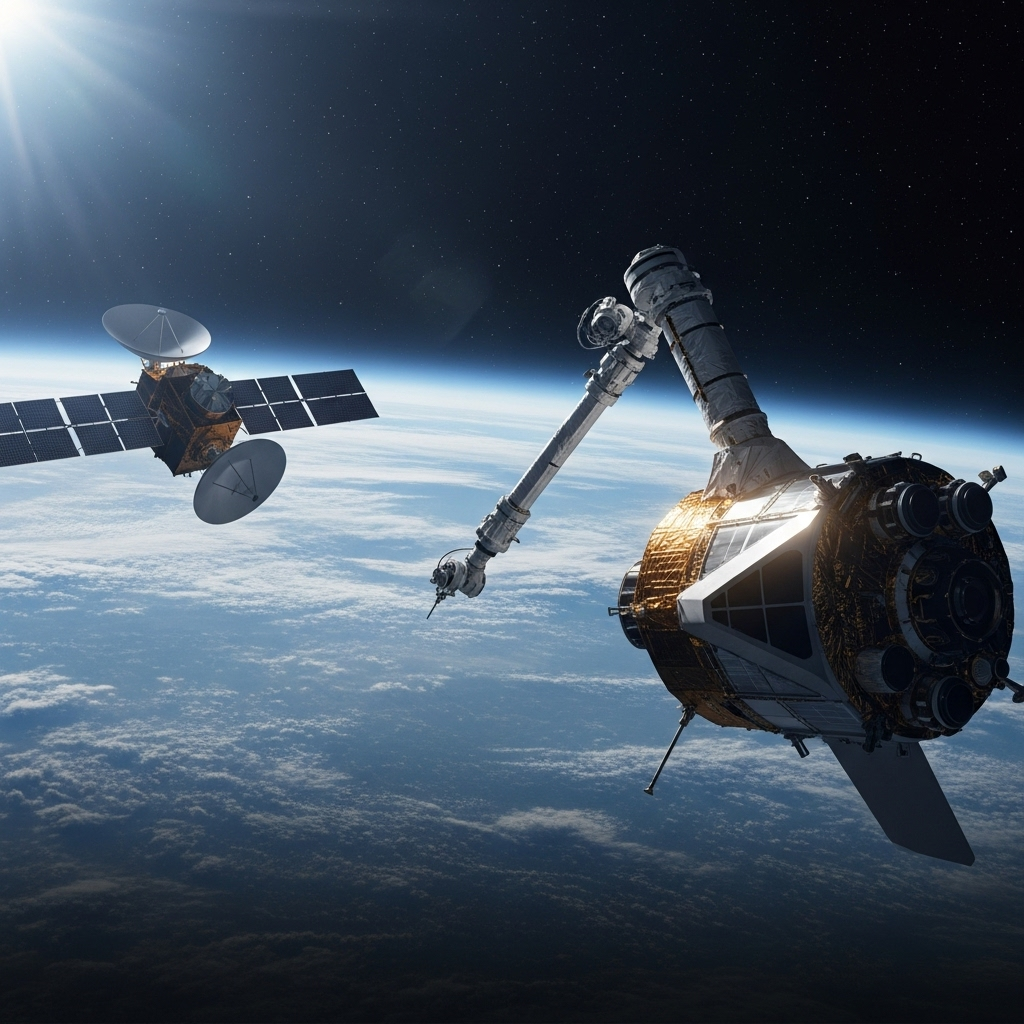
Katalyst’s first active mission is scheduled for June 27, 2024. The LINK spacecraft will launch from a Northrop Grumman Stargazer aircraft via a Pegasus XL rocket to assist NASA’s Swift Observatory, which is currently at risk of re-entering Earth’s atmosphere.
How does Katalyst differentiate its business model from traditional life extension?
Katalyst aims to shift the industry focus away from routine satellite life-extension services toward general-purpose orbital robotics. CEO Ghonhee Lee stated that the future of space infrastructure—including orbital data centers and lunar support—requires robotics capable of manipulating the environment rather than simply docking for fuel. By deploying a fleet of NEXUS spacecraft, the company intends to capture higher margins by providing multiple, simultaneous revenue-generating services within a single orbital plane.
How does the current space funding environment compare to recent activity?
The $12 million investment in Katalyst occurs alongside broader capital influxes in the space sector. Dawn Aerospace, a New Zealand-Dutch firm, recently closed a $25 million Series B round at a $195 million post-money valuation, according to the company. While Katalyst is concentrating on GEO-capable robotic infrastructure, Dawn Aerospace is prioritizing the acceleration of its Aurora spaceplane and in-space refueling demonstrations. Both companies represent a trend of private capital moving toward specialized, high-utility orbital services rather than pure-play launch or communications hardware.
Pro Tip: Tracking Orbital Servicing
Industry observers should monitor the integration of SDA (Space Domain Awareness) modules on commercial spacecraft. As orbital density increases, the ability to maneuver and inspect assets in real-time is becoming as critical to satellite operators as propulsion.

Frequently Asked Questions
- When is the first NEXUS mission scheduled? The debut mission for the NEXUS spacecraft is slated for 2027 aboard an Arianespace Ariane 6 rocket.
- What is the purpose of the LINK mission? The LINK mission, scheduled for June 2024, will rendezvous with NASA’s Neil Gehrels Swift Observatory to provide an orbital boost and prevent its re-entry into Earth’s atmosphere.
- Who led the latest funding round for Katalyst Space? Geodesic Capital led the $12 million round, with additional participation from Fortitude Ventures.
Stay informed on the latest developments in space infrastructure and orbital servicing. Subscribe to our newsletter or explore our archives for deep dives into emerging aerospace technologies.