
Korea Industrial Loans Hit 14-Quarter High in Q1
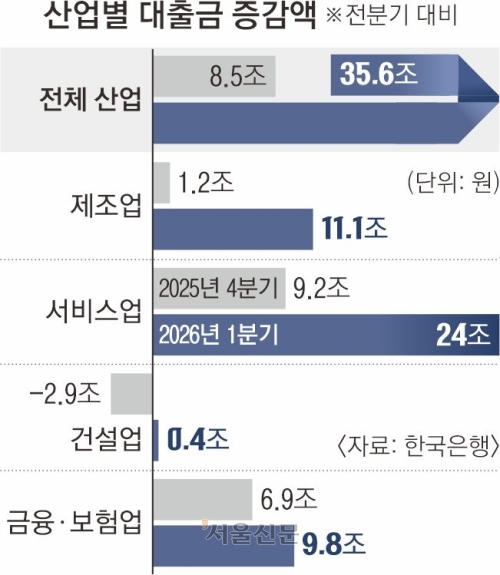
Industrial lending in the first quarter of 2026 surged by 35.6 trillion won, marking the largest increase in 14 quarters. According to the Bank of Korea, this expansion was driven by a strategic move toward “productive finance” by financial institutions and improved conditions across major sectors, including services and manufacturing. The total outstanding balance of industrial loans reached 2,061.8 trillion won by the end of the quarter.
Did You Know? The current growth of 35.6 trillion won in industrial loans is the most significant quarterly increase recorded since the third quarter of 2022, when lending grew by 56.7 trillion won.
Drivers of the Lending Surge
The service sector acted as the primary engine for this growth, contributing 24 trillion won to the total increase. Within this sector, financial and insurance services saw a 9.8 trillion won rise, largely due to capital demands from securities firms. Meanwhile, wholesale and retail trade businesses borrowed an additional 4.9 trillion won, supported by a general improvement in industry conditions. Real estate lending also saw a 2.6 trillion won uptick, partly due to the base effect following the disposal and write-offs of non-performing loans by non-bank financial institutions in the previous quarter.
Manufacturing sector loans rose by 11.1 trillion won. This shift was fueled by both the broader push for productive finance and the resumption of credit lines that companies had temporarily paid down at the end of last year to manage their financial ratios. Specifically, manufacturing working capital loans moved from a 2.2 trillion won decline in the fourth quarter of 2025 to a 6.7 trillion won increase in the first quarter of 2026.
Recovery in Construction Lending
After experiencing a downward trend that began in the third quarter of 2024, the construction industry saw a reversal in its lending trajectory. Construction loans increased by 400 billion won in the first quarter of 2026. This modest recovery is attributed to an actual increase in construction project activity, signaling a potential stabilization in a sector that had previously struggled with declining credit demand.
Future Outlook and Implications
Industry analysts and observers suggest that if the current “productive finance” stance continues, businesses may find it easier to secure operational liquidity throughout the remainder of the year. The resumption of credit lines by manufacturing firms indicates that companies are increasingly confident in their ability to manage financial ratios while maintaining higher debt levels for growth. If construction activity continues to trend upward, it may further bolster industrial lending figures in the coming quarters.

Frequently Asked Questions
What is the primary reason for the spike in industrial loans?
The increase is largely due to financial institutions expanding their “productive finance” stance, coupled with improved industry conditions that have encouraged firms to secure more capital for operations.
How did the manufacturing sector contribute to this trend?
Manufacturing loans grew by 11.1 trillion won, largely driven by a return to utilizing credit lines that were previously paid down for year-end financial ratio management, specifically concerning working capital.
Is the construction sector showing signs of recovery?
Yes, for the first time since the third quarter of 2024, construction lending has increased—rising by 400 billion won—supported by an uptick in actual construction project activity.
Do you believe this shift toward increased industrial lending signals a long-term strengthening of the domestic manufacturing and construction sectors?