
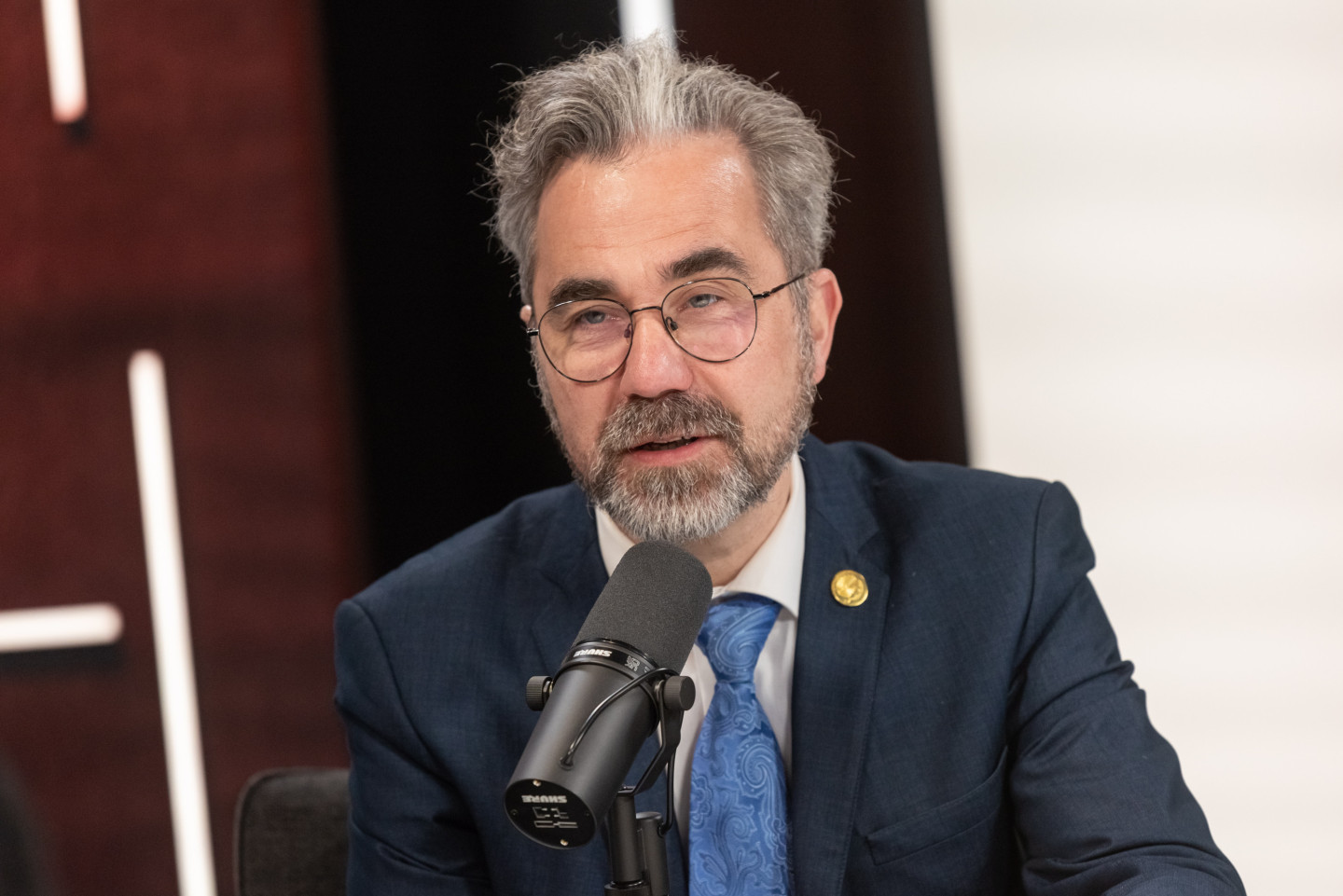
Krists Kalniņš: Ilgošanās pēc tēva mīlestības
Imants Kalniņš, the renowned Latvian composer, recently marked his 85th birthday. His son, Krists Kalniņš, reveals in a candid discussion how music and mutual love eventually healed a childhood rift following his parents’ divorce, while reflecting on the composer’s enduring spiritual and musical legacy.
How did music bridge the gap between Imants and Krists Kalniņš?
Krists Kalniņš describes a childhood marked by longing. His parents’ marriage ended when he was four, leaving his mother, National Theatre actress Helga Dancberga, to raise three children alone.
The relationship between father and son wasn’t always close. Krists notes that while the first half of his life lacked that connection, they developed a deep, heartfelt bond as adults.
Music served as the primary genetic and spiritual link. Imants Kalniņš previously stated that music is the feeling that unites the family across generations.
What defines the musical legacy of Imants Kalniņš?
For Krists, his father’s work is more than a display of genius; it is a vibration that resonates through his very soul. He cites “Zilais putniņš” as a constant presence in his childhood with his twin sister, Rēzija.
Specific works like “Dziesma, ar ko tu sācies” and “Viņi dejoja vienu vasaru” hold deep personal meaning. Krists also highlights the 4th Symphony and the 6th Symphony, the latter of which he associates with his father’s period of Christian faith.
A comprehensive book documenting the composer’s vast musical creativity is scheduled for release in June. Krists expresses gratitude for the effort put into this project to provide readers with a full insight into the work.
How does Krists Kalniņš view Latvia’s current security and social climate?
Moving beyond art, Krists expresses sharp concerns regarding Latvia’s national security. He questions the effectiveness of air defense, noting that the country has struggled to intercept drones that have entered its territory.
He criticizes the government for keeping citizens in a “security bubble” without providing adequate civil defense training. According to Krists, the lack of public drills for drone or missile threats is a form of irresponsibility.
Krists also reflects on the “red ideology” of the former Soviet Union. He describes it as a system that turned citizens into “slaves” and continues to fuel Russian aggression today.
The intersection of faith and state
As a pastor at the Old St. Gertrude’s Church in Riga, Krists views the role of the state and church as complementary. He believes the state must guard the borders and verify arrivals to protect its foundations.

Conversely, he asserts that the church must remain open to everyone, regardless of their faith. He views the stranger at the door not as an enemy, but as a soul to be reached with the Gospel.
What may happen next for the Kalniņš legacy?
The upcoming release of the biography in June could lead to a renewed public interest in Imants Kalniņš’s early works, particularly those written during his time in Liepāja with Helga Dancberga.
Given Krists’s vocal stance on national preparedness, he may continue to advocate for more transparent civil defense training within his community and church.
The family’s musical tradition is likely to persist through the next generation. Krists’s children are already active in the arts, including sons in the Dome Choir School and the Music Academy, and a daughter who is a director.
Frequently Asked Questions
When will the book about Imants Kalniņš be released?
The book is expected to be released in June.
What is Krists Kalniņš’s current role?
He is a supervisor and the pastor of the Old St. Gertrude’s Church in Riga.
How many children does Krists Kalniņš have?
He has five children, including those from previous marriages.
Do you believe that art and music have the power to heal fractured family relationships over time?