

Lucknow’s Gomti River: Study Reveals Urgent Need for Ecological Restoration
A study by the CSIR-National Botanical Research Institute (NBRI) found that approximately 36% of the Gomti river’s riparian corridors in Lucknow require urgent restoration. Researchers used a satellite-based Composite Restoration Index to identify severe ecological degradation driven by urbanization, citing high soil erosion and a loss of native flora.
Why is the Gomti river corridor degrading?
Human activity and urbanization are driving the decline of the riverbanks, according to NBRI scientists. The study reports declining tree cover, escalating soil erosion, and a gradual disappearance of native plants.
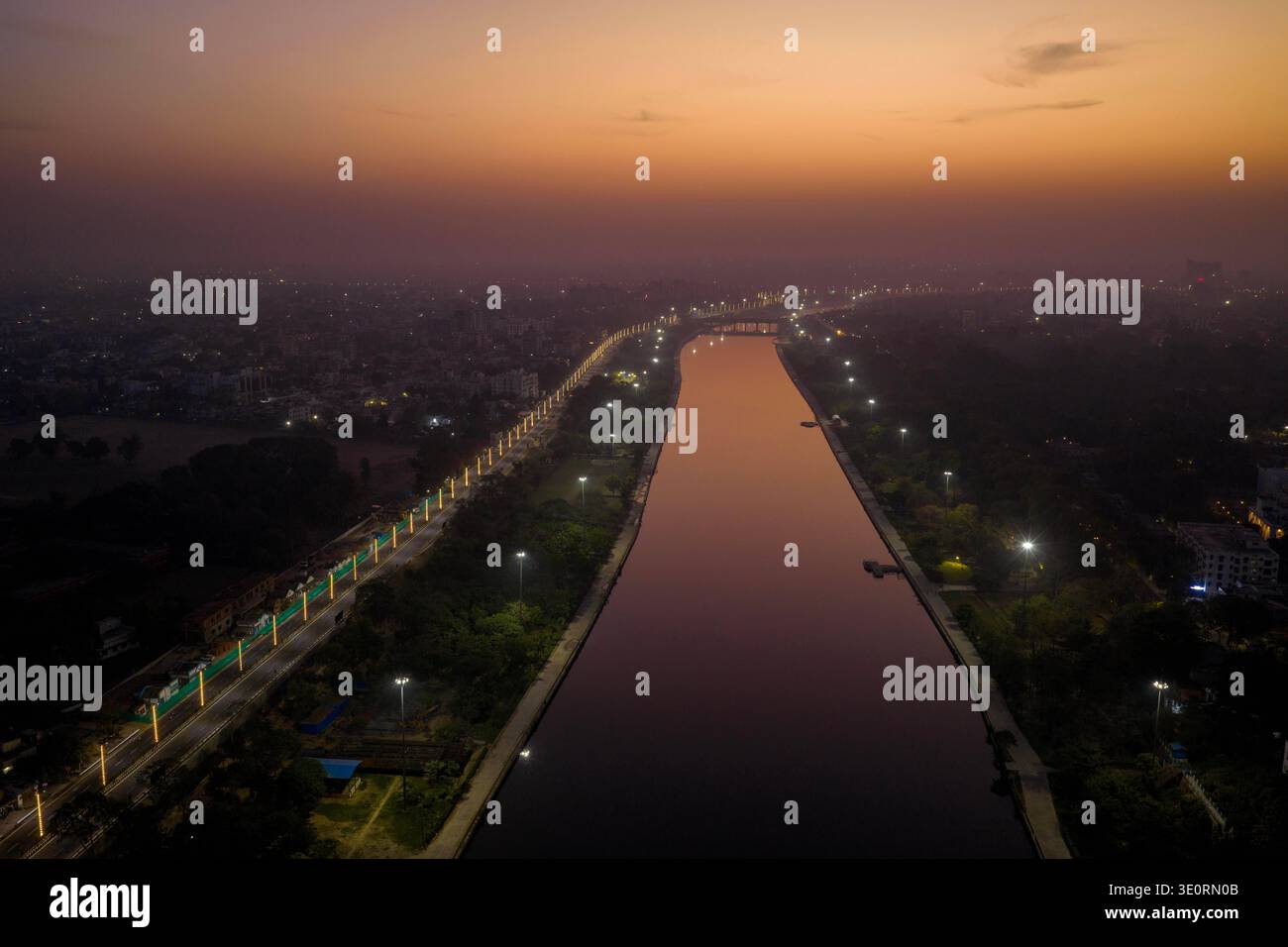
The most severely degraded zones include Tikraghat, Churheya, Khiron, Chandiyamau, and the Kakrabad Bridge. In these areas, scientists observed high ground temperatures and soil that has lost much of its ecological quality.
How did scientists map the degradation?
Researchers deployed an Integrated Spatial Decision-Support Framework to identify priority areas for intervention. This smart map-making system analyzed satellite images to measure soil composition, ground temperature, vegetation greenness, and the extent of paved land.
These factors were combined into a Composite Restoration Index (CRI) score for every patch of land. A high CRI score indicates an area requires greater restoration attention, while a low score suggests a better ecological condition.
Dibyendu Adhikari, a senior principal scientist involved in the study, stated the system uses open-source software and free satellite data. Adhikari noted that other cities with stressed river corridors could use this affordable approach to determine where to plant trees and remove invasive species.
What are the ecological impacts on the land?
Ground surveys confirmed that species richness declined from 21 to 14 species per plot in high-CRI zones. These areas showed a dominance of invasive species, specifically lantana and carrot grass, which spread aggressively and impact local biodiversity.
Prof Venkatesh Dutta, head of the environmental science department at Babasaheb Bhimrao Ambedkar University, stated that Gomti sediments are full of heavy metals. Dutta argued that the river must have a natural landscape, floodplain, and river terrace rather than walled rivers and engineered landscapes.
What could be the next steps for Lucknow’s river?
NBRI director Ajit Shasany suggested that low-CRI reaches providing cooling benefits to neighborhoods should be protected via incentive schemes and zoning.

Integrating these priorities into Lucknow’s river-rejuvenation and Smart City plans could lead to several co-benefits. These may include enhanced recreational spaces and flood-peak attenuation, according to Shasany.
Frequently Asked Questions
Which specific areas of the Gomti river are most degraded?
The highly degraded zones identified in the study include the Kakrabad Bridge, Chandiyamau, Khiron, Churheya, and Tikraghat.
What is the Composite Restoration Index (CRI)?
The CRI is a score derived from satellite data—including ground temperature, soil quality, and vegetation cover—used to determine which patches of land along the river require the most urgent restoration.
What invasive species are affecting the riverbanks?
Researchers found a high prevalence of carrot grass and lantana in high-priority restoration zones.
How should cities balance urban growth with the preservation of natural river floodplains?