
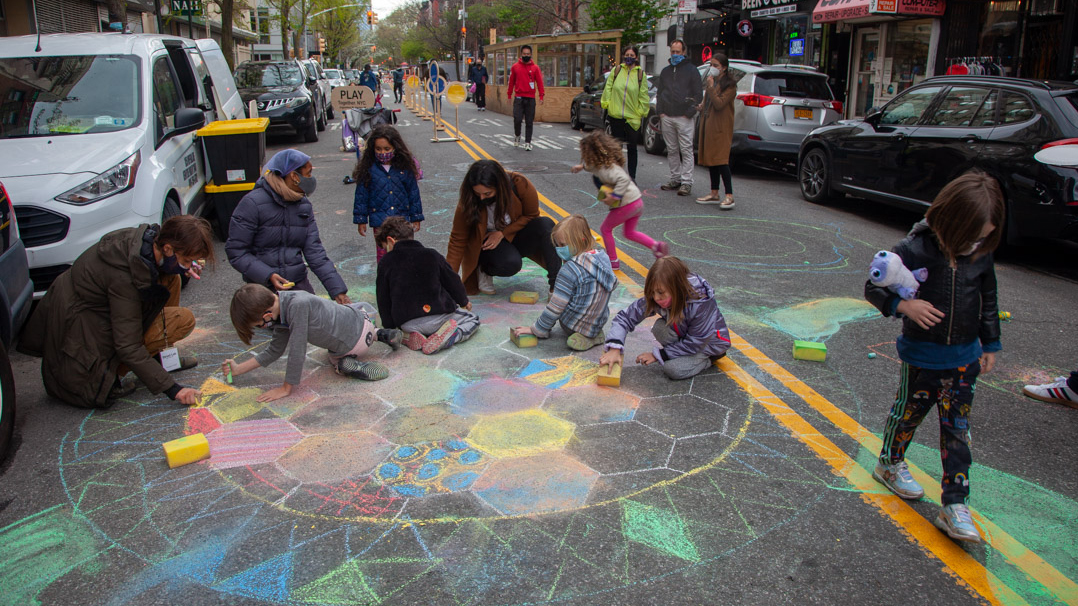
Mamdani Adds Funding for Open Streets As Organizers Press for More
Mayor Mamdani has proposed a $6.4 million annual baseline budget for New York City’s Open Streets program through Fiscal Year 2030, a move designed to provide long-term financial stability for the initiative. While the Department of Transportation (DOT) has welcomed the funding as a solution to year-to-year planning uncertainty, advocates are pressing for an additional $48 million over three years to expand the program’s footprint and resources.
The Shift Toward Permanent Funding
The proposed $6.4 million baseline exceeds the $5 million threshold that DOT officials previously identified as necessary to maintain the program at its current levels. This move marks a departure from the previous administration’s approach; in his final year, Mayor Eric Adams allocated $2.1 million to the program, leaving the responsibility for long-term sustainability to his successor.
DOT Deputy Commissioner Eric Beaton told the City Council Transportation Committee last month that the new, consistent funding stream allows the agency to plan effectively. “We’re grateful that the funding is baselined so we’re not going year-to-year anymore and not knowing what’s coming up,” Beaton stated. The agency also noted it has partnered with the Citizens Committee for New York to streamline the reimbursement process for local organizers.
The Open Streets program originally launched using pandemic-era federal aid, which forced the DOT and community volunteers to scramble for funding as that initial support expired.
Advocates Push for Broader Expansion
Despite the administration’s financial commitment, organizers argue that the program requires significantly more capital to thrive. A coalition of organizers from nearly a dozen open streets has formally requested that the City Council push for three major adjustments: maintaining a $10 million annual investment for underserved communities, increasing the direct funding cap for partners from $20,000 to $200,000 per year, and allocating $100 million for permanent street redesigns.

John Surico, chairperson of the 31st Avenue Open Street in Astoria, acknowledged the progress but noted the program still faces hurdles. “It’s an improvement from last year for sure, and good to see Mamdani administration doubling down on the program, but I think there’s still a ways to go,” Surico said. Other organizers, including Alex Morano of the Vanderbilt Avenue open street, pointed out that many programs are currently forced to scale back due to real-world funding constraints.
The conflict between the city’s focus on base-level sustainability and advocates’ demands for capital expansion highlights a common tension in urban planning. While the city prioritizes fiscal predictability for agency management, advocates prioritize the “thriving” status of public spaces, which they argue requires higher, consistent investment to create permanent, high-quality thoroughfares.
Economic Impact and Future Outlook
Proponents of the program emphasize its economic benefits to justify further investment. A 2024 Department of City Planning study found that commercial strips utilizing open streets experienced fewer vacancies than those that did not. Additionally, a report from Comptroller Tom DiNapoli indicated that job growth on open streets outpaced other areas of the city.
The program’s future may depend on upcoming budget negotiations between the Mayor’s office and the City Council. Majority Leader Shaun Abreu, who chairs the Transportation Committee, has signaled support for further investment. If the Council successfully negotiates for the requested $100 million in permanent infrastructure, the city could see a shift from temporary, volunteer-managed closures toward more permanent, redesigned public thoroughfares.
Frequently Asked Questions
What is the current funding status of the Open Streets program?
The Mamdani administration has proposed a $6.4 million annual baseline budget through Fiscal Year 2030 to ensure the program’s continuity.
Why do advocates want more funding if the DOT says the current amount is sufficient?
Advocates argue that while the current funding maintains existing sites, it does not provide enough support to expand the program, increase grant caps for partners, or fund permanent physical redesigns of streets.
What is the economic argument for expanding Open Streets?
A 2024 City Planning study found lower commercial vacancy rates on open streets, and Comptroller Tom DiNapoli’s report indicated that job growth on these streets was faster than in other parts of the city.
What do you think is the most important step for ensuring the long-term success of car-free public spaces in your neighborhood?