
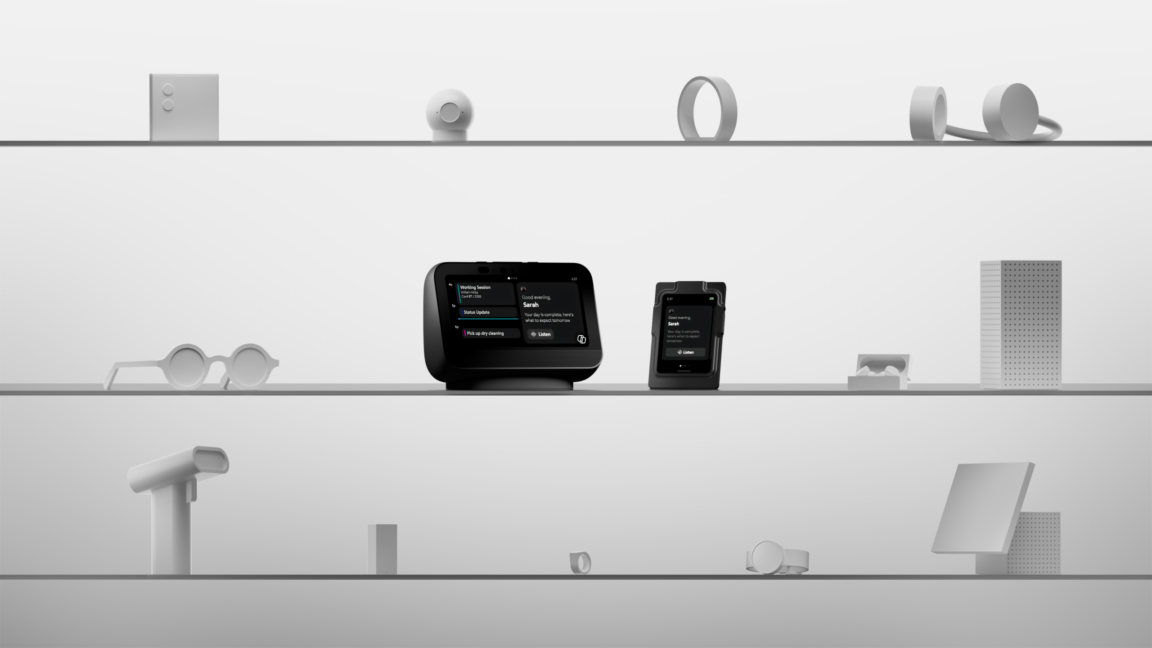
Microsoft’s Project Solara is an Android OS designed for agents instead of apps
The End of the App Era: How Agentic AI is Redefining Our Hardware
For the last decade, our digital lives have been trapped in a grid of colorful squares. We open an app to check the weather, another to send a message, and a third to manage our calendar. But we are approaching a fundamental pivot in computing: the shift from app-centric to agent-centric interfaces.
Microsoft’s Project Solara is a glimpse into this future. By moving away from traditional software silos and toward “AI agents,” the industry is betting that we won’t want to navigate menus anymore. Instead, we will simply tell a system what we need, and the agent will orchestrate the tools to get it done.
Ambient Computing: Why Your Next PC Might Be a Badge
The most provocative part of the agentic shift isn’t the software; it’s the hardware. If an AI agent can handle the heavy lifting, we no longer need a 13-inch screen and a keyboard tethered to our laps. We are entering the era of ambient computing.

Consider the concept of “invisible” hardware. Microsoft’s exploration of a wearable “Badge Concept” suggests a world where biometric authentication and 5G connectivity live on your lanyard. This isn’t just a gadget; it’s a portal. Instead of pulling out a phone, you interact with a generative interface that understands your environment.
The Rise of the Smart Hub
While wearables handle mobility, the “Desk Concept” represents the evolution of the workstation. Imagine a secondary display that doesn’t just show notifications, but acts as a command center for your digital twins. While you focus on deep work, your agent is in the background, summarizing emails and prepping your briefing notes via cloud computing services like Microsoft Azure.
This mirrors a broader trend seen in the industry. We are seeing a move toward “headless” computing, where the processing happens in the cloud, and the physical device is merely a thin client for interaction.
The Battle for the “Agentic” Interface: Microsoft vs. Google
This isn’t a solo mission. We are witnessing a high-stakes arms race between the titans of search and productivity. While Microsoft focuses on integration within the enterprise and hardware concepts, Google is leveraging its dominance in search to create “agent-first” tools.
Google’s vision involves search queries that don’t just return a list of links, but instantly build mini-apps or custom dashboards to solve a specific problem. Whether it’s planning a trip or analyzing a dataset, the goal is the same: zero-friction execution.
The winner of this war won’t be the company with the smartest LLM, but the company that creates the most seamless “hand-off” between the user’s intent and the agent’s action. Here’s why biometric integration—like fingerprint scanners on wearable badges—is so critical; it ensures security in a world where your AI has the power to move money or access sensitive corporate data.
Real-World Impact: Beyond the Hype
We are already seeing the precursors to this in industries like healthcare and retail. For example, CVS Health and other retail giants are exploring how AI can streamline pharmacy workflows. An agentic system wouldn’t just notify a pharmacist of a prescription; it would cross-reference insurance, check inventory, and prep the label autonomously.
The Challenges of a “Screenless” Future
Despite the potential, the path to agentic hardware is fraught with hurdles. The primary concern is “digital fatigue.” The idea of wearing a touchscreen “millstone” around our necks is unappealing to many. For this to succeed, the technology must move from intrusive to intuitive.
- Privacy: A badge with a camera and microphone that “takes action on the environment” raises massive surveillance concerns.
- Battery Life: Running 5G and generative AI interfaces requires significant power, a hurdle that current battery tech hasn’t fully cleared.
- Reliability: “Hallucinations” in a chatbot are annoying; hallucinations in an agent that has access to your bank account are catastrophic.
Frequently Asked Questions
What is an AI Agent?
Unlike a standard chatbot that provides information, an AI agent is designed to complete goals. It can use tools, browse the web, and interact with other software to execute a task from start to finish.
Will AI agents replace mobile apps?
They likely won’t kill apps entirely, but they will change how we use them. Instead of you opening an app, the agent will “call” the app’s API in the background to get the job done.
Is agentic hardware available now?
Most current examples, like Project Solara, are concepts. However, the integration of AI into wearables (like the Humane AI Pin or Rabbit R1) shows the industry is actively trying to move away from the smartphone screen.
The transition from clicking buttons to commanding agents is the most significant shift in human-computer interaction since the invention of the mouse. We are moving toward a world where technology finally adapts to us, rather than us adapting to the software.
Join the Conversation
Would you wear an AI-powered badge if it meant never having to open a productivity app again, or is that a step too far into the “Black Mirror” territory? Let us know in the comments below or subscribe to our newsletter for the latest insights on the AI revolution.