

Mirasol Resources Sells Argentina Copper Projects to Focus on Chile’s Vicuña District
Argentina’s Copper Boom: Mirasol Resources Shifts Focus as Vicuña District Heats Up
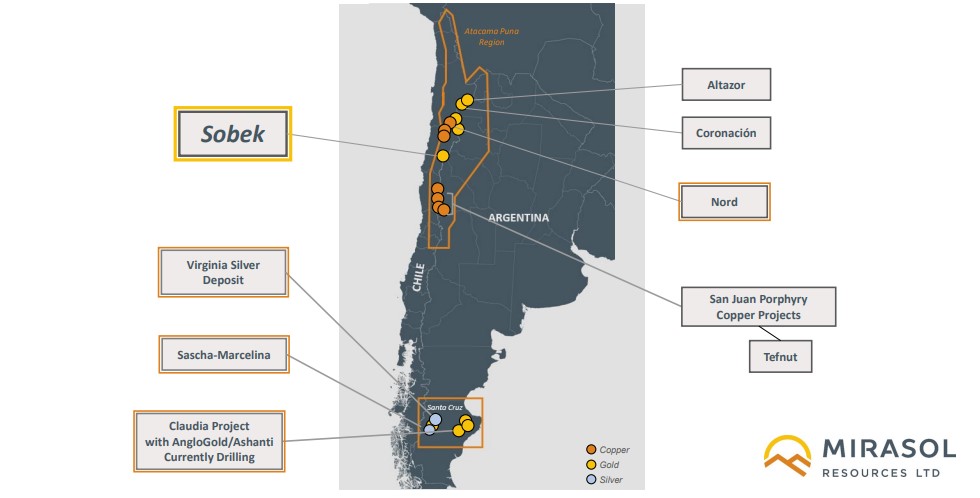
The global demand for copper is surging, driven by the green energy transition and electrification. This demand is reshaping the mining landscape in South America, particularly in Argentina and Chile. Recent moves by Canadian firm Mirasol Resources, selling off 14 copper exploration projects in Mendoza, Argentina, for US$50,000 to Mises Metals (a subsidiary of Argentina Metals Corp), signal a strategic realignment focused on maximizing potential in the burgeoning Vicuña district.
The Rise of the Vicuña Copper District
The Vicuña district, straddling the Argentina-Chile border in the Atacama Region, is rapidly becoming a hotspot for copper exploration. The planned US$17 billion megaproject – a combined operation between BHP, Lundin Mining’s Vicuña Corp, and the Josemaria project – is a major catalyst. This massive investment is attracting significant attention and infrastructure development, creating a positive feedback loop for surrounding exploration projects. According to a recent report by S&P Global, copper demand is projected to double by 2050, making regions like Vicuña critical to meeting future supply needs.
Mirasol’s decision to concentrate on its flagship Sobek project, located within the Vicuña district, is a calculated bet. Sobek’s proximity to the Filo del Sol and Lunahuasi deposits – two world-class copper-gold-silver systems – positions it within a highly mineralized corridor. Early results from Sobek show promising near-surface geochemical anomalies of copper, gold, and molybdenum, further bolstering its potential.
Strategic Portfolio Reshuffling: A Trend Across the Industry
Mirasol’s strategy isn’t isolated. Across the mining sector, companies are increasingly streamlining their portfolios, divesting non-core assets to focus on projects with the highest potential for significant returns. This trend is fueled by several factors:
- Capital Allocation: Focusing resources on fewer, high-impact projects allows for more efficient capital allocation and faster development.
- Risk Mitigation: Reducing geographic and commodity diversification can lower overall risk, particularly in a volatile market.
- Investor Pressure: Investors are increasingly demanding clear strategic focus and demonstrable progress on key assets.
Argentina Metals Corp’s acquisition of the “Cartera Mendoza” portfolio aligns with this trend. The company is actively building a substantial copper-focused portfolio exceeding 100,000 hectares, demonstrating a clear commitment to the metal. Similar acquisitions have been observed in Peru and Brazil, as companies scramble to secure access to copper resources.
The Role of Infrastructure and Binational Cooperation
The development of the Vicuña district is heavily reliant on improved infrastructure. The integrated Josemaria-Filo del Sol megaproject is expected to drive significant infrastructure improvements, including roads, power, and water supply. This will benefit not only the large-scale operations but also smaller exploration projects like Sobek.
Binational cooperation between Argentina and Chile is also crucial. The Vicuña district spans both countries, requiring coordinated regulatory frameworks and infrastructure planning. Recent agreements between the two governments to streamline cross-border mining projects are positive steps in this direction.
Looking Ahead: What to Expect
The next few years will be pivotal for the Vicuña district. We can anticipate:
- Increased Exploration Activity: The success of Josemaria and Filo del Sol will likely spur further exploration across the region.
- Consolidation: Smaller exploration companies may be acquired by larger players seeking to expand their land positions.
- Technological Innovation: Advanced exploration technologies, such as AI-powered data analysis and drone-based surveying, will play an increasingly important role in identifying new deposits.
- ESG Focus: Environmental, social, and governance (ESG) considerations will become even more critical, as companies strive to operate sustainably and responsibly.
Mirasol’s strategic shift highlights a broader trend in the mining industry: a focus on quality over quantity, and a willingness to prioritize projects with the greatest potential for long-term value creation. The Vicuña district is poised to become a major copper-producing region, and companies like Mirasol are positioning themselves to capitalize on this opportunity.
FAQ
Q: What is the significance of the Vicuña district?
A: It’s a rapidly developing copper-rich region straddling Argentina and Chile, attracting significant investment due to its geological potential and planned infrastructure improvements.
Q: Why is Mirasol selling its Argentine projects?
A: To focus resources and investment on its flagship Sobek project in the Vicuña district, which has high exploration potential.
Q: What is driving the demand for copper?
A: The global transition to green energy, including electric vehicles and renewable energy infrastructure, is significantly increasing demand for copper.
Q: What role does infrastructure play in the development of the Vicuña district?
A: Improved infrastructure, such as roads and power supply, is crucial for supporting mining operations and attracting further investment.
Did you know? The Filo del Sol deposit is considered one of the largest copper-gold-silver discoveries in recent decades.
Pro Tip: Keep an eye on companies actively consolidating land positions in the Vicuña district – they are likely to benefit from the region’s growth.
Want to learn more about the evolving landscape of South American mining? Explore our other articles or subscribe to our newsletter for the latest insights.