
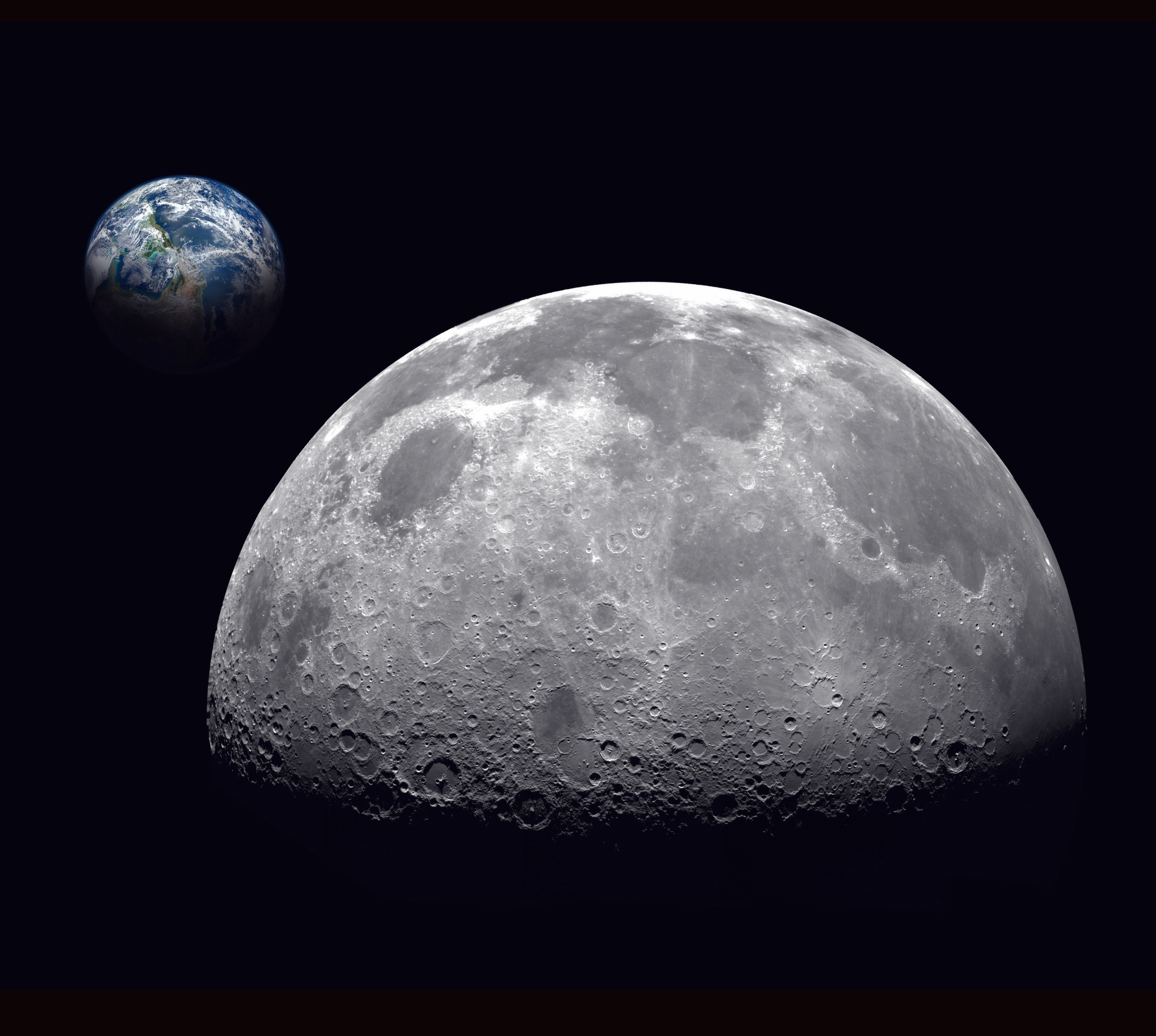
Moon meteorite reveals three ancient impacts in a single rock
A lunar meteorite named NWA 12593 provides evidence of a massive impact on the Moon approximately 3.5 billion years ago. According to a study led by Carolyn Crow of the University of Colorado Boulder and published in the journal Geology, this event aligns with similar collisions on Earth and the asteroid 4 Vesta, coinciding with the emergence of early life.
How did NWA 12593 record three separate catastrophes?
The meteorite, discovered by collectors in northwest Africa, acts as a geological diary. Carolyn Crow’s team identified three distinct collision events within a single stone. The oldest event happened roughly 3.5 billion years ago, leaving the deepest mark on the rock.
This first impact was powerful enough to melt the lunar surface into a glowing sheet of molten rock. While the mineral cubic zirconia—often used as a diamond substitute in labs—formed during this heat and later broke down, it left behind “ghost” internal structures. These crystals prove the rock experienced ferocious temperatures before cooling.

The second strike occurred later, shattering the hardened melt sheet. This blast created a “breccia,” a stone composed of broken, angular fragments welded together. Crow describes the resulting texture as similar to a piece of chipped-out sidewalk concrete. Because this process fused fragments from different lunar regions, the meteorite provides a broader sample of the Moon’s surface than a single landing site could offer.
The third and final impact was the event that sent the rock into space. A more recent collision blasted the breccia off the Moon, allowing it to drift through the vacuum before eventually falling to Earth.
Why does the 3.5 billion-year date matter for Earth’s history?
Earth’s geological record is incomplete because tectonic plates and erosion constantly recycle the planet’s surface. The Moon, lacking weather and a restless crust, preserves these scars for billions of years. This makes lunar rocks essential for understanding Earth’s violent youth.
The 3.5 billion-year date found in NWA 12593 creates a “three-way match” across the inner solar system. According to the Geology study, evidence of large strikes from this same era exists on Earth and on 4 Vesta, the fourth-largest body in the asteroid belt.
This alignment is rare. Crow notes that matching impact ages across three separate worlds almost never happens. It confirms that the inner solar system didn’t just experience a brief period of chaos during formation, but continued to take heavy hits for hundreds of millions of years.
The link to early biological life
For biologists, 3.5 billion years ago is a critical landmark. Fossil traces from this era, specifically those found in ancient Australian hot spring deposits, are among the earliest known signs of life on Earth.
Crow argues that these catastrophes must be included in any account of how life took hold. Massive impacts could rearrange a young planet’s surface and stir its oceans, potentially influencing the environment where the first organisms evolved.
What happens next for lunar and planetary research?
The discovery of this three-way match changes how scientists will analyze future samples. Researchers can now use the 3.5 billion-year window as a benchmark to test other desert meteorites or samples returned from upcoming Moon missions.
Geologists searching for Earth’s oldest, most hidden craters now have a specific time window to examine. Additionally, biologists modeling the survival of early life now have concrete dates for when the heaviest blows landed on the planet.
The study highlights a contrast in how we view planetary formation. While some theories suggest the “Late Heavy Bombardment” faded quickly, the data from NWA 12593 shows that large collisions remained a persistent threat well into the chapters where life was beginning to emerge.
Frequently Asked Questions
A breccia is a rock composed of broken fragments of minerals or older rocks cemented together by a fine-grained matrix, often formed during high-energy events like asteroid impacts.
The “NWA” stands for Northwest Africa, where the meteorite was discovered by collectors before being analyzed by scientists.
Researchers measure the slow decay of radioactive elements locked within the rock’s minerals to determine its age.
Join the Conversation: Do you think the violent history of the early solar system helped or hindered the start of life on Earth? Share your thoughts in the comments below or subscribe to our newsletter for more updates on planetary science.