
Much of what we know about the scale of the universe rests on a method worked out by a woman employed as a human computer at Harvard for a few cents an hour
The foundational measurements of the modern universe were built upon the labour of a “human computer” at the Harvard College Observatory. Henrietta Swan Leavitt developed a method for measuring stellar brightness that remains a critical component of the astronomical distance ladder today.
The Economics of Early Astronomical labour
In the late nineteenth and early twentieth centuries, the Harvard College Observatory utilized a workforce of women to process photographic plates. Director Edward Pickering hired these women, known as “Pickering’s computers,” partly because they could be paid less than men with similar training.
Leavitt joined the group in 1893 and later secured a permanent post in 1902. She was paid thirty cents an hour, a rate slightly higher than most other women performing the same manual cataloging and classification tasks.
Converting Observation into Measurement
While analyzing the Small Magellanic Cloud, Leavitt identified a specific relationship among Cepheid variables. She noticed that brighter stars tended to take longer to complete their cycle from bright to dim, and back.
Leavitt assumed the stars in the Small Magellanic Cloud were roughly the same distance from Earth. This allowed her to convert the observable period of pulsation into the star’s true output of light.
Before this discovery, distances could only be measured for nearby stars using parallax, a method that failed beyond about a hundred light years. Leavitt’s relation provided a way to bypass this limit.
Scaling the Known Universe
To turn the period-luminosity relation into a distance tool, the scale required “anchoring” via the true distance of at least one Cepheid. While Leavitt was restricted to cataloging and not permitted to pursue this calibration, others like Ejnar Hertzsprung and Harlow Shapley completed the process.
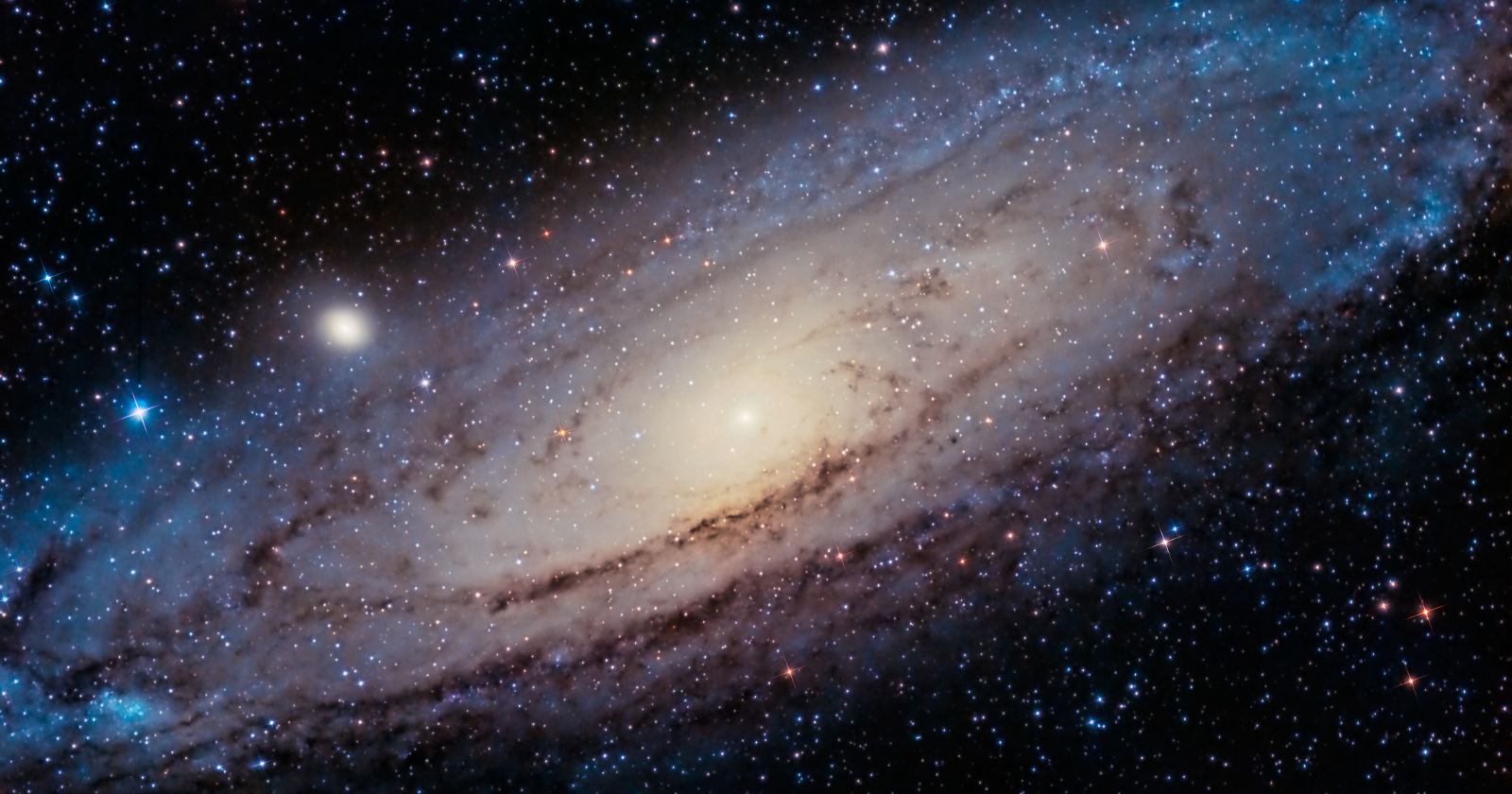
In the 1920s, Edwin Hubble applied this relation to the Andromeda nebula. He proved that Andromeda was a separate galaxy, vastly increasing the known size of the universe.
Hubble later combined these distances with redshift measurements. This work led to the observation that more distant galaxies recede faster, forming the basis for the theory of the expanding universe.
The Cost of Recognition
Despite the significance of her findings, Leavitt’s professional recognition was limited. Edward Pickering published her work under his own name, noting only that it had been prepared by Miss Leavitt.
In 1925, mathematician Gösta Mittag-Leffler intended to nominate her for the Nobel Prize in Physics. However, Leavitt had died of cancer in 1921, and the prize is not awarded posthumously.
Modern Implications and Ongoing Disputes
Now referred to as Leavitt’s Law, this relation was central to the work that shared the 2011 Nobel Prize in Physics regarding the accelerating expansion of the universe.
A 2025 analysis by Louise Breuval, Caroline Huang, and Adam Riess revisited Leavitt’s original 1912 data. They compared her hand-drawn relations with modern measurements to identify where early photographic plates may have skewed the data.
This re-examination is critical because a disagreement persists regarding the expansion rate of the universe. The rate measured via the Cepheid ladder does not match the rate inferred from the early universe.
Because the lower rungs of the distance ladder depend on Leavitt’s original work, her 1912 data may continue to be re-measured to resolve this cosmological conflict.
Frequently Asked Questions
What is the period-luminosity relation?
It is the observation that among Cepheid variable stars, those that are brighter take a longer time to complete a cycle of brightening and dimming.
How did Leavitt’s work change our understanding of the universe?
It allowed astronomers to measure distances far beyond the 100 light-year limit of parallax, enabling Edwin Hubble to discover that Andromeda was a separate galaxy and that the universe is expanding.
Why is Leavitt’s 1912 data still being analyzed in 2025?
There is a current disagreement between the expansion rate measured by the Cepheid distance ladder and the rate inferred from the early universe, making the original foundational data essential for review.
Do you believe the historical underpayment of foundational researchers impacts the way we value modern data collection?