
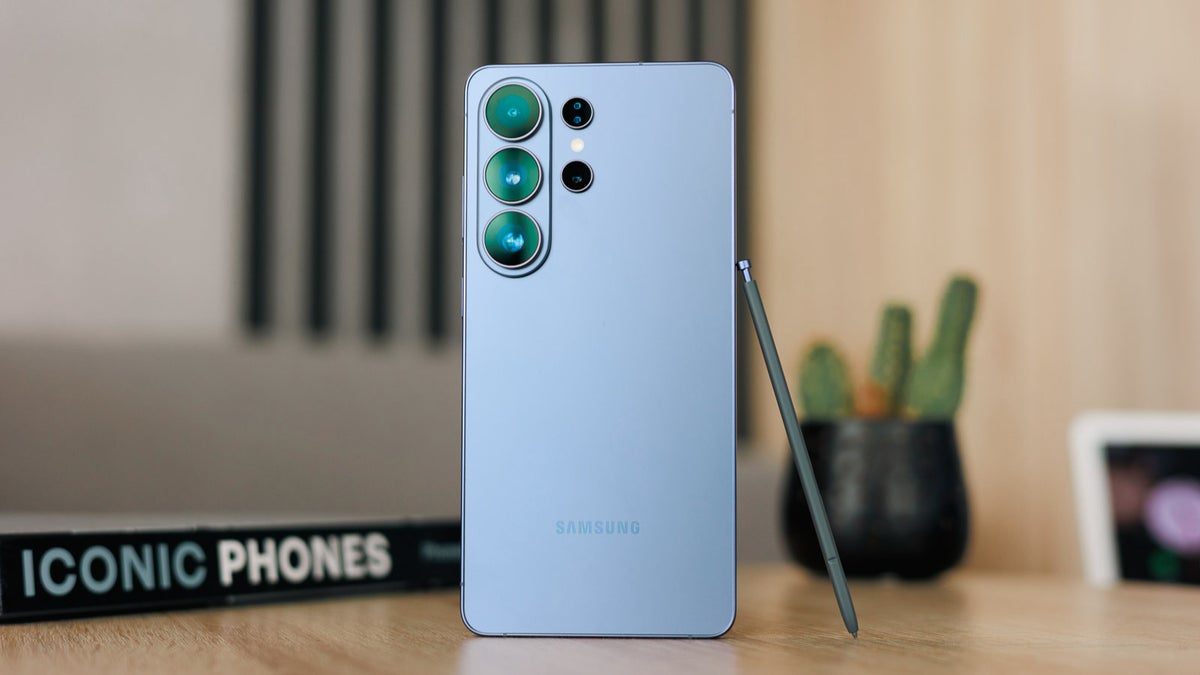
The Galaxy S27 Ultra could outperform every flagship before it thanks to this Samsung research team
The Invisible Wall: Why Your Flagship Phone Suddenly Slows Down
You buy the fastest chip money can buy, the most vivid screen, and a camera that rivals a DSLR. But thirty minutes into a high-end gaming session or a heavy 4K video export, something happens. Your frame rates dip, the interface stutters, and the back of the device becomes uncomfortably warm.
This isn’t a software bug; it’s a survival mechanism known as thermal throttling. To prevent the internal components from literally cooking themselves, your phone’s operating system forces the processor to dial back its speed. Essentially, your $1,200 powerhouse turns into a mid-range device the moment it gets too hot.
Beyond the Vapor Chamber: The Shift to Active Cooling
For years, Samsung and other giants have relied on passive cooling—specifically vapor chambers. These are flat, vacuum-sealed copper plates that spread heat across a larger surface area. While effective for basic tasks, they have a ceiling. As we move toward 2nm chip architecture and heavy on-device AI processing, passive cooling is no longer enough.
Enter active liquid cooling. Unlike a vapor chamber, which relies on passive evaporation and condensation, an active system uses a tiny pump to circulate coolant through a sealed loop. This moves heat away from the chipset far more aggressively, allowing the processor to maintain peak clock speeds for significantly longer.
Liquid vs. Air: Which Wins?
While some manufacturers have experimented with tiny internal fans (active air cooling), the industry is leaning toward liquid for a few key reasons:
- Noise: Fans create a high-pitched whine that is distracting during calls or quiet gaming.
- Weight and Space: Fans require air intake and exhaust vents, which compromise the phone’s water resistance and structural integrity.
- Efficiency: Liquid has a higher thermal conductivity than air, meaning it can absorb and transport more heat per square millimeter.
Learning from the Gaming Giants
Samsung isn’t venturing into unknown territory; they are playing catch-up. Gaming-centric brands like Nubia have already integrated sophisticated systems. The RedMagic series, for instance, utilizes a pump-driven “AquaCore” liquid loop.
The data shows a stark difference. In 3DMark stress tests, traditional flagships often see their performance “sag” significantly. In contrast, devices with active liquid cooling can maintain roughly 75% GPU stability. While not a “magic switch” that eliminates heat entirely, it provides a massive advantage in sustained performance.
The AI Heatwave: Why This Matters Now
Why is this becoming a priority for a mainstream line like the Galaxy Ultra? The answer is On-Device AI.
Large Language Models (LLMs) and generative AI tools require immense computational power. Unlike a quick Google search, running a complex AI model locally on your device puts a sustained load on the NPU (Neural Processing Unit) and GPU. This generates a different kind of heat profile—steady and intense—that passive vapor chambers struggle to dissipate.
Recent performance data suggests that competitors like the OnePlus 13 have managed to maintain nearly 50% higher prolonged performance on similar chipsets compared to some Galaxy models. For Samsung to maintain its “Ultra” status, solving the thermal equation is no longer optional; it’s a necessity.
Potential Impact on Future Devices:
- Smoother Gaming: No more “frame drops” after 20 minutes of Genshin Impact or Warzone.
- Faster Exports: 8K video rendering that doesn’t slow down halfway through.
- Battery Health: Lower internal temperatures generally lead to slower battery degradation over time.
Frequently Asked Questions
Will active liquid cooling make my phone thicker?
Likely not significantly. The goal of current research is to integrate micro-pumps and thin-film tubing that fit within the existing chassis dimensions.
Does liquid cooling risk leaking inside the phone?
These are sealed, closed-loop systems. The amount of coolant is minimal and contained in industrial-grade materials, making the risk of a leak extremely low.
Will this improve battery life?
Indirectly, yes. When a chip runs too hot, it becomes less efficient. By keeping the chip in its “sweet spot” of temperature, the device can operate more efficiently, though the pump itself will consume a tiny amount of power.
What do you think?
Would you trade a bit of battery capacity for a phone that never throttles? Or is a fan-less, silent design more important to you? Let us know in the comments below or join the conversation on our community forum!
Subscribe to our newsletter for the latest deep dives into mobile hardware.