
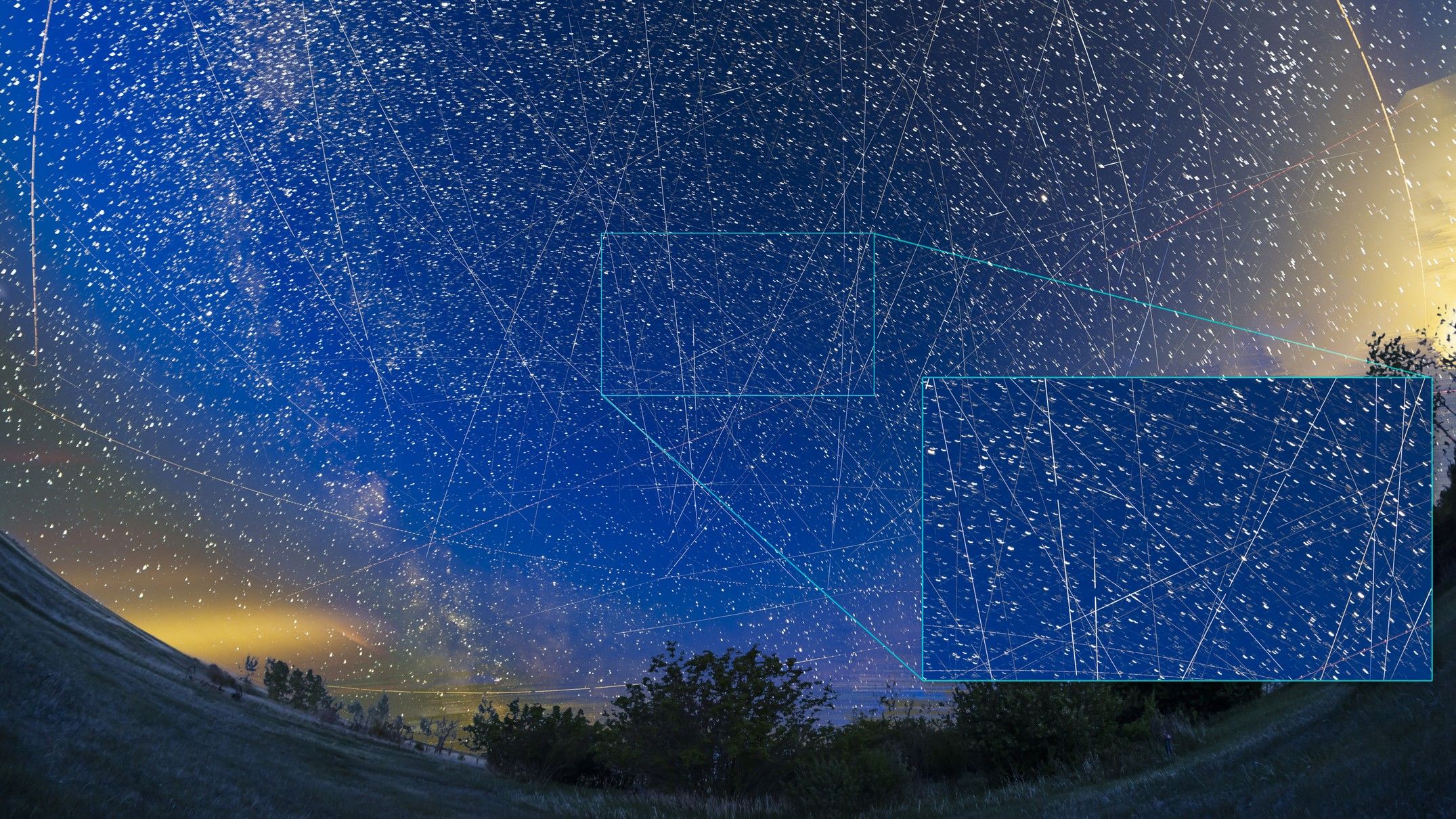
My quiet obsession with satellites – and how they’re ruining everything
The night sky is undergoing a rapid transformation as the number of artificial satellites in low Earth orbit (LEO) grows from thousands to tens of thousands. According to recent industry projections, the rise of mega-constellations—led by SpaceX’s Starlink and joined by upcoming projects from Amazon and other entities—is permanently altering the visibility of stars for both amateur stargazers and professional astronomers. While these satellites provide global internet access, they introduce significant challenges for ground-based observation, including light pollution in long-exposure photography and radio-frequency interference for sensitive scientific instruments.
Why are satellites becoming more visible at night?
Satellites are most visible during the “twilight hour,” immediately after sunset or before sunrise. According to astronomical observations, this occurs because the sun remains illuminated for satellites in high orbits even after it has dipped below the observer’s horizon. As the night progresses and the sun moves deeper below the horizon, satellites pass into Earth’s shadow, rendering them invisible to the naked eye. This seasonal phenomenon is most pronounced during summer months when the sun stays closer to the horizon for longer periods, providing a consistent window for satellite reflection.
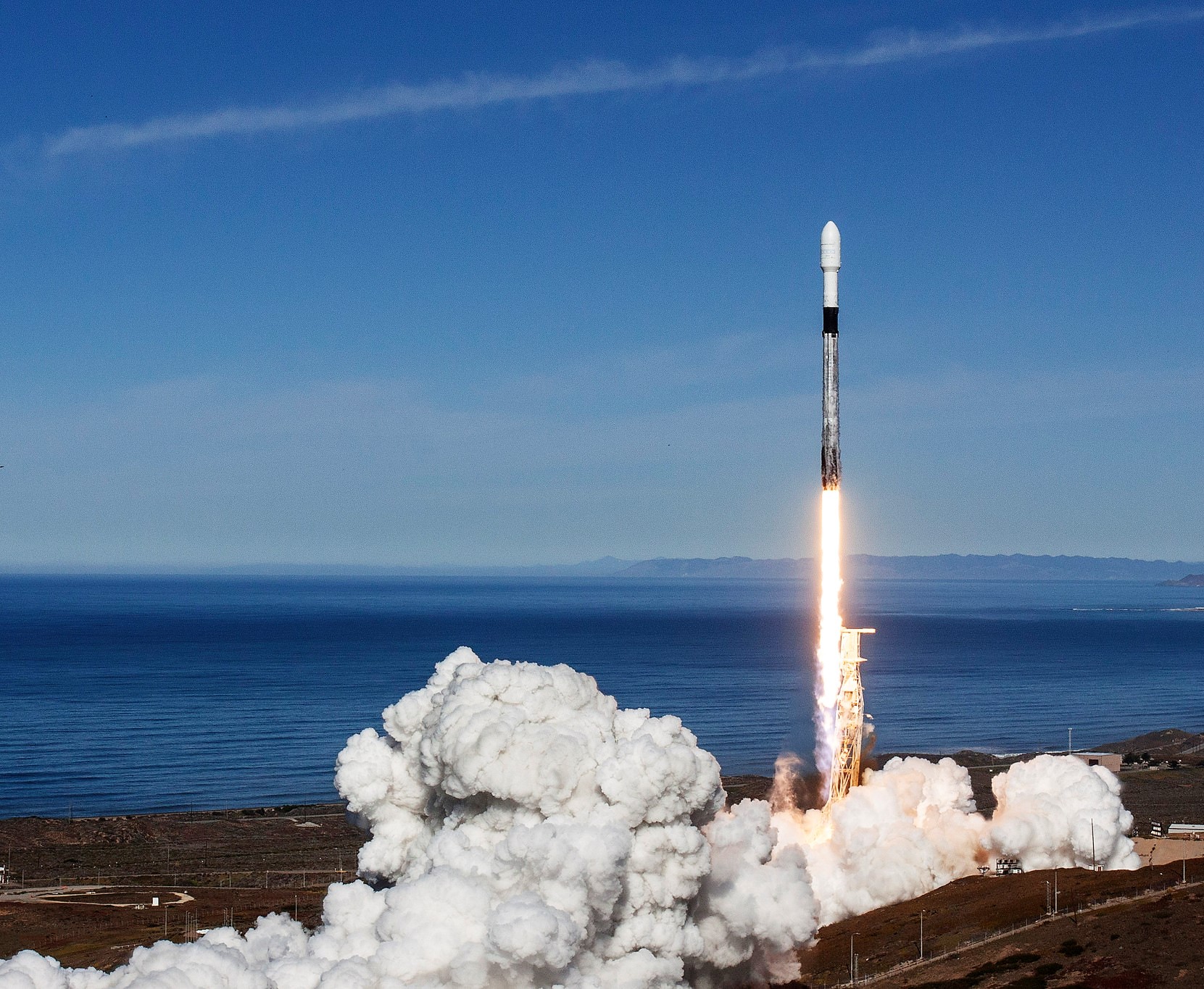
Before the launch of modern mega-constellations, observers tracked “Iridium flares.” These were caused by the reflective antennas of Iridium communication satellites, which created brief, intense flashes of light. The practice ended in 2019 when the company replaced its aging satellite fleet with non-flaring models.
How do mega-constellations affect professional astronomy?
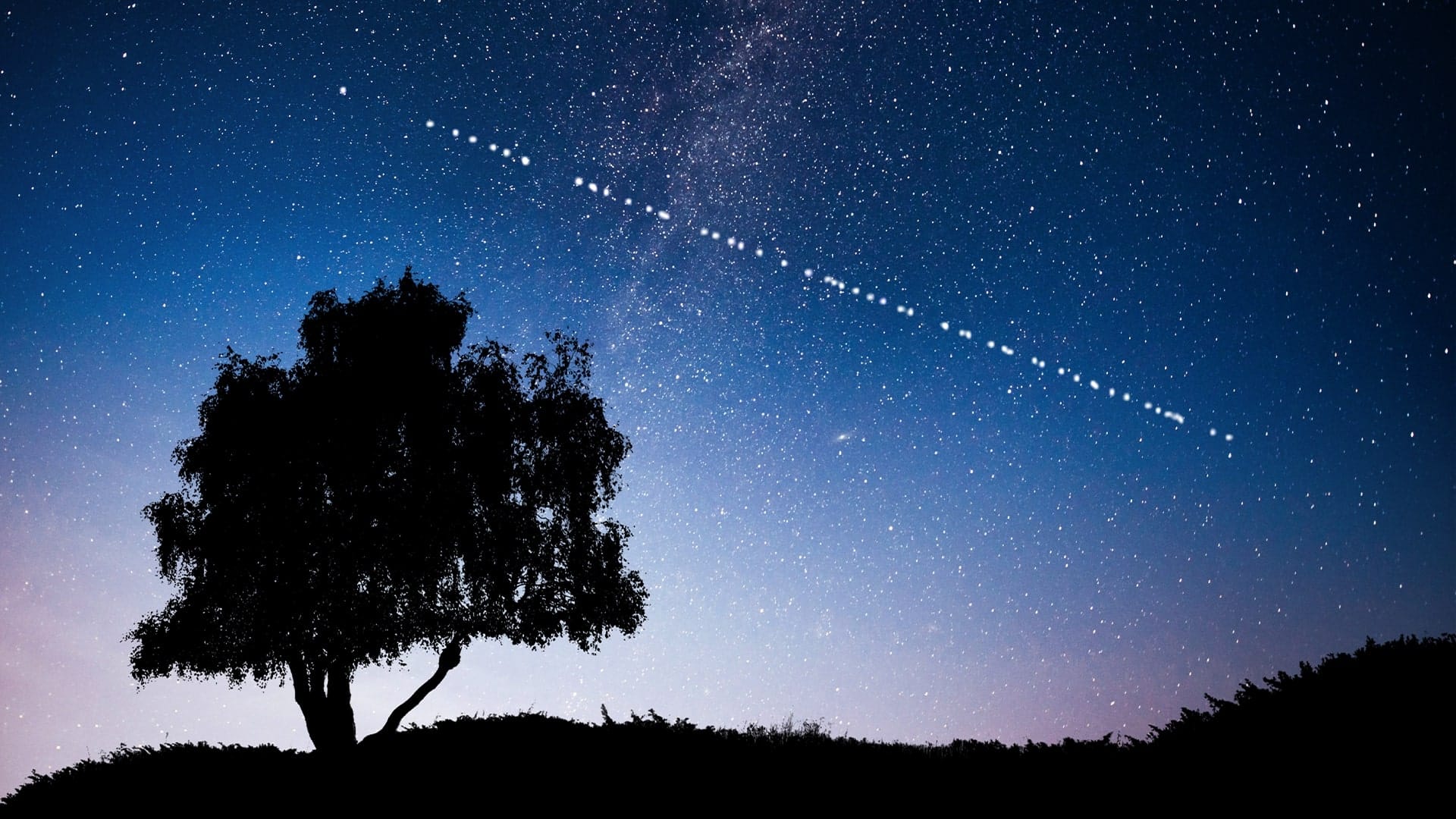
The impact of satellite constellations extends beyond the visual disruption of “trains” of lights. Professional astronomers, particularly those utilizing wide-field surveys like the upcoming Rubin Observatory, face significant data contamination. According to reports from the astronomy community, satellite streaks can compromise sensitive spectroscopic data. While astrophotographers can mitigate the impact of streaks through image stacking and post-processing software, radio-frequency interference remains a harder challenge for radio astronomers. The accumulation of debris and active satellites in LEO creates a complex environment that requires ongoing mitigation efforts between aerospace companies and the scientific community.
What is the future of the orbital environment?
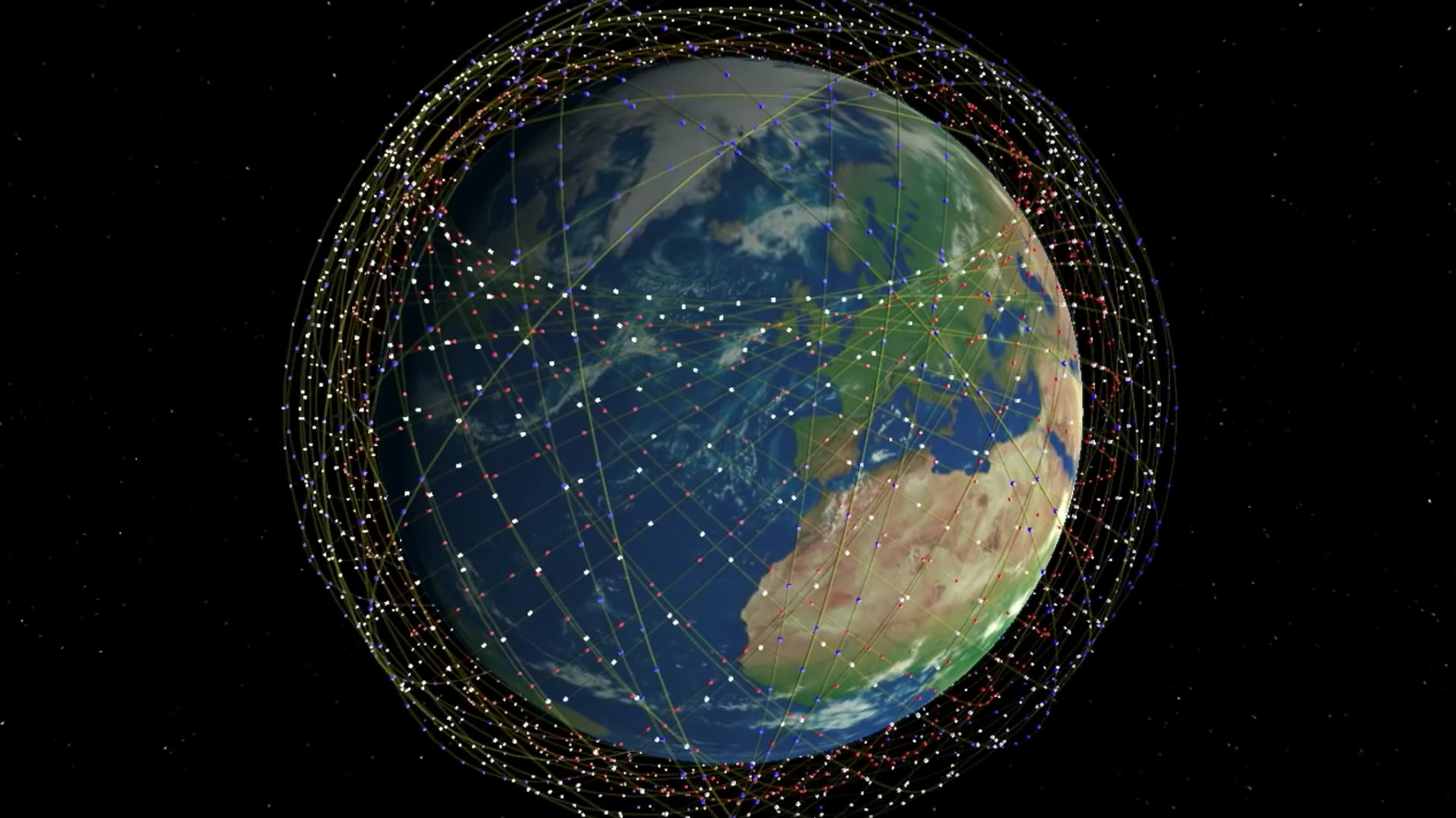
The current count of approximately 11,000 Starlink satellites is expected to grow as companies pursue global coverage. Industry forecasts suggest the total number of satellites could reach 40,000 within a few years as Amazon and other competitors deploy their own constellations. While these satellites will eventually de-orbit and burn up in the atmosphere, the cycle of deployment and replacement ensures a constant presence in the night sky. For the observer, this means the “alien invasion” look of early Starlink launches will likely become a permanent, albeit less novel, feature of the horizon.
Pro Tips for Stargazing in the Satellite Era
- Use Tracking Apps: Tools like NASA’s “Spot The Station” or Heavens Above allow you to predict when the International Space Station (ISS) and other objects will pass overhead.
- Target Deep Sky Objects: Focus on constellations like Lyra, which houses the bright star Vega, during the middle of the night when satellites are hidden in Earth’s shadow.
- Leverage Twilight: Use the hour after sunset to observe the ISS, as its brightness is highest when the sun is still catching its panels while the ground is dark.
Frequently Asked Questions
Are all moving lights in the sky satellites?
Not necessarily. While satellites appear as steady, moving points of light, they can be distinguished from aircraft by their lack of blinking navigation lights and their silent, constant trajectory across the sky.
Can I still see the ISS?
Yes. The International Space Station remains highly visible. Because it orbits at a specific altitude, you can track its path using augmented reality apps to see exactly when it will enter and leave your field of view.
Will these satellites stay in the sky forever?
No. According to aerospace standards, satellites are designed to eventually de-orbit and burn up upon re-entry into Earth’s atmosphere, though this process happens gradually as new satellites replace the old ones.
Have you spotted a satellite train or captured the ISS in your night sky photography? Share your experiences or your favorite stargazing apps in the comments below. For more updates on upcoming celestial events, subscribe to our weekly newsletter.