

Eclipse S-CORE: How Open Source Middleware Transforms Software-Defined Vehicles
Eclipse S-CORE and the Shift Toward Open-Source Automotive Middleware
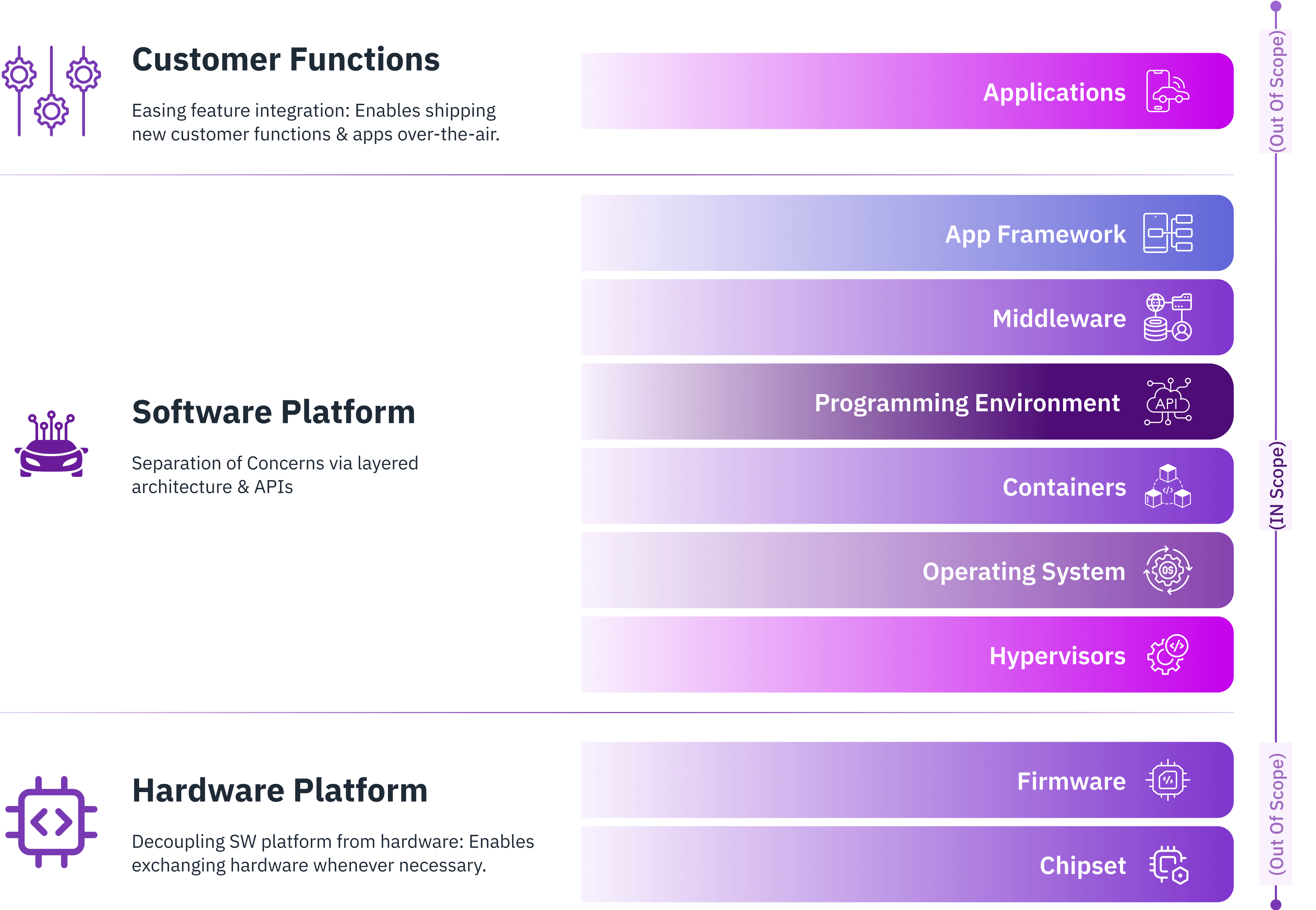
The Eclipse S-CORE project aims to standardize middleware for software-defined vehicles (SDVs) by providing a common, open-source foundation. According to Sven Kappel of ETAS and Markus Rettstatt of Mercedes-Benz Tech Innovation, this collaborative model reduces redundant development, accelerates integration, and allows manufacturers to shift resources toward brand-differentiating features rather than non-differentiating base software.
Unlike traditional development cycles that rely on long, static specification phases, the Eclipse S-CORE project uses a “code-first” methodology, allowing developers to test and integrate working code earlier in the vehicle lifecycle.
Why Is the Automotive Industry Moving to Open Source?
Automakers are increasingly burdened by the complexity of developing proprietary software stacks from scratch. Markus Rettstatt explains that many companies currently solve identical technical problems in parallel, which is neither efficient nor sustainable. By adopting an open-source model, OEMs and their partners can share the burden of building foundational layers. This creates a stable, long-term platform that, according to Sven Kappel, avoids the “start-from-zero” trap every time a new vehicle generation is launched.
How Does S-CORE Shorten Time-to-Delivery?
Development speed increases when teams stop relying solely on documents and start working with shared code. Rettstatt notes that in traditional environments, integration happens late in the process, leading to massive, costly validation efforts. Because S-CORE provides a functional, “public release” stack, developers can begin building application-level features much sooner. Kappel adds that this approach allows for parallel development, where universities and new partners can contribute to the ecosystem without waiting for sequential project phases to finish.
Look for projects that prioritize “artifact-driven” development over “spec-driven” development. When the code itself is the primary reference, it eliminates the ambiguity often found in complex, multi-page technical specifications.
The Cultural Challenge of Open-Source Collaboration
Technical hurdles are often easier to clear than cultural ones. Kappel points out that while the industry is comfortable with open-source components in infotainment, applying the same principles to safety-critical stacks requires a significant shift in mindset. Companies that are fierce competitors in the marketplace must learn to share knowledge and co-develop foundational code. This transparency is the real “cultural break” from the traditional, siloed automotive development model.
How Are Safety and Compliance Managed?
A common fear is that open-source software might complicate safety certifications. To address this, the S-CORE project integrates safety, security, and documentation requirements from the very start of the development cycle. According to Kappel, the project works with external auditors, such as Exida, to ensure that the processes and artifacts generated are “safety-certifiable.” This allows distributors to take the open-source base and evolve it into a fully certified, production-ready product for OEMs.
Frequently Asked Questions
What is the difference between S-CORE and traditional middleware?
Traditional middleware is often proprietary and isolated, leading to project-specific customizations. S-CORE provides a shared, open-source foundation that is maintained by a community, ensuring higher interoperability and long-term stability.
Is the entire vehicle software becoming open source?
No. The industry is focusing open-source efforts on “non-differentiating” base software. Areas like brand-specific user experiences, unique product logic, and data-driven features remain proprietary to each OEM.
Why does S-CORE support both C++ and Rust?
The project uses a pragmatic approach: C++ is maintained for its established ecosystem and legacy integration, while Rust is utilized for new, safety-critical components where memory safety and concurrency are essential.
Are you interested in how open-source standards will reshape the future of the automotive industry? Subscribe to our weekly newsletter for the latest insights on software-defined vehicles and industrial innovation.