

Nanomaterial Arrays Achieve Spatial Coherence Without Lasers Or Condensates
Researchers from the University of Cambridge, the University of St Andrews, and the University of California San Diego have demonstrated room-temperature spatial coherence in plasmonic nanogap arrays. According to Arul and colleagues, this driven-dissipative system uses strong near-field coupling to synchronize light-emitting dipoles without the need for cryogenic cooling or specific laser frequencies.
How does room-temperature spatial coherence work in nanogap arrays?
The system relies on plasmonic nanocavities—structures that concentrate light—arranged in two-dimensional arrays. These arrays feature sub-nanometre gaps of 0.9nm between nanoparticles, which act as resonators. According to the research team, these gaps enable strong near-field coupling between organic dye emitter molecules embedded within them.
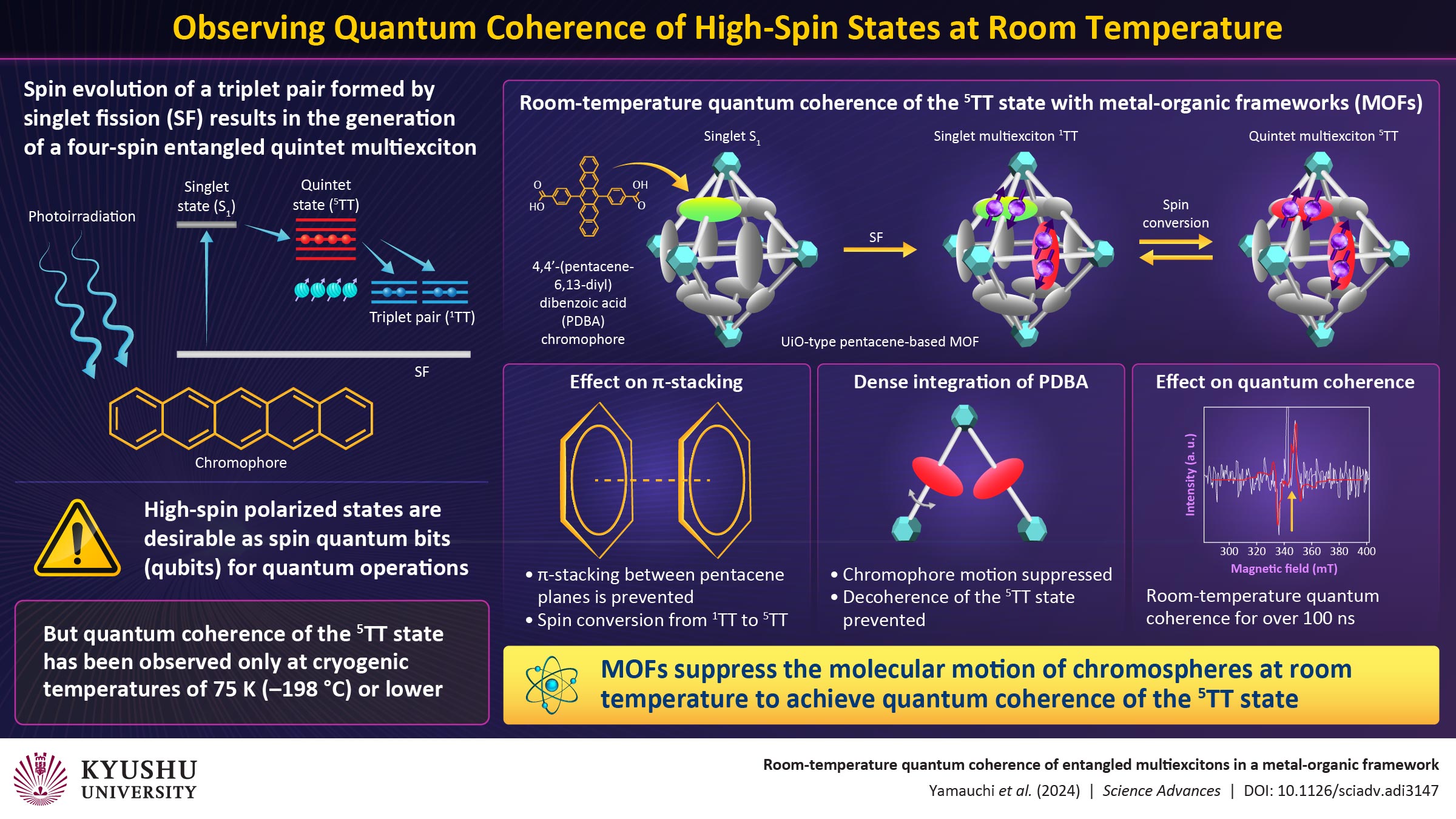
When subjected to continuous-wave illumination, these emissive dipoles interact with a collective optical mode. This interaction drives the dipoles into a synchronized state. The researchers found that increasing pump power alters the spatial spread of coherence, though it does not result in spectral narrowing or directional emission.
Why is this different from conventional lasers?
Most light sources, including traditional lasers and Bose-Einstein condensates, prioritize temporal coherence—the consistent timing of emitted photons. They typically require narrow frequency ranges or extreme cryogenic cooling to function. This new system operates differently by prioritizing spatial coherence, which is the aligned positioning of light waves.

Arul and colleagues report that their system maintains spatial alignment despite rapid emission decay and incoherent illumination. While traditional lasers focus on a narrow beam and specific wavelengths, this driven-dissipative system accepts high energy loss and uses it to support complex spatial correlations.
| Feature | Conventional Lasers | Plasmonic Nanogap Arrays |
|---|---|---|
| Primary Coherence | Temporal (Timing) | Spatial (Positioning) |
| Temperature | Often requires cooling | Room Temperature |
| Illumination | Specific frequencies | Continuous-wave/Incoherent |
What are the implications for quantum and photonic technology?
The ability to achieve synchronization at room temperature removes a significant barrier to scalability. According to the researchers, this platform could enable the development of photonic and quantum technologies with ultralow mode volumes and high Purcell enhancement.
Because the system does not require the bulky infrastructure associated with cryogenic cooling, it opens a path for integrating synchronized light-emitting components into smaller, more durable devices. This allows for the manipulation of light at the nanoscale in ways that were previously considered impossible due to the rapid decay of excited states.
What challenges remain for scaling this technology?
While the demonstration proves that spatial coherence is possible, the researchers note that the precise parameters for optimal performance are not yet fully defined. Current data shows that emission characteristics change as pumping power increases, but the exact thresholds for maximum efficiency remain unclear.
This lack of full characterization limits immediate scalability. According to the study, further investigation is needed to ensure consistent synchronization can be maintained across larger and more complex arrays. Until these parameters are mapped, the technology remains a proof-of-concept for studying synchronization phenomena rather than a ready-to-use industrial tool.
Frequently Asked Questions
What is spatial coherence?
Spatial coherence refers to the fixed phase relationship between different points in a light wave, essentially meaning the light waves are aligned in their relative positions.
Why is room-temperature operation significant?
Most quantum states require temperatures near absolute zero to prevent thermal noise from destroying coherence. Achieving this at room temperature simplifies hardware and reduces costs.
What are plasmonic nanogaps?
These are incredibly small spaces (in this case, 0.9nm) between metallic nanoparticles that concentrate electromagnetic fields, allowing light to interact strongly with nearby molecules.
Does this replace the laser?
No. It provides a different type of coherence (spatial rather than temporal) and serves as a new platform for synchronization and quantum research rather than a direct replacement for laser beams.
Want to stay updated on the latest breakthroughs in qubits and hardware? Explore more deep dives on Quantum Zeitgeist or leave a comment below to discuss how room-temperature coherence might impact your field.