

NASA Ends Maven Mission After Losing Contact With Mars Probe
Beyond the Silence: What the End of MAVEN Tells Us About the Future of Mars Exploration
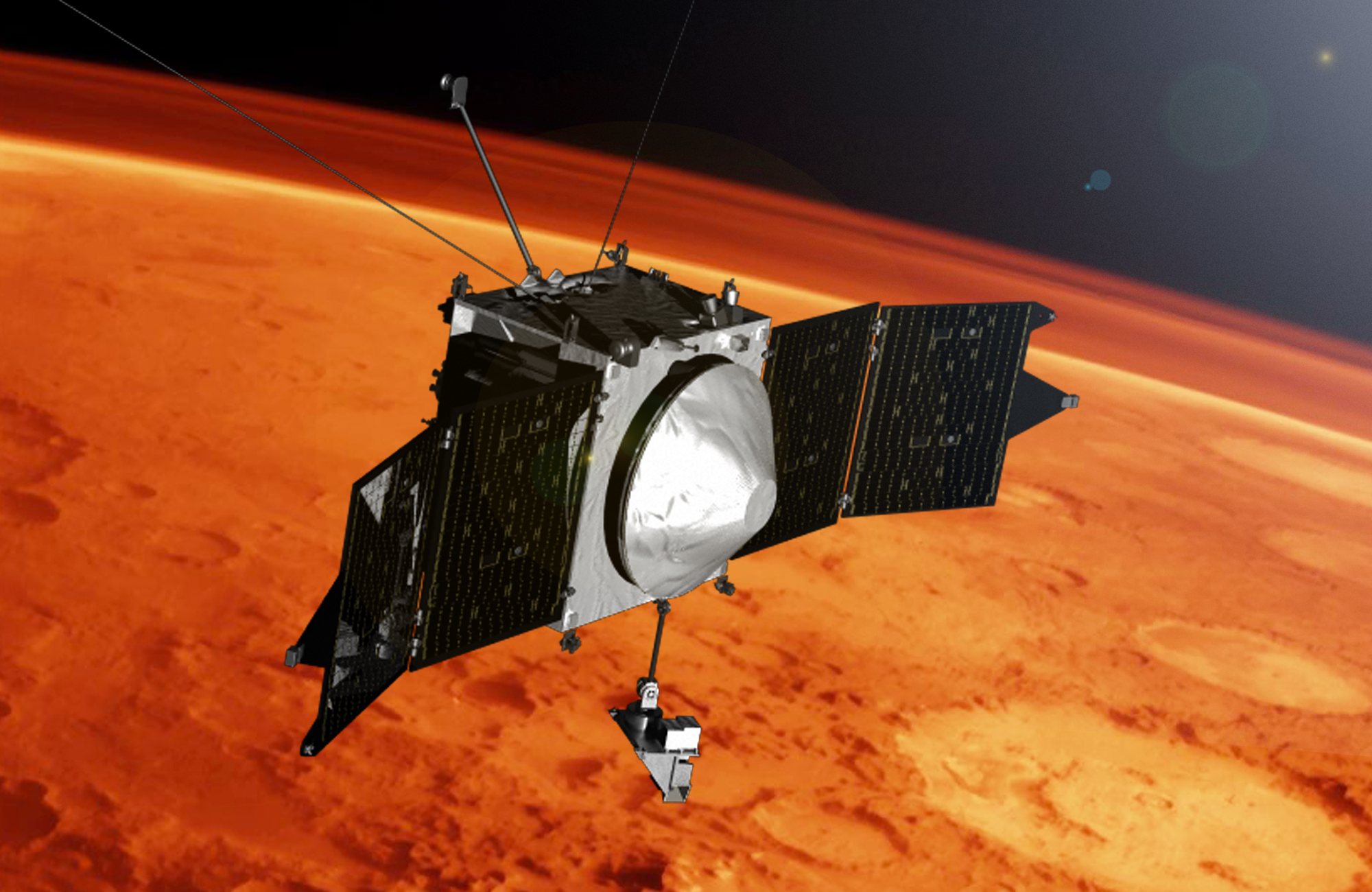
The recent silence from NASA’s MAVEN (Mars Atmosphere and Volatile Evolution) spacecraft isn’t just the end of a decade-long mission; it’s a signal of where planetary science is heading. For over 11 years, MAVEN acted as our eyes in the Martian sky, peeling back the layers of the Red Planet’s atmosphere to understand why a once-watery world became a frozen desert.

As we transition from robotic observation to the ambition of human footprints, the lessons learned from MAVEN are becoming the blueprints for the next generation of space exploration. The shift is moving from “what happened” to “how do we survive there?”
The Next Frontier: Mapping “Space Weather” for Human Safety
One of MAVEN’s most critical contributions was documenting how solar storms strip away the Martian atmosphere. For future astronauts, this isn’t just an academic curiosity—it’s a matter of life and death. Without a thick atmosphere or a global magnetic field, Mars is essentially an open door for high-energy solar particles.
Future trends in exploration will likely see the deployment of “Weather Satellites” similar to those we have on Earth. These will provide real-time alerts for solar flares, allowing colonists to retreat to shielded habitats before lethal radiation hits the surface.
We are moving toward a model of Active Planetary Monitoring. Instead of sporadic missions, we will likely see a permanent constellation of sensors orbiting Mars to track the “solar wind” and its interaction with the surface, ensuring that the Perseverance and Curiosity legacies lead to safe human landing zones.
The Quest for Ancient Water and Microbial Life
By understanding how Mars lost its atmosphere, scientists can better pinpoint where water might still exist in subsurface ice deposits. The trend in astrobiology is shifting toward Deep Crustal Exploration. If the surface is too hostile due to atmospheric loss, the answers to “Are we alone?” likely lie kilometers beneath the Martian soil.

For more on how we search for life, check out our guide on the latest in astrobiology and exoplanet research.
Building a “Galactic Internet”: The Evolution of Space Communication
The end of MAVEN highlighted a critical vulnerability: the reliance on a few key relay orbiters. When MAVEN went silent, it created a “small delay” in the data transmission from surface rovers like Perseverance. This reveals a bottleneck in our current space infrastructure.
The future of Martian communication isn’t a few lonely satellites; it’s a Mars-based Mesh Network. Imagine a “Starlink for Mars”—a swarm of small, redundant satellites that ensure no single point of failure can sever the link between Earth and the Red Planet.
This infrastructure will be essential for:
- High-bandwidth video feeds: Moving beyond static images to real-time 4K streaming of Martian landscapes.
- Low-latency control: Allowing Earth-based scientists to operate drones and rovers with far greater precision.
- Inter-planetary routing: Creating a standardized communication protocol that allows different nations’ spacecraft to share data seamlessly.
The “Ghost Ship” Phenomenon: Orbital Decay and Space Sustainability
MAVEN will remain in orbit for another 50 to 100 years before eventually crashing into the Martian surface. This brings up a growing concern in the space industry: Orbital Debris.
As we launch more missions, the space around Mars will become crowded with “ghost ships”—dead satellites that can collide with active missions. The emerging trend in space law and engineering is Active Debris Removal (ADR). We may soon see “space tugs” designed to push defunct satellites into controlled reentry or move them to “graveyard orbits.”
Sustainability is no longer just for Earth. The concept of Planetary Stewardship is becoming central to how agencies like NASA and the European Space Agency (ESA) plan their long-term strategies.
Frequently Asked Questions
Why did MAVEN lose contact?
Preliminary evidence suggests the spacecraft began spinning rapidly after passing behind Mars, which likely drained its batteries and knocked out its communication systems.
Will the loss of MAVEN stop other Mars missions?
No. NASA has other relay spacecraft in operation, and the network is resilient enough to compensate for the loss, though it may cause slight delays in data transmission.
What is the “solar wind”?
The solar wind is a constant stream of charged particles released from the upper atmosphere of the Sun. It is the primary force responsible for stripping away the atmospheres of planets without strong magnetic fields.
Can we “refill” the Martian atmosphere?
This is the theoretical concept of terraforming. While currently science fiction, understanding MAVEN’s data on atmospheric escape is the first step in knowing if such a feat is even physically possible.
What do you think? Will we ever successfully terraform Mars, or should we focus on building enclosed cities beneath the surface? Let us know your thoughts in the comments below or share this article with a fellow space enthusiast!
Want more deep dives into the future of technology and space? Subscribe to our weekly newsletter to get the latest insights delivered straight to your inbox.