
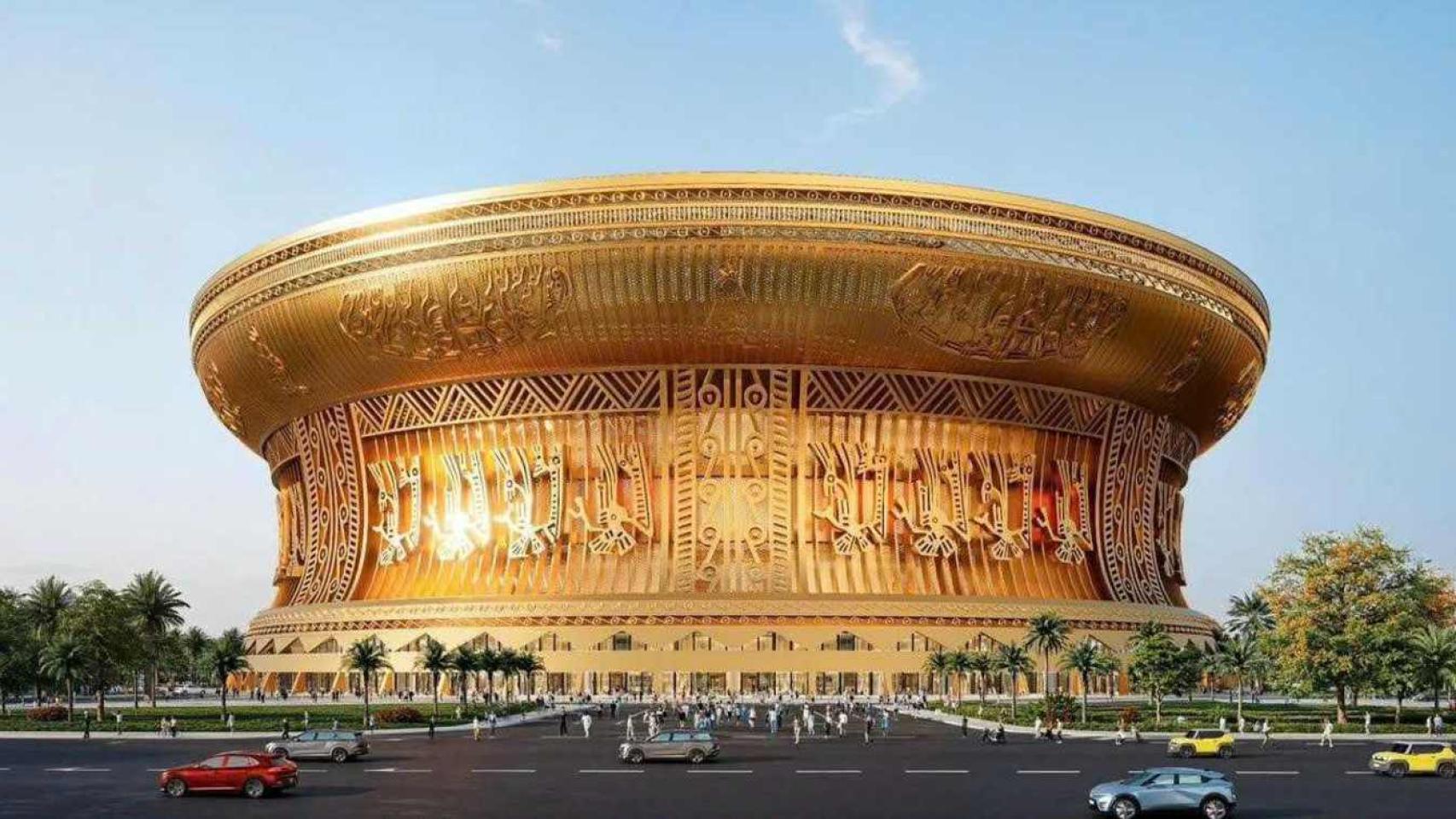
Vietnam’s Massive 135,000-Seat Trong Dong Stadium to Rival Spotify Camp Nou
Beyond the Game: The Rise of the ‘Hyper-Stadium’
For decades, a stadium was simply a place to watch a match. You entered, you sat in a concrete bowl, and you left. But we are entering the era of the “Hyper-Stadium”—massive, multi-functional ecosystems that blur the line between sports venues and futuristic cities.
The Trong Dong Stadium in Vietnam is the latest blueprint for this evolution. With a staggering capacity of 135,000 and an investment that dwarfs traditional builds, it isn’t just competing with the likes of the Spotify Camp Nou; it is redefining what a sports venue is meant to do for a city.
The Blueprint of the Future: Integration and Hybridity
The trend is moving toward “hybridity.” We are seeing a shift where the pitch is no longer a permanent fixture. The inclusion of movable grass systems—similar to those found in the Tottenham Hotspur Stadium—allows a venue to switch from a world-class football pitch to an NFL field or a concert hall in a matter of hours.
When you combine a retractable roof with a disappearing pitch, the stadium becomes a climate-controlled chameleon. This removes the seasonal limitations of sports and transforms the venue into a year-round engine for the local economy.
Sustainable Engineering at Scale
The challenge with projects of this magnitude is the environmental footprint. The next generation of stadiums is pivoting toward “regenerative architecture.” This includes natural ventilation systems to reduce air conditioning costs and massive rainwater harvesting arrays to maintain pitches without draining city reserves.
Architecture as Cultural Storytelling
We are seeing a departure from the “generic glass bowl” aesthetic. Future stadium trends emphasize Architectural Identity. The Trong Dong Stadium’s inspiration from the Đông Sơn bronze drums is a prime example of using a sports venue to project national heritage on a global stage.
Architecture is now being used as a branding tool. By integrating traditional motifs with ultra-modern materials, cities can attract global tourism while reinforcing local pride. It is no longer just about the seats; it is about the silhouette on the skyline.
The ‘Sports City’ Model: More Than Just a Match Day
The most significant trend highlighted by the Olympic Sports City project is the move toward Sports-Led Urbanism. The stadium is no longer the destination; it is the “tractor” used to pull in residential, commercial, and medical infrastructure.
By building a macro-city around the stadium—complete with eSports arenas, hospitals, and housing—developers like Vingroup are essentially creating a private city where the sports venue acts as the primary marketing tool. This model increases real estate value exponentially, turning a sports investment into a diversified urban portfolio.
One can see similar logic in the “Espai Barça” project, where the goal is to create a holistic experience that extends far beyond the 90 minutes of a game. You can read more about sustainable urban planning trends to see how this fits into the wider global shift.
The Tech Stack: AI, 5G, and the Frictionless Fan Experience
The future of the fan experience is “frictionless.” The integration of AI and 5G is moving toward a world where your phone is your ticket, your wallet, and your concierge.
- Real-time Crowd Management: AI-driven heat maps to eliminate queues at concessions and bathrooms.
- Hyper-Personalization: AR (Augmented Reality) overlays on mobile devices providing real-time player stats as you watch the game.
- Energy Intelligence: Smart grids that adjust lighting and temperature based on real-time occupancy.
Frequently Asked Questions
What is a “Smart Stadium”?
A smart stadium uses IoT, 5G, and AI to improve the fan experience, optimize operations, and increase revenue through data-driven insights.
Why are stadiums becoming part of “Sports Cities”?
To avoid the financial risk of maintaining a massive venue that is only used a few times a month. Integrating housing and retail ensures a constant flow of people and income.
How do movable pitches work?
The grass is grown on massive trays that slide on rails beneath the stands, allowing a different surface (like concrete or synthetic turf) to be used for non-sporting events.
What do you think?
Is the era of the mega-stadium a bold leap forward or an architectural overkill? We want to hear your thoughts on the future of sports infrastructure.
Join the conversation in the comments below or subscribe to our newsletter for more insights into the future of urban design!