
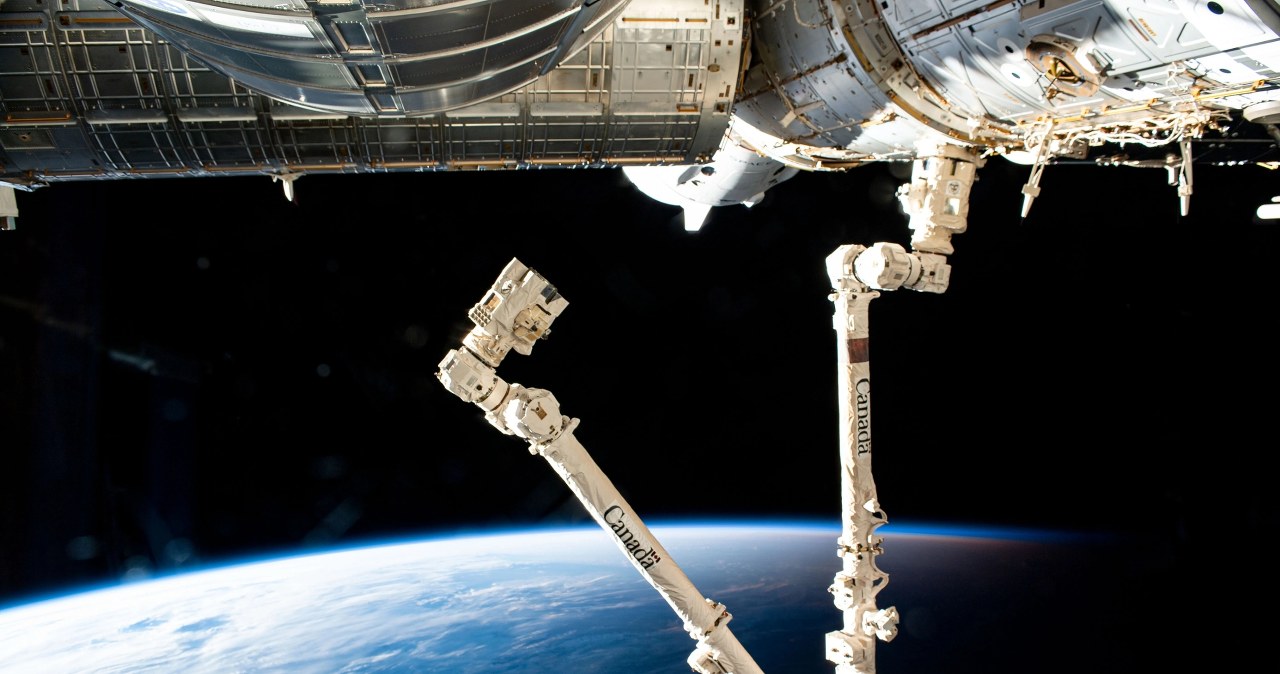
NASA Plans Spacewalk to Repair ISS Canadarm2 Robotic Arm
NASA will deploy two astronauts from Expedition 74 for a spacewalk in late June to repair the Canadarm2 robotic arm on the International Space Station (ISS). According to NASA, a joint failure causing high electrical current requires the manual installation of a spare part already stored on the station.
The malfunction was identified after a joint in the arm became stuck in late May. NASA confirmed the repair cannot be performed remotely, necessitating an extravehicular activity (EVA). The agency is collaborating with the Canadian Space Agency (CSA) to finalize the mission details.
Why does Canadarm2 need a manual repair?
Analysis by NASA and the CSA revealed a “high current” issue in one of the arm’s joints. This electrical anomaly caused the component to jam, rendering remote software fixes useless. Because the mechanical failure is physical, astronauts must physically replace the faulty element with a spare already available on the ISS.

The arm’s inability to function perfectly risks the station’s ability to capture incoming cargo. While the arm hasn’t failed completely, the current state prevents full operational reliability for future docking maneuvers.
Who will perform the repair on the ISS?
Two members of the four-person Expedition 74 crew will conduct the spacewalk. While NASA hasn’t named the specific pair, the candidates include Chris Williams, Jessica Meir, and Jack Hathaway from NASA, as well as Sophie Adenot from the European Space Agency (ESA).

NASA expects to announce the final crew selection and the exact date of the EVA shortly before the mission begins. This repair is a priority to ensure the station remains capable of receiving essential supplies.
How critical is the robotic arm to station operations?
Canadarm2 is essential for the “berthing” process of cargo ships. Unlike some vessels that dock automatically, others require the arm to “grapple” the ship and guide it to a docking port. In April, the arm was used to secure a Northrop Grumman Cygnus XL cargo capsule.

According to station records, Canadarm2 has captured 50 ships as of 2024. It also serves as a mobile platform for astronauts during other spacewalks, moving them across the exterior of the station to reach repair sites.
Is the Canadarm2 reaching the end of its lifespan?
The arm is significantly older than its original design intended. Installed in 2001, Canadarm2 was built to last for a specific operational window. According to CSA data, the arm is now 10 years past its original expiration date.
This creates a stark contrast between the arm’s intended longevity and its actual utility. While it was not originally designed to handle the volume of commercial cargo ships flying today, it has evolved into a cornerstone of ISS logistics. This current failure highlights the growing challenge of maintaining legacy hardware in the harsh environment of space.
The ongoing partnership between NASA and the CSA, solidified by the arm’s success, continues to facilitate Canadian astronaut flights to the ISS, including the upcoming mission of Josh Kutryk as part of Crew-13.
Frequently Asked Questions
What is the Canadarm2?
It is a 17-meter-long robotic arm on the ISS used for moving equipment, assisting astronauts, and capturing cargo spacecraft.
Can the arm be fixed from Earth?
No. NASA and the CSA confirmed the current joint failure requires a physical replacement via a spacewalk.
Will this affect current ISS missions?
The repair is scheduled for late June to prevent disruptions to future cargo arrivals and station maintenance.
What do you think about the reliance on 25-year-old technology in space? Should NASA prioritize replacing the arm entirely or continue patching legacy systems? Let us know in the comments below or subscribe to our newsletter for more space tech updates.