
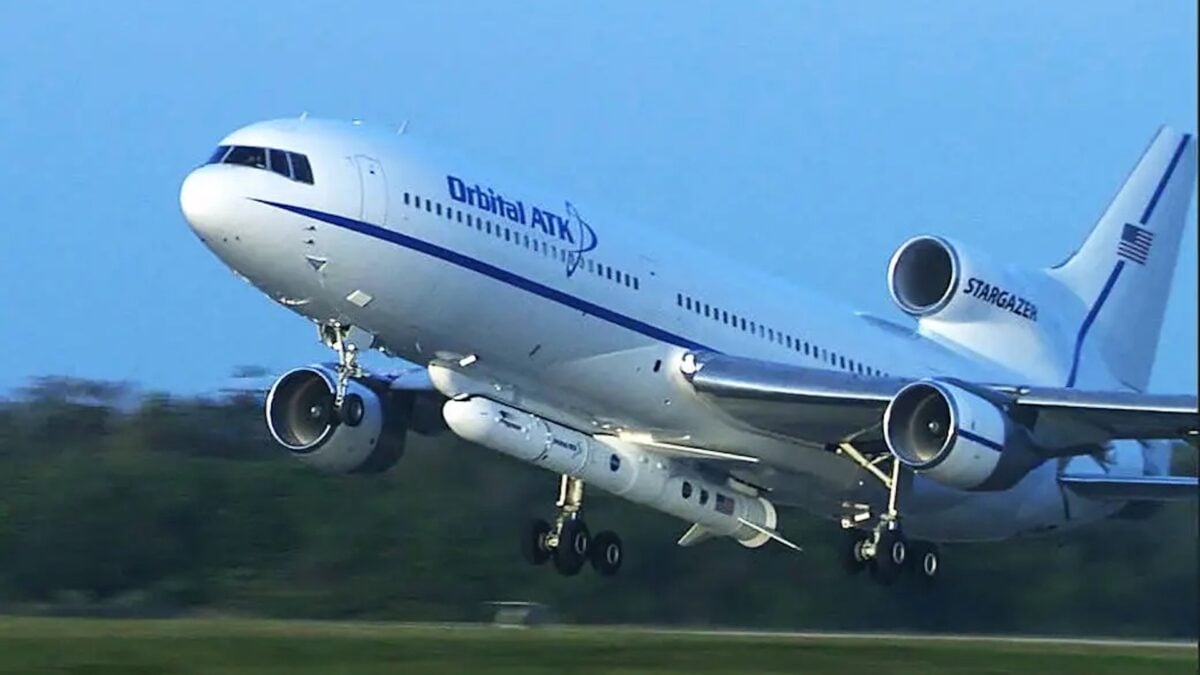
NASA to Rescue Decaying Swift Observatory Using Rare L-1011 Stargazer
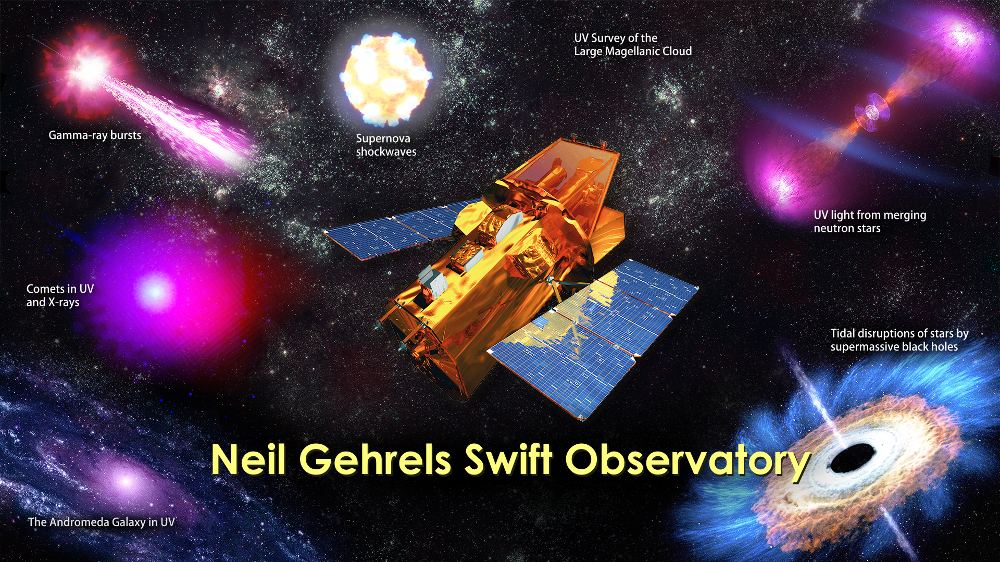
NASA is deploying a Lockheed L-1011 Stargazer aircraft to launch the Katalyst Space LINK spacecraft, a mission aimed at extending the life of the Neil Gehrels Swift Observatory. By utilizing a Northrop Grumman Pegasus XL rocket released at 40,000 feet, the agency intends to boost the telescope’s decaying orbit and prevent its uncontrolled reentry into Earth’s atmosphere, according to NASA mission briefings.
How Air-Launch Technology Extends Satellite Lifespan
Air-launch systems, such as the Stargazer platform, provide a unique orbital advantage by bypassing the dense lower atmosphere. According to Northrop Grumman, the Lockheed L-1011 carries the Pegasus XL rocket to 40,000 feet before release. This altitude reduces the propellant requirements typically needed to reach specific orbital inclinations. For the Swift Observatory, which maintains a 20.6-degree inclination to avoid the South Atlantic Anomaly’s radiation, this method is the most budget-efficient way to deliver a servicing vehicle to the telescope’s precise coordinates.
The Shift Toward Robotic In-Orbit Servicing
The mission to save the Swift Observatory marks a shift toward sustainable satellite management. As orbital debris concerns rise, NASA is testing whether startups like Katalyst Space can perform “nudge” maneuvers to stabilize aging assets. If the LINK spacecraft successfully docks and boosts Swift, it could establish a new precedent for robotic servicing. This approach contrasts with the traditional “launch and forget” model, potentially saving agencies billions by extending the utility of hardware already in space.
Comparison: Ground-Launch vs. Air-Launch Costs
| Feature | Ground-Launch | Air-Launch (Pegasus XL) |
|---|---|---|
| Propellant Efficiency | Lower (Higher drag) | Higher (Starts at 40k ft) |
| Flexibility | Fixed launch sites | Mobile launch capability |
Why Satellite Orbit Decay Requires Intervention
Satellites in low-Earth orbit face constant atmospheric drag, which gradually pulls them toward the planet. The Swift Observatory, launched in 2004, has lost significant altitude over two decades. NASA reports a 50% probability of uncontrolled reentry by mid-2026 without intervention. By using a servicing spacecraft to adjust its trajectory, the agency aims to mitigate the risk of the telescope burning up prematurely in the atmosphere.
Frequently Asked Questions
Why can’t the telescope just stay in its current orbit?
Atmospheric drag constantly slows satellites in low-Earth orbit. Without periodic “boosts” to increase altitude, they will eventually fall into the denser parts of the atmosphere and disintegrate.
What makes the Stargazer aircraft unique?
It is the only remaining L-1011 TriStar modified to carry and deploy orbital rockets from the air, a capability that allows for precise, targeted launches that ground-based rockets struggle to match for specific, sensitive orbits.
Is this the first time NASA has rescued a satellite?
While NASA has performed high-profile repairs like the Hubble Space Telescope servicing missions, the use of a private-sector startup to perform an autonomous robotic boost is a new, cost-effective evolution of this strategy.
Have thoughts on the future of robotic satellite servicing? Join the conversation below or sign up for our weekly aerospace newsletter to stay updated on the latest orbital operations.