
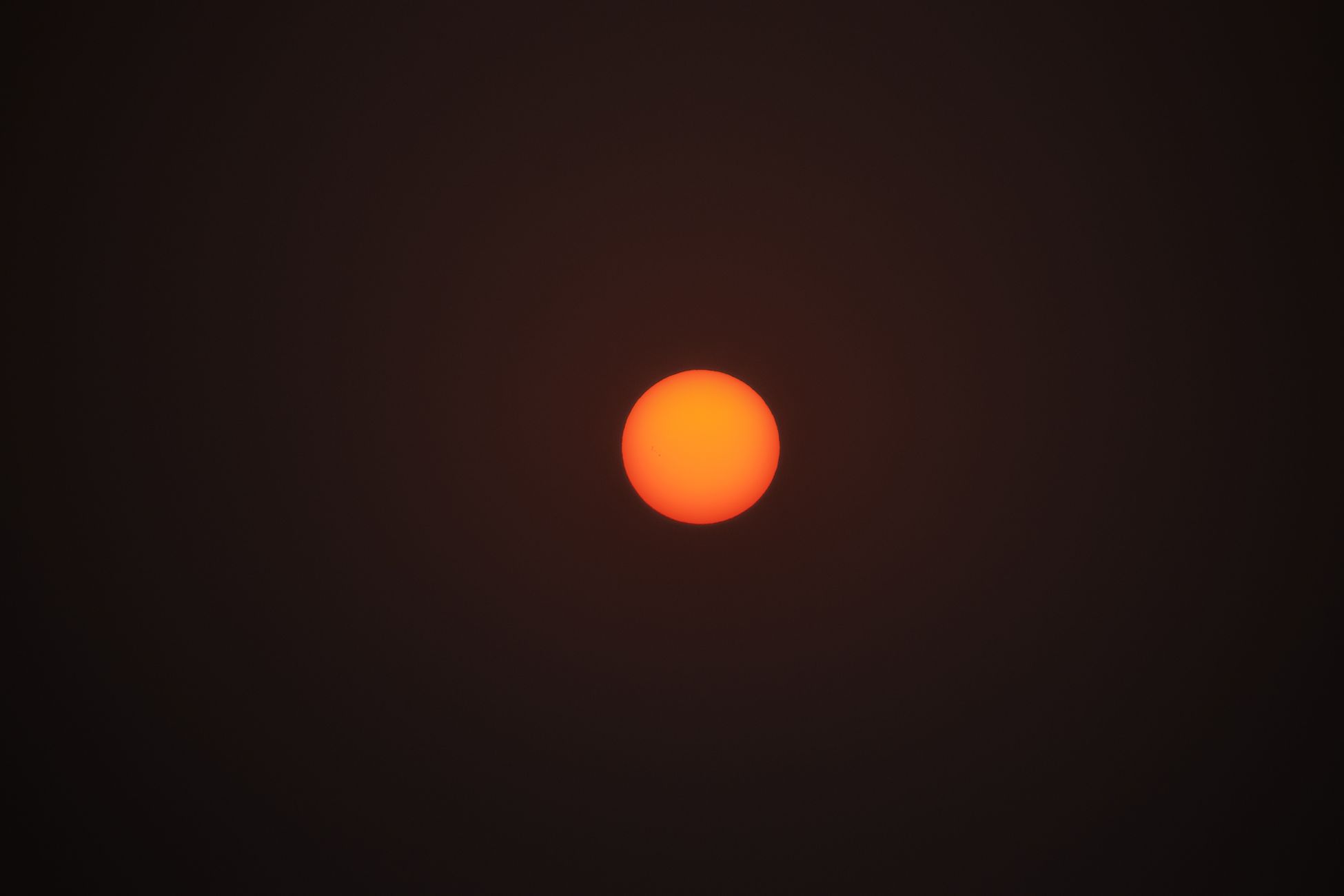
NASA’s STEREO-A spacecraft happened to be sitting in the path of the July 2012 Carrington-class storm and took the full hit instead of Earth – the only reason we have detailed measurements of a blow we never felt
The Carrington-Class Threat: Why STEREO-A Remains Our Best Defense
On July 23, 2012, NASA’s STEREO-A spacecraft recorded a Carrington-class coronal mass ejection (CME) that would have crippled modern global power grids had it struck Earth. While Earth avoided the direct impact, the spacecraft’s instruments captured the only detailed, in-situ measurements of an extreme solar storm in history. According to NASA, this data provides the essential “ground truth” for modeling how a similar event would impact modern, electrified infrastructure today. Without the fortuitous positioning of this probe, scientists would lack the empirical data required to assess the risks our satellites and transformers face from the next major solar superstorm.
How a Spacecraft Became a Solar Sentinel
The STEREO-A (Solar Terrestrial Relations Observatory Ahead) mission was launched in 2006 to provide three-dimensional views of the Sun. By July 2012, its orbit placed it on the far side of the Sun relative to Earth. When the active region fired, it sent a massive plasma cloud directly toward the probe. According to NASA researchers, the event was not a single eruption but two CMEs in rapid succession. The first cleared a low-density path, allowing the second to accelerate to speeds of 3,000 kilometers per second. This “double-hit” scenario remains the gold standard for researchers studying how solar storms reach extreme intensities.
Why Earth Missed the 2012 Superstorm
The 2012 eruption missed Earth simply because the solar active region had rotated out of our direct line of sight. Solar active regions complete a rotation every 27 days, and by the time this flare occurred, it was pointed at “empty space”—or rather, at the exact coordinates where STEREO-A was positioned. Solar physicists note that had this eruption occurred just one week earlier, it would have struck the Earth’s magnetosphere head-on. Unlike the 1989 Quebec blackout, which was a severe G4-level event, a direct hit from the 2012 storm would have likely exceeded the magnitude of the 1859 Carrington Event.
The 1859 Carrington Event was so intense that it caused telegraph systems to fail globally, with some operators reporting sparks flying from their equipment. Modern infrastructure, which relies on high-voltage transformers, is significantly more vulnerable to these geomagnetically induced currents.
Estimating the Economic Impact of a Solar Strike
A Carrington-class event poses a multi-trillion dollar risk to the global economy. According to independent economic assessments cited by space weather analysts, a direct strike could cause $1 to $2 trillion in initial damages. The recovery timeline for damaged high-voltage transformers is estimated to be between four and ten years. Because these transformers are not mass-produced and require long lead times for manufacturing, a synchronized failure across North America or Europe would lead to prolonged, continental-scale power outages. The STEREO-A dataset is now the primary tool used to simulate these failure points and refine emergency preparedness models.
How Scientists Use “Ground Truth” Data
Before the 2012 event, scientists relied on indirect evidence like ice-core nitrate spikes and historical telegraph logs to estimate solar storm intensity. STEREO-A changed this by providing direct measurements of magnetic field topology, proton density, and plasma velocity. Researchers now treat the STEREO-A dataset as the canonical reference for extreme space weather, much like climate scientists use Vostok ice cores to understand prehistoric temperatures. This shift from historical speculation to empirical measurement allows for more accurate statistical predictions, with experts estimating a 10-15 percent probability of a Carrington-class event hitting Earth in any given decade.
Frequently Asked Questions
Could we see the next Carrington-class event coming?
Yes, but the lead time is short. We rely on coronagraphs and deep-space probes like STEREO-A to detect CMEs. Once a storm leaves the Sun, it takes roughly 15 to 72 hours to reach Earth, depending on its velocity.
Is STEREO-A still operational?
Yes. Despite its twin, STEREO-B, being lost in 2014, STEREO-A continues to provide critical stereoscopic observations of the Sun, helping scientists map solar storms from multiple angles.
What is the “Dst index”?
The Disturbance Storm Time (Dst) index measures the intensity of geomagnetic storms. The 2012 event reached levels comparable to the 1859 Carrington Event, making it the most significant solar storm of the modern satellite era.
To track current solar activity, monitor the NOAA Space Weather Prediction Center. They provide real-time alerts on solar flares and geomagnetic storm watches that affect satellite operations and power grids.
*Are you prepared for a long-term power grid disruption? Share your thoughts on space weather preparedness in the comments below, or subscribe to our newsletter for the latest updates on heliophysics and space exploration.*