

New CDC Data Shows Adult Obesity Rates Exceed 35% in 23 US States
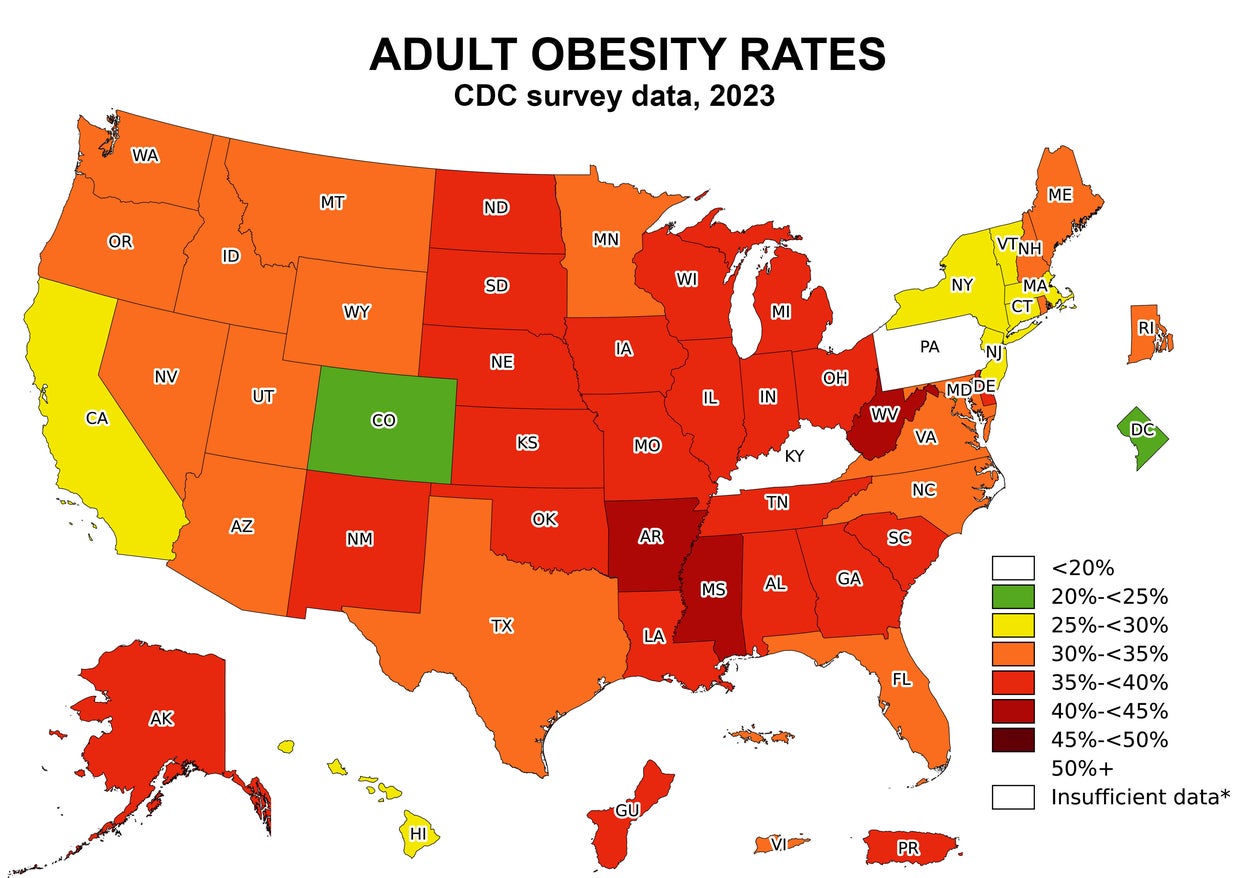
New data from the Centers for Disease Control and Prevention (CDC) reveal that 23 U.S. states now report an adult obesity prevalence of 35% or higher. This marks a significant shift from 2013, when no state reached this threshold. Currently, every state in the U.S. has an adult obesity rate of at least 20%, according to self-reported height and weight data from the Behavioral Risk Factor Surveillance System (BRFSS).
Understanding the scope of adult obesity
Obesity is clinically defined as having a body mass index (BMI) of 30 or higher. The latest 2023 figures show that the 23 states with the highest rates include Alabama, Alaska, Arkansas, Delaware, Georgia, Illinois, Indiana, Iowa, Kansas, Louisiana, Michigan, Mississippi, Missouri, Nebraska, New Mexico, North Dakota, Ohio, Oklahoma, South Carolina, South Dakota, Tennessee, West Virginia, and Wisconsin. Guam and Puerto Rico also report rates at or above 35%.

Did You Know? Before 2013, the prevalence of adult obesity had not reached the 35% threshold in any single U.S. state, highlighting a decade of significant growth in these health statistics.
Demographic disparities in health data
The impact of obesity is not uniform across all populations. Combined data from 2021–2023 show that Black adults report obesity rates at or above 35% in 38 states, followed by Hispanic adults in 34 states, and American Indian or Alaska Native adults in 30 states. White adults reached this threshold in 16 states, while Asian adults did not report an obesity prevalence of 35% or higher in any of the 37 states, one territory, and the District of Columbia where data were collected.
Addressing complex factors
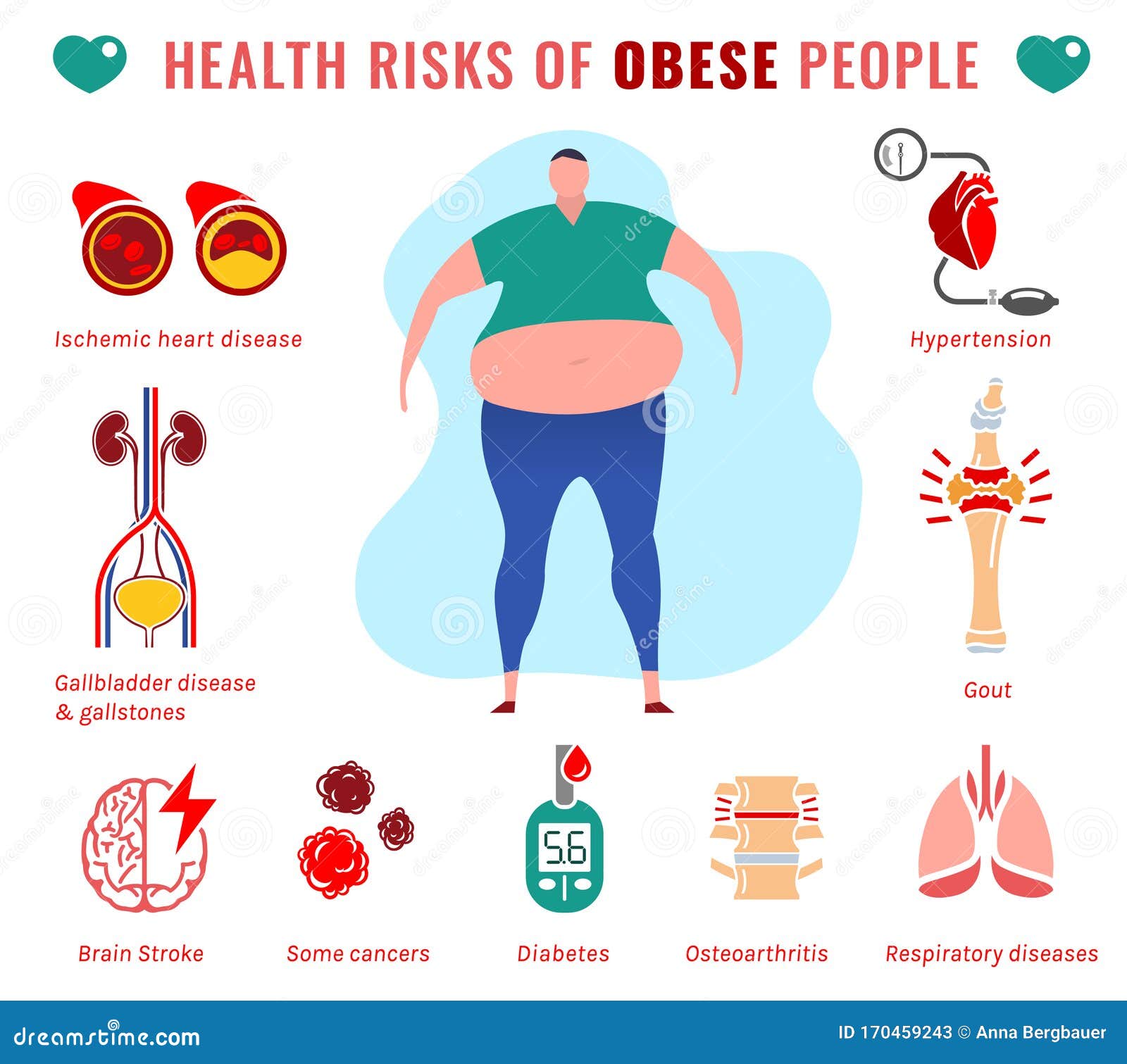
Experts emphasize that obesity is a complex disease rather than a simple result of individual willpower. According to Ruth Petersen, MD, director of the CDC’s Division of Nutrition, Physical Activity, and Obesity, factors such as genetics, medication side effects, stress, sleep quality, and the gut microbiome all play a role. These conditions can lead to severe health consequences, including heart disease, stroke, type 2 diabetes, asthma, and certain cancers.
Expert Insight: The transition from viewing obesity as a behavioral failing to recognizing it as a complex, multifaceted disease is a significant shift in public health. Addressing these rates requires moving beyond individual choices to focus on systemic issues like food access and safe environments, which may eventually help lower the burden of chronic diseases across the country.
Future prevention and treatment strategies
Public health officials are looking toward community-based interventions to address these trends. The CDC currently invests in programs such as SPAN, HOP, and REACH, which fund 17 states, 16 land grant universities, and 50 community and tribal organizations. These initiatives aim to improve access to healthy food, create safe spaces for physical activity, and provide stigma-free treatment resources.
Moving forward, the integration of FDA-approved medications, such as GLP-1s, alongside lifestyle interventions may play a larger role in clinical approaches to obesity. Because children with obesity often become adults with obesity, Karen Hacker, MD, MPH, director of the CDC’s National Center for Chronic Disease Prevention and Health Promotion, notes that prioritizing early childhood investments remains a critical step in long-term prevention.
Frequently Asked Questions
What is the clinical definition of obesity?
An adult is considered to have obesity if they have a body mass index (BMI) of 30 or higher.
How does the CDC collect this data?
State-based prevalence rates are determined using self-reported height and weight data collected through the Behavioral Risk Factor Surveillance System (BRFSS).
What are the health risks associated with obesity?
Obesity can lead to several conditions, including heart disease, stroke, type 2 diabetes, asthma, and certain cancers, as well as mental health consequences like anxiety and poor body image stemming from weight stigma.
What steps can local communities take to improve access to healthy, affordable food for their residents?