
New Feathered Dinosaur from China Had Peacock-Like Tail
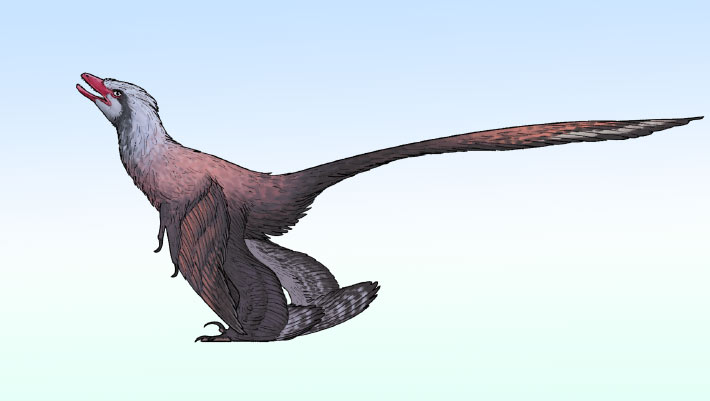
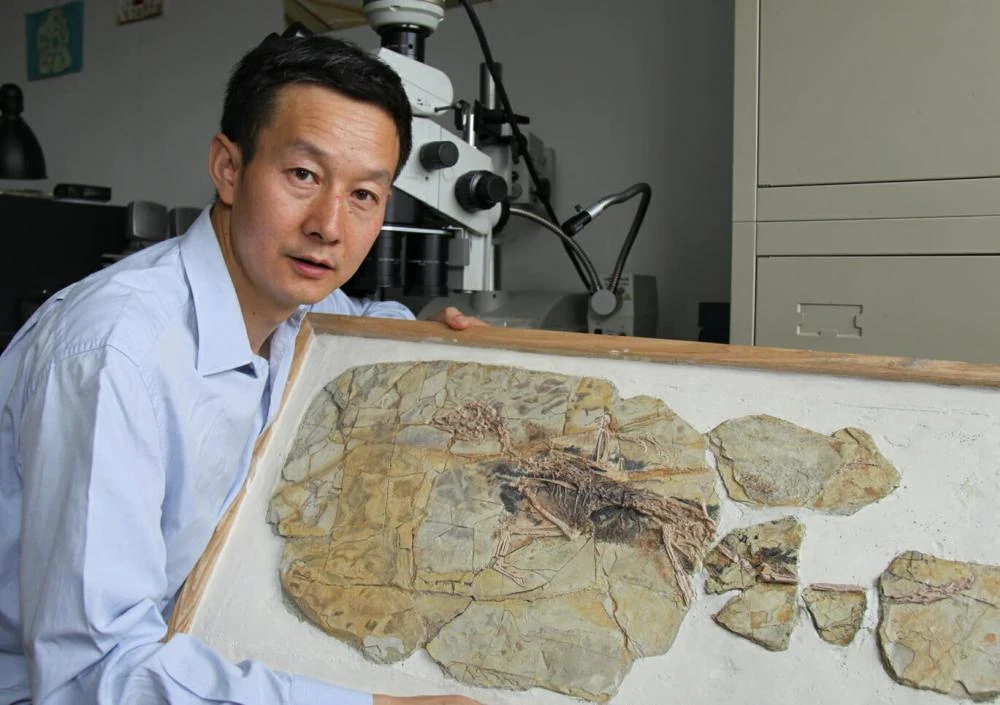
Paleontologist Dr. Xing Xu has identified Changzhousaurus sinensis, a four-winged dinosaur from the Early Cretaceous of northern China. According to research published in Vertebrata PalAsiatica, the 34-cm specimen challenges previous assumptions about flight evolution by demonstrating that wing area and arm length did not always evolve in tandem.
How does Changzhousaurus sinensis change the bird evolution timeline?
The discovery of Changzhousaurus sinensis adds complexity to the transition from non-avian theropods to modern birds. According to Dr. Xu of the Institute of Vertebrate Paleontology and Paleoanthropology at the Chinese Academy of Sciences, this species combined anatomical features from several different branches of the bird-like dinosaur family tree.
Living roughly 120 million years ago, the animal is an early-diverging member of the deinonychosaur lineage. This group includes the well-known dromaeosaurs and troodontids. By filling morphological gaps, the specimen suggests that hallmarks once thought to be exclusive to Avialae—such as aerodynamic behaviors and pennaceous feathers—were actually present across multiple pennaraptoran groups.
Why is the four-winged body plan significant for future research?
The specimen reveals a body plan with large feathers on both the arms and the feet. Specifically, its primary flight feathers measured about 12 cm (4.7 inches) long. According to the study, these proportions exceed those of other known non-avian pennaraptorans.

This discovery forces a rethink of how flight structures developed. Dr. Xu notes that the finding suggests feathered wing area and arm length didn’t always evolve together. Future paleontological trends will likely shift away from “simple assumptions” about flight origins and instead focus on the varied, experimental nature of early wing development.
What role did ornamentation play in early pennaraptorans?
Beyond flight, Changzhousaurus sinensis provides data on dinosaur social signaling. The fossil shows approximately 16 highly elongated tail feathers. These plumes were about four times the length of the animal’s femur, a proportion Dr. Xu says superficially resembles the ornamental tail of a peacock.
This suggests that display and mating rituals were as critical to the evolution of these species as the mechanics of flight. Researchers are now looking at these “ornamental” traits to better understand the ecology and behavior of the Jiufotang Formation’s inhabitants.
What remains unresolved in pennaraptoran phylogeny?
While the specimen is nearly complete, Dr. Xu states that several critical issues remain. The research in Vertebrata PalAsiatica highlights three primary challenges for the field:
- Phylogeny: Recovering a robust family tree for pennaraptorans given the overlapping traits between groups.
- Aerial Behavior: Inferring exactly how these four-winged creatures moved through their environment.
- Definitions: Determining the precise boundary that separates “dinosaurs” from “birds.”
These unresolved questions indicate that the “bird-dinosaur” divide is more of a spectrum than a hard line. Future discoveries in the western Liaoning province are expected to further blur these distinctions.
Comparison: Changzhousaurus vs. Other Pennaraptorans
The diversity of the Pennaraptora group is vast. According to Dr. Xu’s paper, the group includes both long-recognized major groups and recently discovered smaller clades. Here is how Changzhousaurus fits in:
| Feature | Typical Pennaraptoran | Changzhousaurus sinensis |
|---|---|---|
| Wing/Arm Correlation | Often evolve together | Evolved independently |
| Tail Plumes | Variable/Short | 16 elongated feathers (4x femur) |
| Body Plan | Two-winged (usually) | Four-winged |
Frequently Asked Questions
What is Changzhousaurus sinensis?
It is a newly identified genus and species of four-winged pennaraptoran dinosaur from the Early Cretaceous of northern China, measuring roughly 34 cm in length.

Where was the fossil found?
The remains were recovered from the Jiufotang Formation in the western Liaoning province of China.
Did Changzhousaurus sinensis fly?
While it possessed unusually large wing feathers and a four-winged body plan, Dr. Xu notes that inferring the exact aerial behavior of early-diverging pennaraptorans remains an unresolved issue in the research.
How old is the specimen?
The dinosaur lived approximately 120 million years ago during the Early Cretaceous epoch.
What do you think about the “four-winged” stage of bird evolution? Does it change how you view the transition from dinosaurs to birds? Let us know in the comments below or subscribe to our newsletter for more updates on paleontological discoveries.