
No major technical roadblocks prevent S’pore from storing nuclear waste, study with Swedish firm shows
Singapore has found no major technical barriers to storing nuclear waste deep underground if it adopts nuclear energy, according to a study by local authorities and Swedish firm SKB International. The desktop study, conducted in 2023 but released in May 2026, evaluated radioactive waste management for a small, densely populated country. It concluded that existing methods for traditional reactors and small modular reactors could work, though additional geophysical surveys are needed for a full assessment.
The Energy Market Authority (EMA) highlighted that Singapore’s granite formations, such as the Bukit Timah granite, could be viable for waste storage if unfractured. However, experts caution that public engagement and environmental studies remain critical steps. The findings come as Singapore prepares for an International Atomic Energy Agency (IAEA) review in 2027 to evaluate its readiness for nuclear energy deployment.
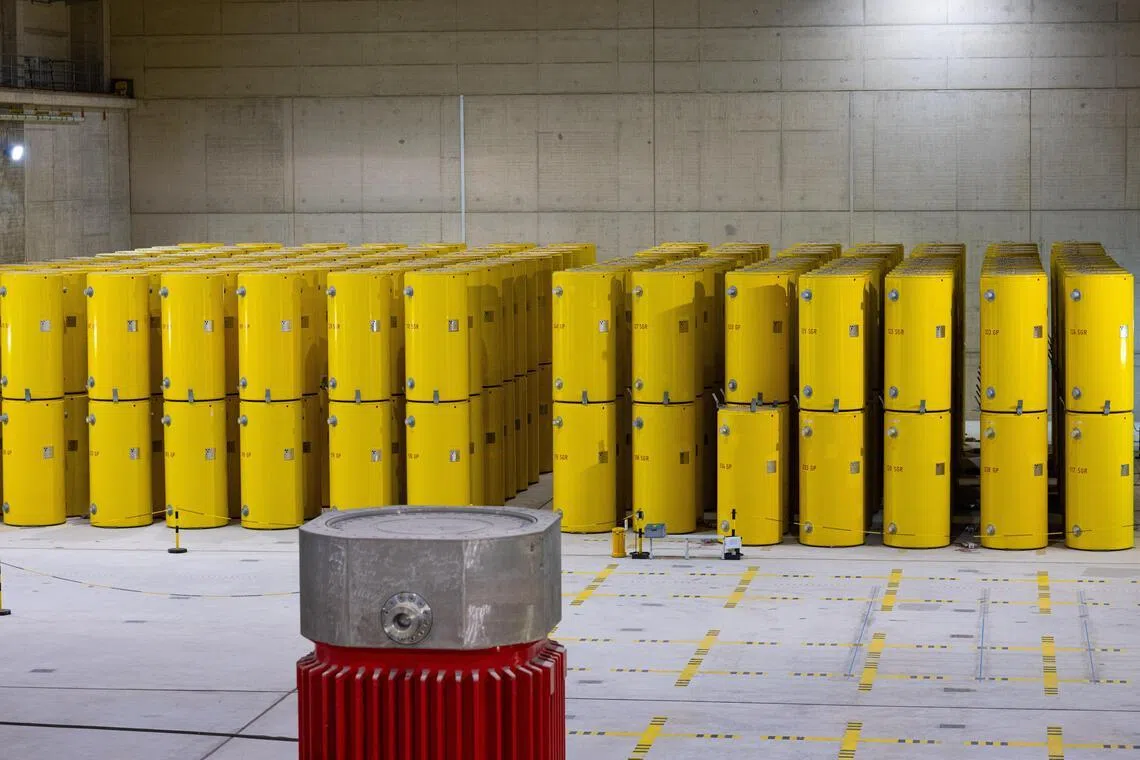
The study noted that a 1GW nuclear reactor produces about 370,000 litres of waste annually—equivalent to one-seventh of an Olympic pool. Singapore’s Semakau Landfill has capacity for over 11,000 such pools, suggesting waste volume is not a prohibitive issue. However, the EMA stressed that deep geological repositories, like Finland’s Onkalo, require multiple barriers, including corrosion-resistant canisters and buffer clay, to isolate radiation over millennia.
Did You Know? Finland’s Onkalo nuclear waste repository, built by SKB International, is set to begin operations in 2026, making it the world’s first fully functional deep geological repository.
Expert Insight: The feasibility of Singapore’s nuclear waste storage hinges on balancing technical solutions with public acceptance. While granite formations offer natural barriers, the social challenge of siting a facility—similar to Finland’s 40-year process—could delay progress. Experts emphasize that transparency and community dialogue will be as crucial as engineering expertise.
The study also noted that small modular reactors, which produce waste comparable to traditional reactors per unit of energy, could align with Singapore’s space constraints. However, the EMA warned that a comprehensive assessment of geological conditions, groundwater movement, and environmental impacts is still required before any site can be selected.
Singapore’s approach mirrors global trends, with countries like Sweden and France developing deep repositories. Yet, the nation’s unique geography and dense population add complexity. The IAEA’s 2027 review will assess 19 areas, including waste management, emergency planning, and nuclear safety, to determine if Singapore can make an informed decision about nuclear energy.
While the study suggests technical readiness, the path forward remains uncertain. As Matthew Chew of HY noted, Finland’s Onkalo took four decades to materialize, underscoring the long-term commitment required for such projects.
What Happens Next?
The IAEA’s 2027 review will be a pivotal step, but it does not guarantee Singapore’s adoption of nuclear energy. Further geophysical surveys, public consultations, and regulatory approvals are likely to follow. If approved, the country could explore innovative storage methods, such as deep boreholes, to accommodate waste in a space-constrained environment.
Why It Matters
Singapore’s exploration of nuclear energy reflects a broader global shift toward low-carbon power sources. However, the challenge of waste management remains a critical hurdle. The study’s findings demonstrate that technical barriers are surmountable, but societal and environmental considerations will shape the final outcome.
What Are the Risks?
The primary risks involve public opposition and unforeseen geological challenges. While the study found no showstoppers, the long-term safety of deep repositories depends on meticulous planning. Any miscalculation could lead to environmental or health risks, requiring rigorous oversight and transparency.
Frequently Asked Questions
[What is the current status of Singapore’s nuclear waste study?]
The study, conducted in 2023 and released in 2026, found no major technical barriers to storing nuclear waste underground. However, additional surveys are needed for a comprehensive assessment.
[When will Singapore’s nuclear energy readiness be evaluated?]
The International Atomic Energy Agency (IAEA) will assess Singapore’s capabilities in 2027, focusing on 19 critical areas including waste management and safety.
[How much nuclear waste would Singapore generate?]
A 1GW reactor would produce about 370,000 litres of waste annually, equivalent to one-seventh of an Olympic pool. This is considered manageable given Singapore’s landfill capacity.
Could Singapore’s unique challenges accelerate or delay global nuclear waste solutions? Share your thoughts below.