
NVIDIA and AWS Collaborate to Bring AI to Production at Scale
AWS and NVIDIA are scaling production AI via new EC2 G7 instances featuring RTX PRO 4500 Blackwell GPUs and making NVIDIA cuVS the default for OpenSearch Serverless vector indexing. According to NVIDIA, these updates increase AI inference performance by up to 4.6x and reduce vector indexing costs by 75% compared to CPU-only builds.
How do EC2 G7 instances change AI inference and graphics?
Amazon EC2 G7 instances accelerate production workloads by integrating NVIDIA RTX PRO 4500 Blackwell Server Edition GPUs. AWS reports that G7 instances deliver up to 4.6x the AI inference performance and 2.1x the graphics performance of previous G6 instances.
The hardware supports configurations of one, two, four, or eight GPUs, providing up to 256GB of total GPU memory. These instances include 700 Gbps of EFA-enabled networking and up to 7.6TB of local NVMe SSD storage. This allows AI teams to right-size their infrastructure instead of over-provisioning resources.
Beyond AI, these GPUs support spatial computing, high-resolution video rendering, and GPU-accelerated data analytics. Data teams can use the NVIDIA cuDF library for Apache Spark workloads on Amazon EMR to speed up analytics pipelines.
Why is GPU-accelerated vector search becoming the standard?
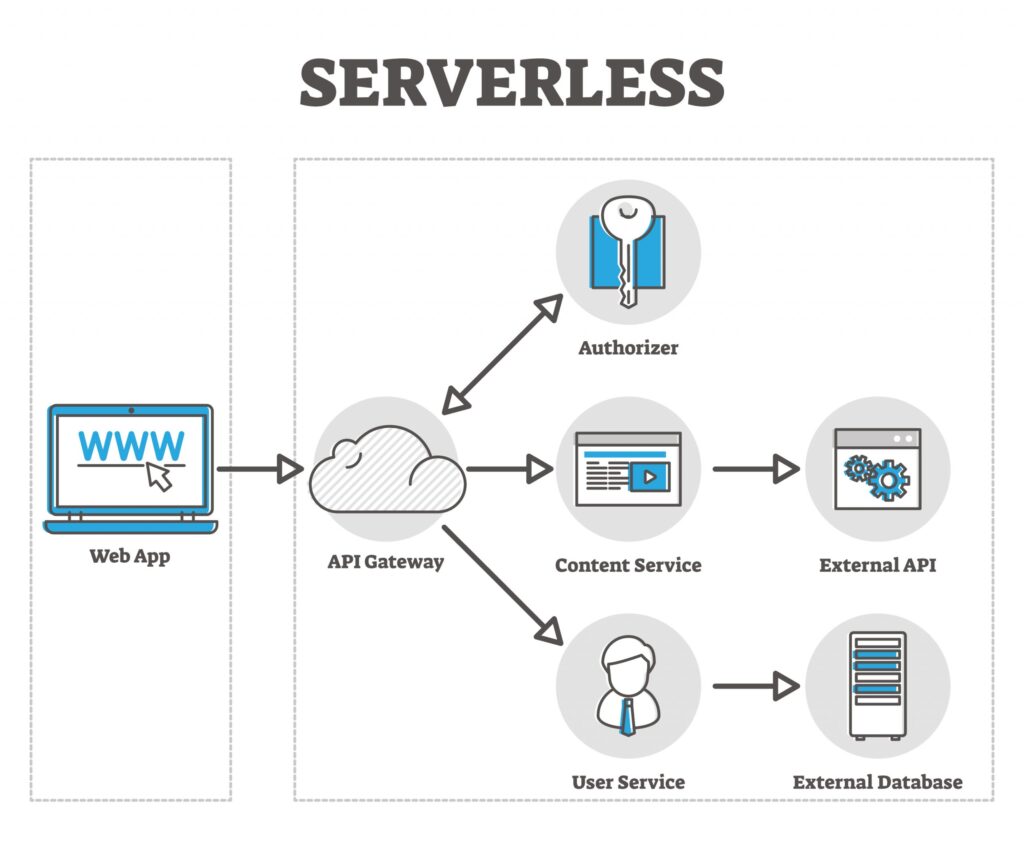
NVIDIA cuVS is now the default compute choice for all vector collections in Amazon OpenSearch Serverless. This shift moves GPU-powered vector search from a specialized optimization project to a standard AWS capability, according to NVIDIA.
The performance difference is stark. Vector indexing is up to 10x faster and costs a quarter as much as CPU-only builds. This allows developers to build billion-scale vector databases in under an hour, which was previously a significant operational hurdle.
This infrastructure specifically benefits teams building Retrieval-Augmented Generation (RAG), semantic search, and agentic AI applications. By utilizing serverless scaling, companies can reduce overhead when workloads are idle while maintaining high-speed retrieval for active users.
What does NVIDIA Exemplar Cloud status mean for large-scale training?
AWS has achieved NVIDIA Exemplar Cloud status for the NVIDIA GB300, meaning the cloud provider meets the specific performance thresholds NVIDIA uses to benchmark AI workloads. This status is based on NVIDIA’s reference architecture.
The designation results from co-engineering between AWS and NVIDIA. It provides developers a verifiable baseline for training large-scale models, ensuring that performance remains consistent across the cloud infrastructure.
For enterprises, this reduces the total cost of ownership (TCO) by removing the guesswork from cloud provider evaluation. It allows AI leaders to move projects from the planning phase to production more efficiently by relying on a pre-validated environment.
Comparing G6 and G7 Instance Performance
The transition from G6 to G7 represents a significant jump in raw compute efficiency. Based on data provided by NVIDIA, the improvements are concentrated in three primary areas:
| Metric | G6 Performance | G7 Performance |
|---|---|---|
| AI Inference | Baseline | Up to 4.6x Faster |
| Graphics Workloads | Baseline | Up to 2.1x Faster |
| Vector Indexing | CPU-Heavy | 10x Faster (via cuVS) |
This jump in performance suggests a trend toward “right-sizing” rather than “over-provisioning.” Instead of renting more instances to handle latency, developers can use fewer, more powerful G7 instances to achieve the same result.
Frequently Asked Questions
What is the main advantage of the NVIDIA RTX PRO 4500 Blackwell GPUs?
They provide a balance of high AI inference performance and graphics power without the operational complexity of a customer-managed GPU platform, according to AWS.
How does NVIDIA cuVS reduce costs in OpenSearch?
By shifting vector indexing from CPUs to GPUs, AWS reports that indexing costs can be reduced to 25% of what they would be on CPU-only builds.
What is the benefit of GB300 Exemplar Cloud status?
It guarantees that the cloud infrastructure meets NVIDIA’s reference architecture benchmarks, providing consistent performance for large-scale AI training workloads.
To learn more about optimizing your AI stack, explore our guides on GPU acceleration and serverless architecture.
Are you migrating your AI workloads to G7 instances or sticking with your current setup? Share your performance results in the comments below or subscribe to our newsletter for more infrastructure updates.