
SpaceX Names Its AI Orbital Data Center Starmind
Elon Musk has confirmed “Starmind” as the official name for SpaceX’s planned orbital AI data center constellation. According to company filings and Musk, the project aims to deploy up to one million AI-equipped satellites to shift data processing from Earth to space, utilizing unlimited solar energy and natural vacuum cooling.
What is Starmind and how does it differ from Starlink?
Starmind is an orbital computing layer designed to move AI data processing into space. While Starlink focuses on delivering internet connectivity to underserved areas, Starmind moves the actual computation off-planet. According to Notebookcheck, the system will utilize “computing racks” linked together via laser connections.
These AI satellites will connect with existing Starlink satellites to transmit data to ground stations using low-latency laser links and antennas. This creates a hybrid network where the “brain” of the operation resides in orbit rather than in a terrestrial warehouse.
Why is SpaceX moving AI data centers into orbit?
SpaceX is pursuing orbital computing because terrestrial AI data centers are hitting physical and regulatory ceilings. According to the company, ground-based facilities face acute shortages of available land and increasing resistance from local communities. Power and water consumption limits further constrain the growth of Earth-bound AI.
Musk argues that space provides three primary advantages: unlimited solar energy, natural vacuum cooling, and a total absence of zoning laws or building permits. Musk expects space to become the most cost-effective location for AI computations within a few years.
What are the technical specifications of the AI1 satellites?
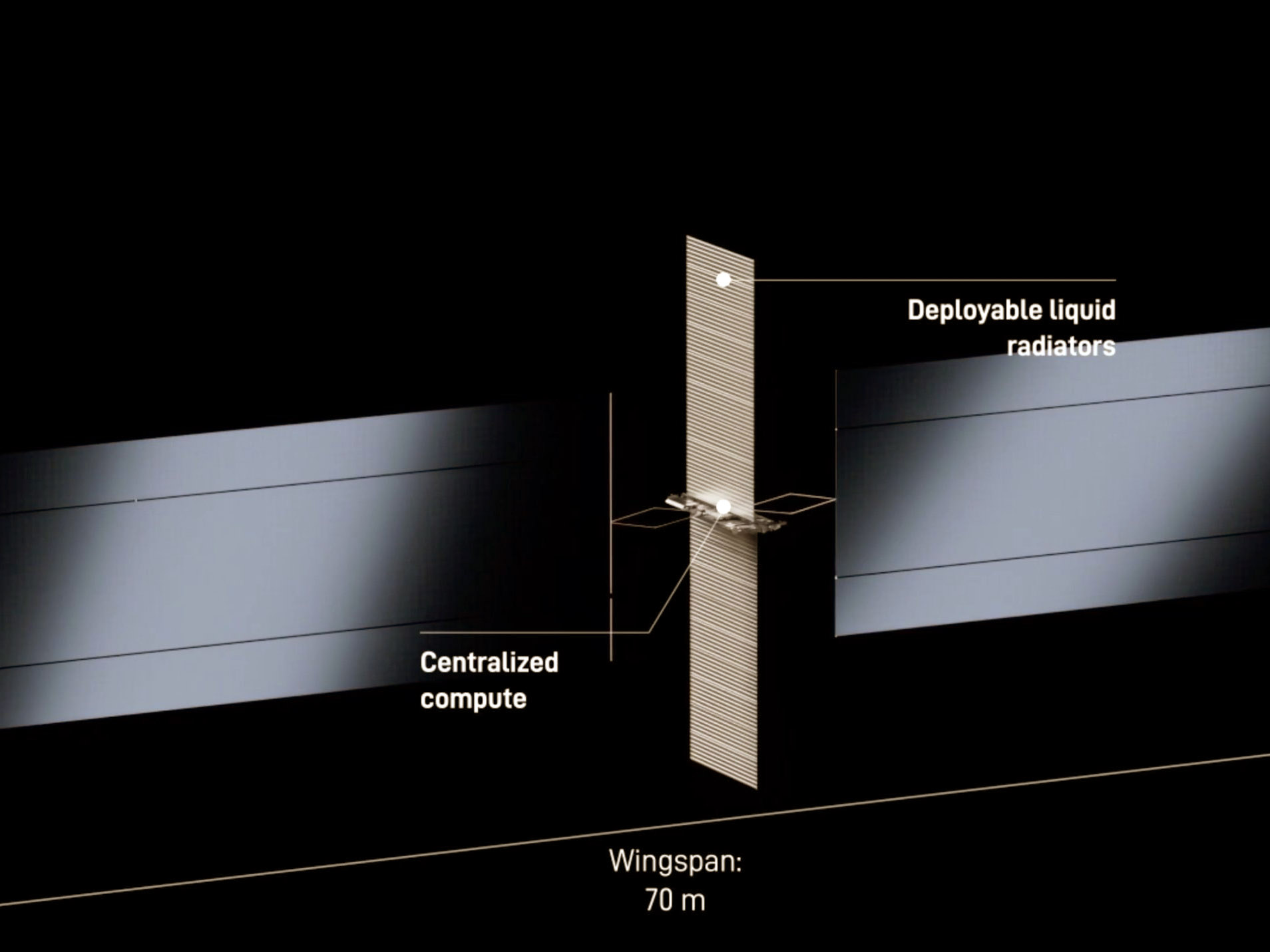
The AI1 satellites are designed for high-energy throughput. Notebookcheck reports that each satellite will have an average computing capacity of approximately 120 kilowatts, with peak capacity reaching 150 kilowatts.
To power these loads, each unit will feature solar panels spanning roughly 70 meters. These satellites will operate at an orbital altitude of approximately 600 kilometers.
When will the Starmind constellation launch?
The timeline for deployment begins in 2027. According to Notebookcheck, SpaceX plans to launch the first AI1 prototype satellites in early 2027. Volume production is scheduled to begin by the end of that year.
This mass production will take place at a new dedicated facility called “Gigasat.” This follows a pattern of SpaceX creating specialized infrastructure to support massive constellation scales, similar to the Starlink production lines.
Comparison: Terrestrial vs. Orbital AI Computing
| Feature | Terrestrial Data Centers | Starmind (Orbital) |
|---|---|---|
| Cooling | Water-intensive / HVAC | Natural vacuum cooling |
| Energy | Grid-dependent / Fossil fuels | Unlimited solar power |
| Regulation | Zoning laws & building permits | No terrestrial zoning |
Frequently Asked Questions
What is the goal of the Starmind project?
To create an orbital AI computing layer consisting of up to one million satellites to handle data processing in space.

How do Starmind satellites get power?
They use massive solar panels, roughly 70 meters in length, to harness unlimited solar energy.
When will the first Starmind satellites be in space?
Prototypes are planned for launch in early 2027, with mass production following later that year.
Do you think moving AI to space is the solution to the energy crisis on Earth?
Share your thoughts in the comments below or subscribe to our newsletter for more updates on the future of orbital infrastructure.