
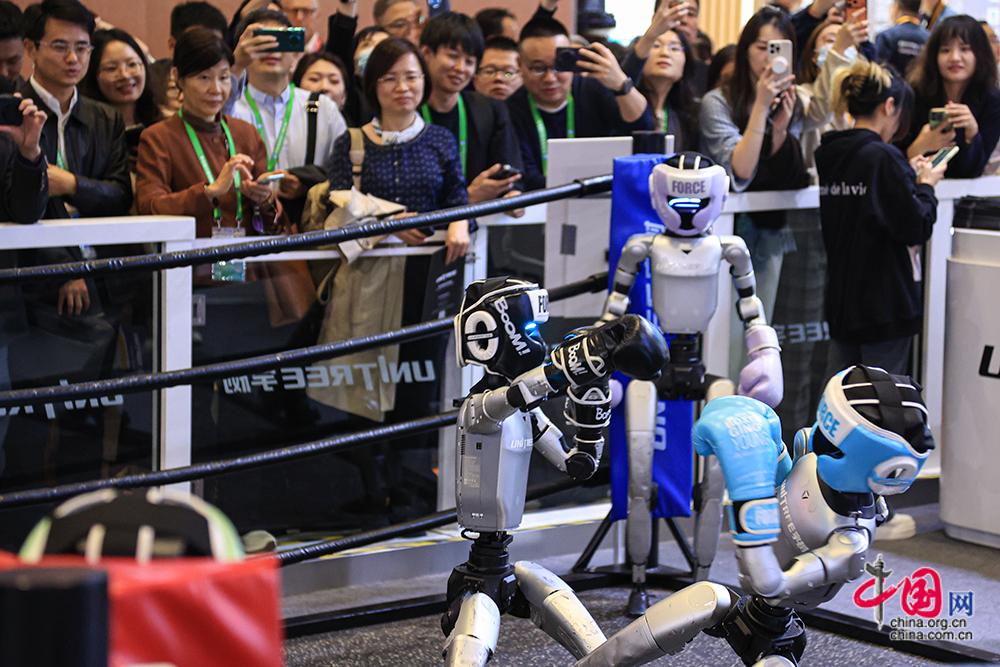
Nvidia and Unitree Robotics Partnership Highlights China’s Growing AI Influence
The New Frontier: Why the Nvidia-Unitree Alliance Changes Everything
The landscape of artificial intelligence is shifting under our feet. When a tech titan like Nvidia joins forces with a specialized player like China’s Unitree Robotics, it’s more than a mere business deal—it’s a signal that the era of the humanoid worker has officially arrived.

By integrating Nvidia’s powerful Jetson Thor hardware with Unitree’s H2 humanoid platform, the two companies are creating a blueprint for the future of automation. This isn’t just about building robots that walk; it’s about giving them an “intelligent brain” capable of navigating complex, human-centric environments.
The “China Factor”: A Dominance Built on Supply Chains
While the world watches Silicon Valley, the real manufacturing engine for robotics is humming in China. The data is hard to ignore: China currently accounts for nearly 85% of global humanoid robot shipments. But why is this happening?
The answer lies in the vertical integration of the supply chain. China controls the essential building blocks for modern robotics:
- Rare Earth Elements: 91% of the world’s refined supply.
- Battery Exports: 45% of the global market share.
- Actuators: 22% of the global output, the “muscles” that allow robots to move with precision.
Patents vs. Perception: Who is Really Leading the AI Race?
For years, the narrative was that China was a “fast follower” in innovation. Today, that narrative is obsolete. According to European Patent Office data, China holds roughly 70% of the world’s robotics patents, compared to just 4% in the United States. This massive intellectual property lead suggests that the next decade of robotics won’t just be manufactured in China—it will be invented there.
Scaling the Humanoid Brain
The challenge for the robotics industry has always been the “brain.” How do you make a machine react to an unpredictable world? The partnership between Nvidia and Unitree tackles this by focusing on high-performance computing power. By putting a supercomputer inside a humanoid frame, they are bridging the gap between static automation and true artificial general intelligence (AGI) mobility.
The Future of Global Collaboration
Despite geopolitical tensions, the consensus among industry leaders is clear: the US and China are the only two “real players” in the high-stakes game of AI. The interdependence between American software/chip prowess and Chinese manufacturing/hardware scale is not a weakness—it is the engine of global progress. As Sean Stein of the US-China Business Council notes, the exchange of ideas is what keeps innovation moving at this breakneck pace.
Frequently Asked Questions
Q: Why are humanoid robots suddenly becoming popular?
A: Advancements in generative AI and more powerful, compact hardware have finally made it possible for robots to process human-like tasks in real-time, moving them from factory floors into research and service sectors.
Q: Is China the only leader in robotics?
A: While China leads in manufacturing volume and patents, the US remains a global leader in AI software architecture and high-end chip design. The two ecosystems are increasingly intertwined.
Q: What is the significance of the Nvidia-Unitree deal?
A: It represents the convergence of world-class AI computing (Nvidia) with mass-market, scalable robotic hardware (Unitree), accelerating the timeline for commercializing humanoid robots.
What do you think? Will humanoid robots be working alongside us in offices within the next decade, or is the technology still too far off? Share your thoughts in the comments below or subscribe to our weekly tech briefing for more deep dives into the future of robotics.