
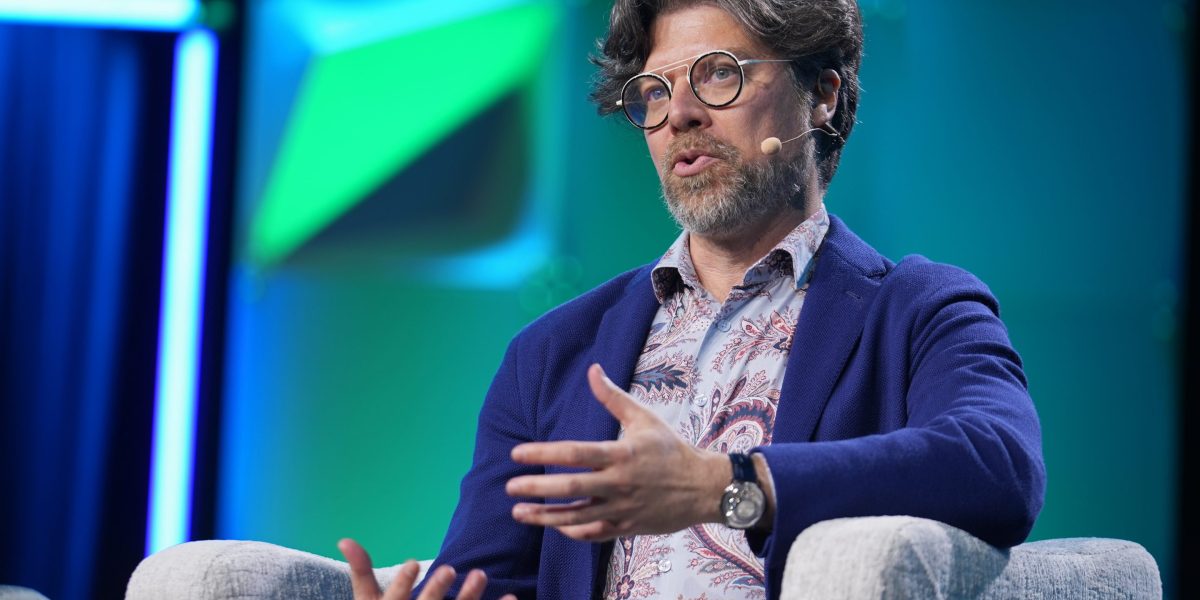
Nvidia executive: The cost of AI tools is ‘far beyond’ the cost of human workers
Tech companies are cutting thousands of jobs while spending billions on artificial intelligence, though current data suggests AI is often more expensive than the human labor it replaces. According to an MIT study, AI automation is economically viable in only 23% of roles where vision is a primary requirement, while Morgan Stanley reports Big Tech firms have spent $740 billion in capital expenditures on AI this year.
Why are tech layoffs increasing while AI spending surges?
Recent workforce reductions may look like a shift from humans to AI, but the economics suggest a different driver. Meta announced a plan to lay off 10% of its workforce—roughly 8,000 employees—and scrap 6,000 open positions to “run the company more efficiently,” according to a company memo.
Microsoft has also offered thousands of employees voluntary buyouts, the largest in the company’s history. Data from Layoffs.fyi shows more than 118,000 tech layoffs have occurred so far in 2026 across nearly 100 companies, a rate that already exceeds the 120,000 total layoffs seen in the previous year.
Despite these cuts, spending is accelerating. Morgan Stanley reports a 69% increase in AI capital expenditures compared to 2025. This creates a paradox where firms are reducing payroll while increasing operational costs for technology.
Is AI actually more expensive than human employees?
For many firms, the cost of running AI models outweighs the salary of a human worker. Bryan Catanzaro, vice president of applied deep learning at Nvidia, told Axios in April that the cost of compute for his team is “far beyond the costs of the employees.”

This financial strain is hitting corporate budgets in real-time. Uber chief technology officer Praveen Neppalli Naga told The Information that the company exhausted its entire 2026 AI coding tools budget by April. Naga attributed this to the rapid adoption of tools like Anthropic’s Claude Code, which was incentivized through employee leaderboards.
Microsoft is similarly adjusting its strategy. The Verge reported last month that Microsoft is canceling most direct Claude Code licenses and pivoting to GitHub Copilot CLI because the technology became popular too quickly for its existing budget structure.
When will AI become a cost-saving substitute for labor?
Keith Lee, an AI and finance professor at the Swiss Institute of Artificial Intelligence’s Gordon School of Business, describes the current situation as a “short-term mismatch.” He told Fortune that AI is currently a complementary tool rather than a cost-saving substitute because hardware and energy costs remain high.
The cost of AI software is also rising. Spending management firm Tropic noted in December 2025 that AI software fees increased by 20% to 37% over the year. Lee noted that flat subscription models often fail to cover the operating costs for heavy users, leading to losses for AI providers.
Projected tipping points for AI viability
- Inference Costs: A report from analyst firm Gartner suggests the cost of performing inference for large language models with 1 trillion parameters will drop by more than 90% over the next four years.
- Infrastructure Growth: McKinsey data predicts AI expenditures could reach between $5.2 trillion and $7.9 trillion by 2030, with trillions allocated to data centers and IT equipment.
- Pricing Shifts: Professor Keith Lee predicts a move away from flat subscriptions toward usage-based pricing to stabilize cost structures.
What happens next for the AI labor market?
The transition to AI viability depends on reliability and predictability. Professor Lee stated that AI must reduce “hallucinations” and the need for constant human oversight to truly integrate into corporate infrastructure.

Adoption is growing regardless of the immediate cost. Federal Reserve data shows 18% of companies had adopted AI tools by the end of 2025, marking a 68% growth in adoption since September 2025. The goal for these firms is to reach a point where the technology is both cheaper and more predictable at scale.
Frequently Asked Questions
While layoffs are increasing, data suggests they aren’t solely caused by AI replacement. An MIT study found AI is economically viable in only 23% of vision-heavy roles, meaning humans are still cheaper in the majority of these cases.
High costs stem from the compute power required for inference, massive energy demands for data centers, and expensive hardware. According to Nvidia’s Bryan Catanzaro, compute costs can exceed employee salaries.
According to Morgan Stanley, Big Tech firms have spent $740 billion on AI capital expenditures so far this year, a 69% increase from 2025.
Join the Conversation: Do you think AI will ever actually be cheaper than a skilled human employee, or are we in a spending bubble? Share your thoughts in the comments below or subscribe to our newsletter for more deep dives into the economics of tech.