
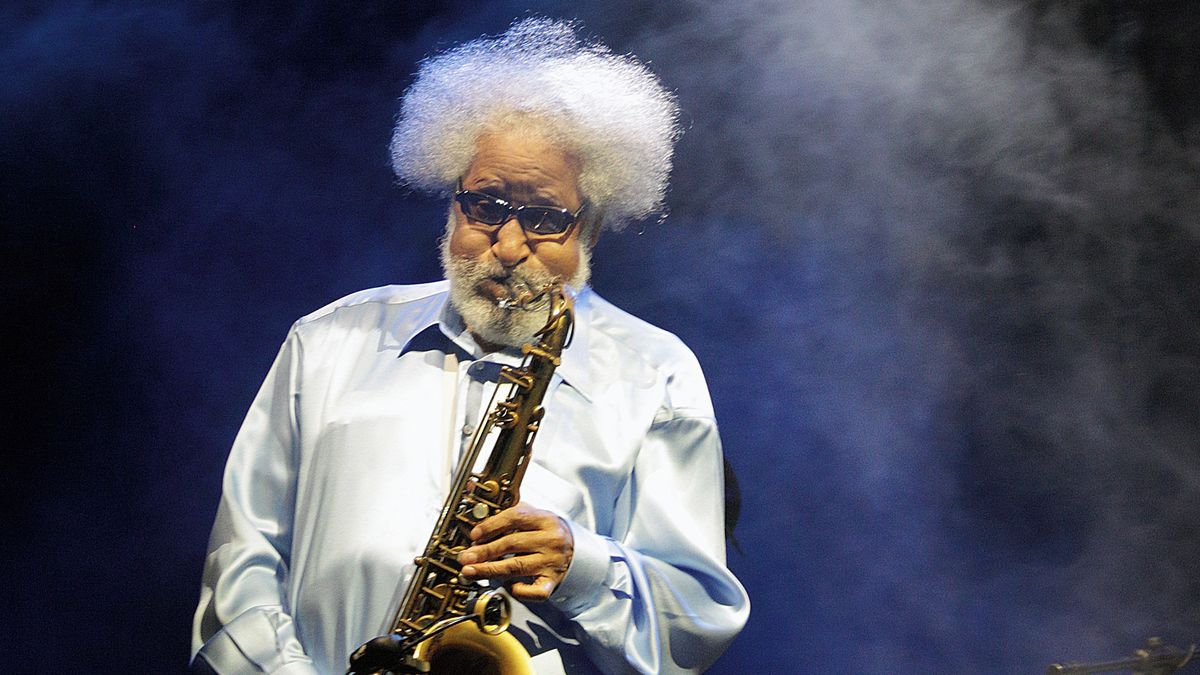
Odešel legendární saxofonista
The jazz world has lost one of its most towering figures. Sonny Rollins, the legendary tenor saxophonist and two-time Grammy winner, has passed away at the age of 95, according to his agent.
Rollins was more than a performer; he was a style-forming force and the last great star of the bebop generation. He leaves behind a legacy of jazz standards, including “St. Thomas,” “Oleo,” and “Doxy.”
A Legacy of Innovation and Intensity
Beginning his career in the late 1940s, Rollins developed a gritty, distinctive tone inspired by Coleman Hawkins. He balanced this with the lyricism of Lester Young and the innovation of Charlie Parker.
-20110830141213.jpg "Sonny Rollins Oleo album cover")
His early brilliance was recognized by Miles Davis, who hired him for his first quintet. Davis described Rollins as an “aggressive, innovative player” and a “geyser of ideas.”
Rollins’ creative process was often spontaneous. He famously wrote “Oleo” on a scrap of paper after a sudden inspiration, naming the track after a popular brand of margarine.
The Bridge and the Pursuit of Perfection
At the height of his powers in 1959, Rollins took a radical step by withdrawing from public life. From the summer of 1959 to the autumn of 1961, he practiced daily on the Williamsburg Bridge.

Hidden from commuters and ships, he practiced up to 15 hours a day. He stated that he felt his fame had exceeded his actual talent.
While romanticized, the decision had practical roots. Rollins noted that his saxophone was too loud for his apartment, and he did not want to disturb a pregnant neighbour.
Other factors included the shock of seeing Miles Davis beaten by police outside the Birdland club and the rising competition from musicians like John Coltrane and Ornette Coleman.
Triumph Over Adversity
Rollins’ path was not without struggle. In 1950, he was imprisoned for ten months at Rikers Island following an attempted armed robbery, an experience he later claimed strengthened him.
Musically, he pushed boundaries by popularizing the saxophone trio. By removing the piano or guitar, he found a level of freedom that influenced future musicians such as Joe Henderson and Joshua Redman.
A Global Citizen and Final Years
Rollins’ influence extended far beyond New York. He spent years on spiritual journeys through Japan and India between 1966 and 1972.
He also showed a commitment to artistic freedom abroad. After performing in Prague in 1982, he supported the persecuted “Jazz Section” in Czechoslovakia through a benefit concert in Washington.
In 2001, the September 11 attacks forced him to evacuate his home near the World Trade centre. Led by the National Guard, he lost nearly all his possessions but managed to save his longtime Selmer saxophone.
This event taught him that material things are not what truly matter. He spent his final years in Woodstock, eventually founding his own label, Doxy Records.
The Final Note
In his later years, respiratory illness eventually forced him to stop playing. In a 2020 interview, he reflected on the limitations of a single lifetime, suggesting he would “return in another body.”
The jazz community may now enter a period of reflection as they grapple with the loss of the bebop era’s final titan. Future historians are likely to analyze his “bridge period” as a blueprint for artistic reinvention.
Frequently Asked Questions
Why did Sonny Rollins practise on the Williamsburg Bridge?
He was dissatisfied with the quality of his playing and felt his fame exceeded his talent. He wanted to avoid disturbing neighbours and was affected by police brutality against Miles Davis and competition from other musicians.
What happened to Rollins during the 9/11 attacks?
Living blocks from the World Trade centre, he was evacuated by the National Guard. He had to discard most of his belongings due to toxic particles but saved his Selmer saxophone.
Which famous musicians did Sonny Rollins collaborate with early in his career?
He played with Bud Powell and was a member of Miles Davis’s first quintet, and later worked with Clifford Brown and Max Roach.
How do you think the world of music changes when the last representative of a founding generation passes away?