
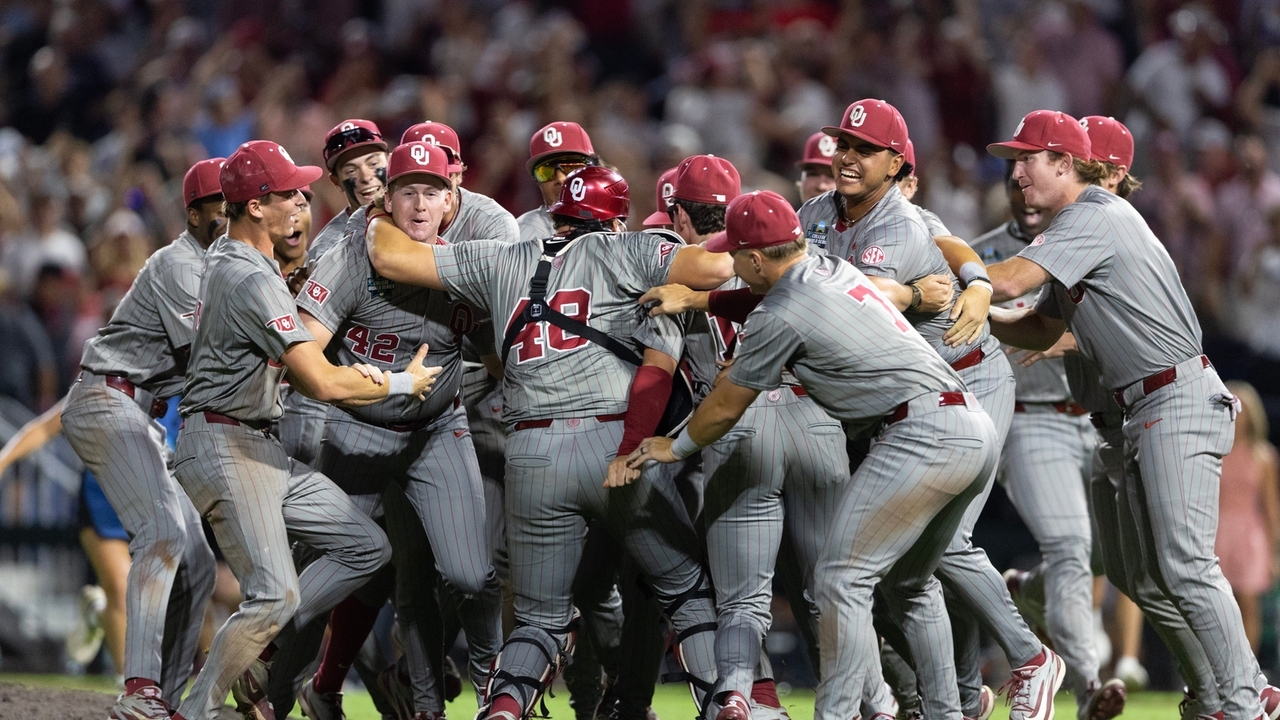
Oklahoma Sooners Win First NCAA College World Series Title Since 1994
Oklahoma defeated North Carolina 13-2 in Game 3 of the College World Series finals on Monday, June 22, 2026, to claim the program’s first national championship since 1994. The Sooners (43-23) overcame a difficult regular season—where they were picked 14th in their conference—to secure the title in Omaha, Nebraska, behind a dominant offensive performance and clutch bullpen work.
Did You Know? The pitching matchup in this winner-take-all final featured two freshmen, Jackson Rose of North Carolina and Nick Wesloski of Oklahoma; it was the first time two freshmen had started a deciding game in the College World Series since 1993.
How the Sooners secured the title
Oklahoma’s offensive surge was led by Kyle Branch, the team’s No. 9 batter, who drove in six runs during the final game. Branch recorded a pair of singles and a home run, marking his first homer of the series. Jaxon Willits, who was named the CWS most outstanding player, contributed three hits and reached base five times, finishing the tournament with a .520 batting average.

The Sooners’ pitching depth proved vital, particularly the performance of LJ Mercurius. According to team records, Mercurius held the Tar Heels to one run over 5 2/3 innings in relief, finishing the CWS with a total of only two runs allowed over 12 1/3 innings of work. The North Carolina pitching staff, which entered the series with the best ERA in the Atlantic Coast Conference, struggled in the final game, as eight pitchers combined to allow 14 hits and eight walks.
Expert Insight: The impact of postseason momentum
Expert Insight: The Oklahoma run highlights the unpredictability of tournament baseball, where team confidence and “selfless” play, as described by coach Skip Johnson, can override regular-season statistical projections. By overcoming early-season losses and navigating a difficult path through regional and super-regional play against high-seeded opponents, the Sooners demonstrated that historical seeding often matters less than a team’s ability to peak at the right time.
What happens next for the programs
Following this loss, North Carolina faces a period of evaluation after falling short in their 13th CWS appearance without a title. Coach Scott Forbes noted that the team “ran out of gas,” suggesting that the heavy workload placed on pitchers like Caden Glauber may lead to future discussions regarding pitching depth management in high-stakes, short-rest scenarios. For Oklahoma, the championship marks a significant turnaround for a program that finished 11th in its conference and entered the postseason having lost seven of its final nine games.
Frequently Asked Questions
Who was named the College World Series most outstanding player?
Jaxon Willits was named the most outstanding player for Oklahoma, finishing the series with a .520 batting average and reaching base five times in the final game.
How did North Carolina’s pitching perform in the final game?
The Tar Heels’ pitching staff, which held the top ERA in the Atlantic Coast Conference, struggled in Game 3. Eight pitchers combined to allow 14 hits and eight walks, while issuing three wild pitches and hitting one batter.
What was significant about Oklahoma’s path to the championship?
The Sooners were picked 14th in their 16-team conference preseason and entered the postseason having lost seven of their last nine games, making their run to the title an improbable outcome.
How will the programs adjust their roster strategies following the high-intensity demands of this year’s College World Series?