
Talos: An Open-Source Tool for Iterative Genomic Reanalysis in Rare Disease
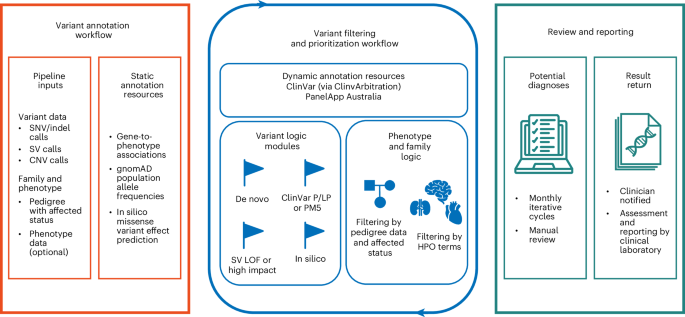
Talos, an open-source genomic analysis tool, is successfully identifying new diagnoses for patients with rare diseases by iteratively reanalyzing data that previously returned inconclusive results. In a large-scale deployment involving 4,735 individuals, the software identified 241 new diagnoses, representing a 5.1% increase in diagnostic yield for patients who had remained undiagnosed after initial genomic testing. The tool operates by monitoring emerging gene-disease associations and variant classifications, automatically flagging only new, actionable evidence for manual review.
Did You Know? The Talos workflow is highly cost-effective, with the variant filtering and prioritization process costing approximately $1.65 USD annually per 1,000 genomes if reanalysis is performed on a monthly basis.
Performance and Accuracy
Researchers evaluated the performance of Talos using the Acute Care Genomics (ACG) cohort, which included 401 critically ill infants and children. According to the study, Talos correctly identified 186 of 208 known diagnoses, or 89%, across the entire cohort. When the team simulated singleton testing—a common scenario in clinical settings where parental data is unavailable—the tool maintained a diagnostic identification rate of 82%.
When compared to Exomiser, a widely used automated variant prioritization tool, Talos demonstrated similar sensitivity for single-nucleotide variants and insertions/deletions. Statistical analysis using McNemar’s exact test showed no significant difference in performance at the top-10 ranked variant setting. However, Talos showed a performance advantage in identifying the causative variant when the review was limited to the top-five or top-one ranked candidates.
Real-World Clinical Impact
The deployment of Talos across a broad, unselected cohort of 4,735 individuals provided new diagnostic clarity for 238 patients. Data shows that 62% of these new findings were coding single-nucleotide variants or indels, while 26% were copy number variants (CNVs) or structural variants. Notably, 93% of the identified CNVs were small intragenic deletions previously considered below the resolution of standard chromosomal microarray analysis.
According to the study, more than half of these additional diagnoses emerged from updated knowledge regarding gene-disease or variant-disease relationships. The average time between new medical knowledge becoming publicly available and the identification of a new diagnosis through Talos was 32 days, with the fastest identification occurring within 24 hours.
Expert Insight: The ability of Talos to filter out noise and present only updated, actionable information addresses a significant bottleneck in clinical genetics. By focusing on changes in medical literature and database annotations, the tool allows clinicians to revisit “negative” cases efficiently, potentially shortening the diagnostic odyssey for families without requiring the massive overhead of full, manual reanalysis.
Future Outlook
As genomic databases continue to expand, the number of reclassifications for previously “uninformative” variants is likely to increase. A possible next step for this technology is its integration into routine clinical workflows, where it could serve as a continuous monitoring layer for patients with rare, undiagnosed conditions. If adopted broadly, analysts expect that the iterative nature of Talos could lead to higher diagnostic yields over time, particularly as more gene-disease associations move from research-only status to clinical-grade certainty.
Frequently Asked Questions
How does Talos determine which variants to flag?
Talos uses a variant tagging and filtering process that utilizes ACMG/AMP criteria. During iterative cycles, it only displays variants where the supporting evidence, such as annotations in ClinVar or PanelApp Australia, has changed since the previous month.

Can Talos be used if parental genomic data is not available?
Yes. The tool was tested on singleton datasets and identified 82% of achievable diagnoses in the ACG cohort in the absence of parental data. While performance is slightly higher when parental trios are used, the tool remains effective for singleton analysis.
What types of variants can the tool detect?
Talos is designed to identify a range of variant types, including single-nucleotide variants (SNVs), insertions and deletions (indels), and copy number variants (CNVs) or structural variants (SVs). In the prospective study, it successfully identified CNVs ranging from 0.6 kilobases to 1.8 megabases in size.
Could automated, iterative reanalysis become the standard of care for patients with undiagnosed rare diseases?