
Open Doors Latin America: Supporting the Persecuted Church
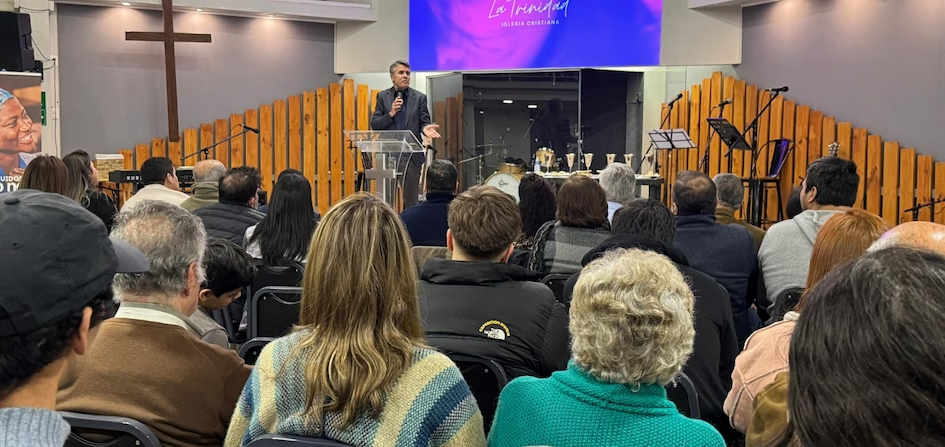
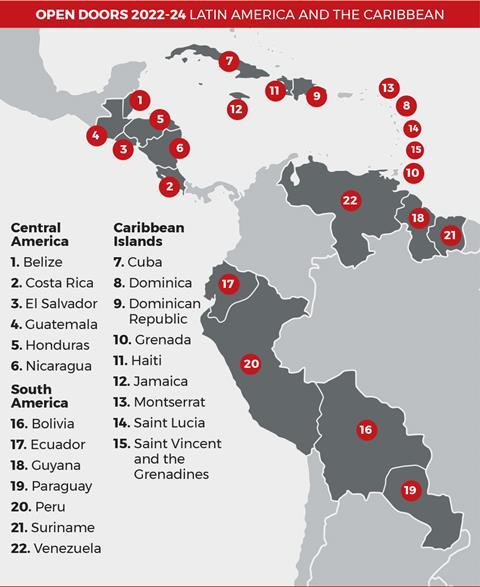
Open Doors Latin America, established June 13, 2019, has scaled its support network for the persecuted church, increasing the number of participating congregations in its annual “Day of the Persecuted Church” (DIP) from 467 in 2021 to 2,667 across 19 countries by 2026, according to organization data.
Why is the Latin American church becoming more active in supporting persecuted Christians?
The surge in Latin American mobilization stems from a strategic effort to bridge the gap between the “free church” and those facing violence for their faith. Marco Cruz, Secretary General of Open Doors Brazil and Open Doors Latin America, states the organization acts as a bridge to connect these two groups through shared testimonies and prayer.
This mobilization has seen exponential growth. In 2021, 467 churches participated in the Day of the Persecuted Church (DIP). By 2023, that number rose to 880 registered churches, which included 11 congregations in Cuba, a country listed on the World Watch List. The trajectory peaked in 2026 with 2,667 participating churches across 19 nations.
How does digital connectivity change the fight against religious persecution?
Digital tools have shifted the mission from physical print to instant global connectivity. Open Doors Brazil began this work with its first printed magazine in 1979. Today, the organization uses digital channels to reach Christians across the continent, regardless of their physical location.

The 2021 DIP serves as a primary example of this shift. Due to pandemic restrictions, churches across Latin America participated digitally. This forced adoption of technology expanded the reach of the mission, allowing the Chile-based office to coordinate activities in 19 different countries simultaneously.
According to Marco Cruz, this digital infrastructure allowed the organization to mobilize churches even in “closed” countries. This suggests a trend where digital platforms bypass geographic and political barriers to create a unified prayer network.
What role does Chile play in the regional coordination of Open Doors?
Chile serves as the operational hub for Open Doors Latin America. The organization chose Chile based on legal organization and logistical conditions that facilitated the ministry’s establishment during its early years.
While the office is physically located in Chile, the mission operates as a regional entity. It leverages the experience of Open Doors Brazil to implement a model of “presence ministry.” This approach focuses on speaking the local language and understanding the specific cultural realities of Spanish-speaking believers to better advocate for the persecuted.
What are the current scale and impact of religious persecution globally?
The scale of the crisis is vast. According to the World Watch List 2026, more than 388 million Christians face persecution or discrimination because of their faith. This data underscores the necessity of the mobilization efforts seen in Latin America.
The impact is felt across all ages. Organization records highlight the example of Rocío, a Chilean child who sells her toys to raise funds for persecuted Christians. This indicates a generational shift where awareness of religious freedom is being instilled in younger populations.
Comparison of DIP Participation Growth
| Year | Participating Churches | Context |
|---|---|---|
| 2021 | 467 | Digital participation due to pandemic |
| 2022 | 428 | Stabilization period |
| 2023 | 880 | Focus on “Most Dangerous Countries” |
| 2026 | 2,667 | Expansion across 19 countries |
Frequently Asked Questions
When was Open Doors Latin America founded?
It was officially founded in Chile on June 13, 2019, under the coordination of Open Doors Brazil.
How many Christians are currently persecuted worldwide?
According to the World Watch List 2026, over 388 million Christians face persecution or discrimination.
What is the “Day of the Persecuted Church” (DIP)?
It is an annual event where churches gather to pray for, sensitize their communities about, and provide support to Christians facing persecution.
Why is the regional office located in Chile?
Chile was selected due to its favorable legal and logistical conditions for establishing the ministry’s coordination center.
Do you believe digital platforms are the most effective way to raise awareness for human rights today? Share your thoughts in the comments or subscribe to our newsletter for more updates on global religious freedom.